
Well-Being
During lockdown, when anxiety was spiking because of isolation, Talina Hermann was reaching out on Instagram, calming the community with tips on stillness, breathwork, and even which tea to sip.
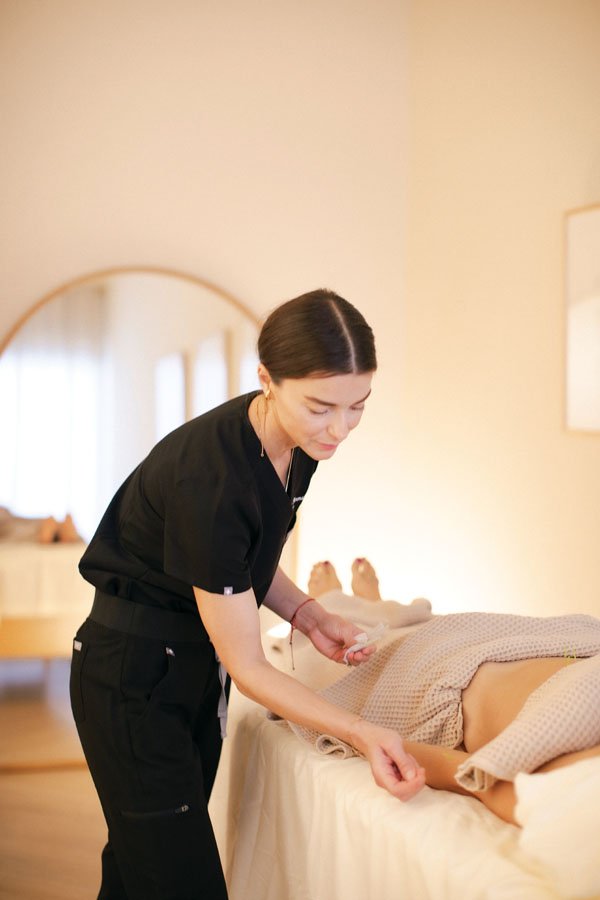
Acupuncture is among the holistic treatments
Written by Jennifer Blaise Kramer | Photography by Blue Gabor
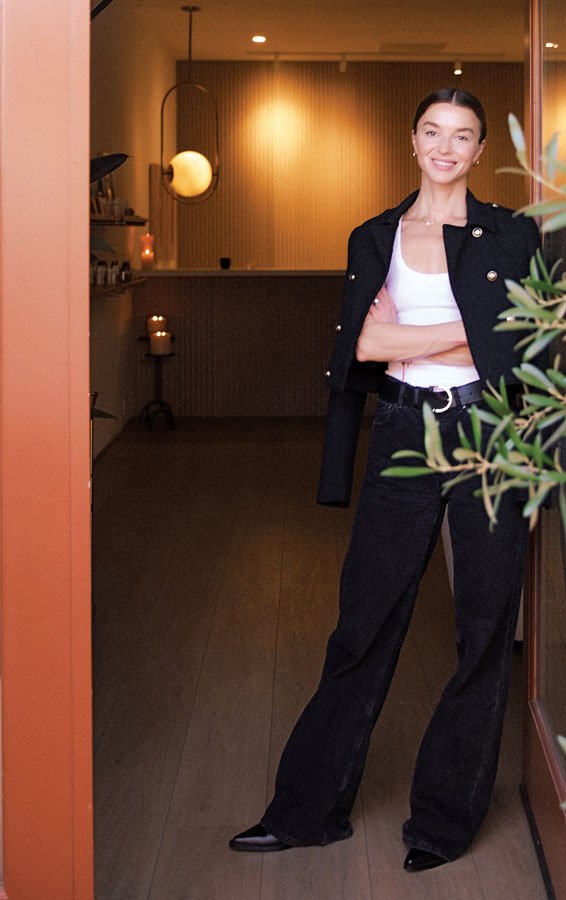
During lockdown, when anxiety was spiking because of isolation, Talina Hermann was reaching out on Instagram, calming the community with tips on stillness, breathwork, and even which tea to sip. Her gentle wisdom was a breath of fresh air as her followers listened, wondering what she would tell them next. Little did we know that Hermann was on her own journey to become Dr. Talina Hermann, wrapping up a four-year master’s degree plus a doctorate to launch her MONTECITO WELLNESS CLINIC, which debuted this fall.
Her space, with tranquil rose walls and soft shearling seating, presents an image of serenity. Patients come for in-depth assessments to discover what’s off with their body. They receive a custom treatment protocol, which may involve blood work, acupuncture, breathwork, plant medicine, herbs, supplements, and holistic psychotherapy.
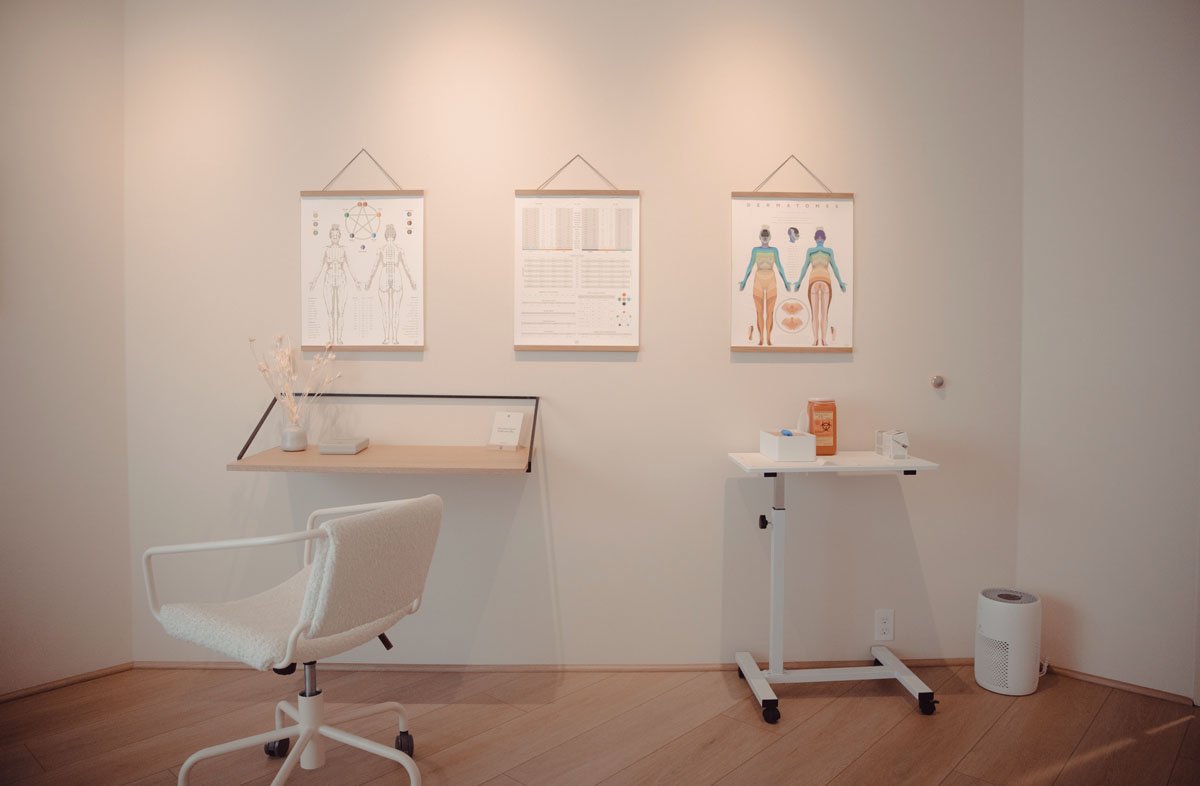
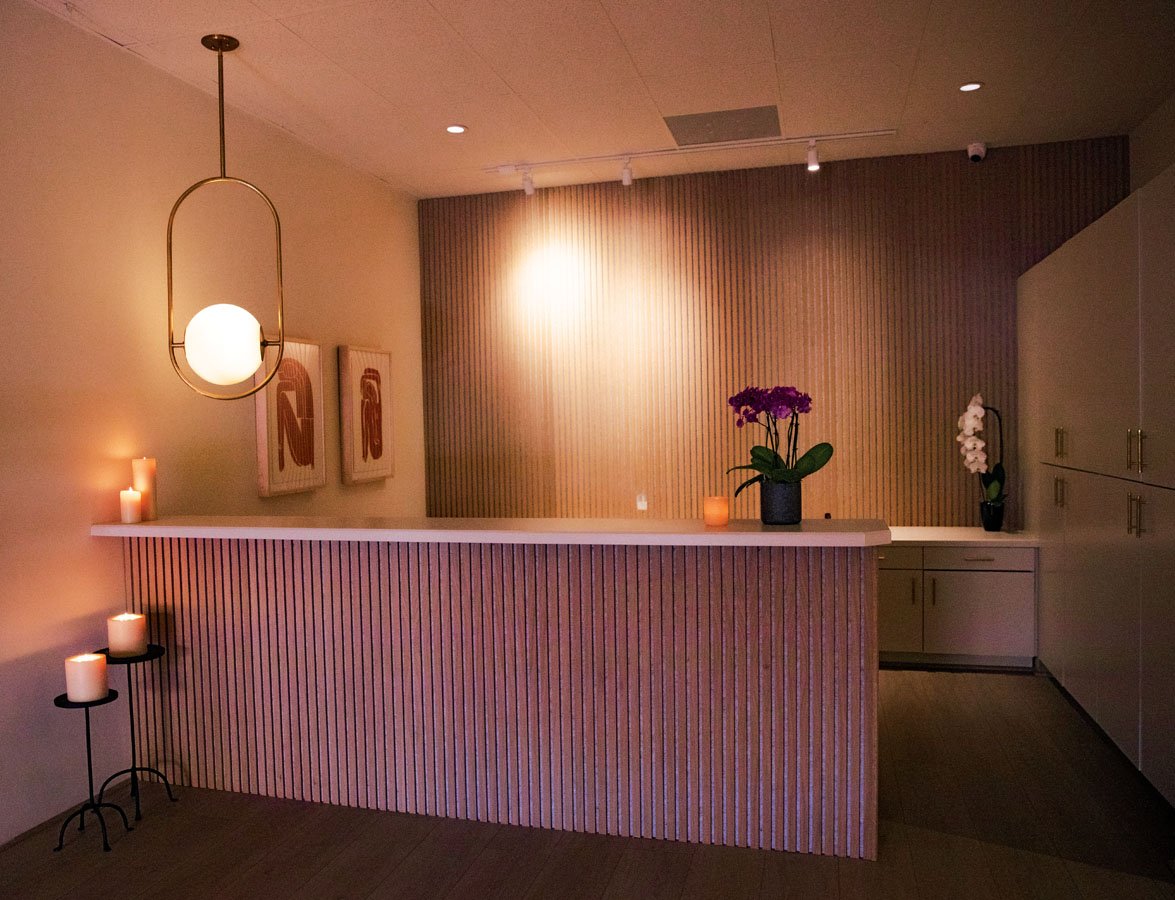
Clients begin with consultations in functional or Chinese medicine; textured wood and rose walls make for a welcome reception.
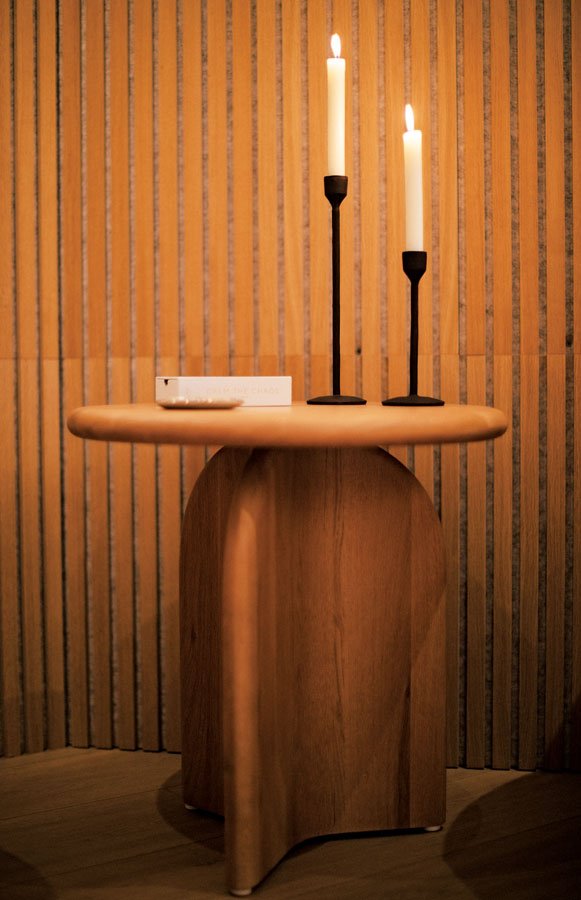
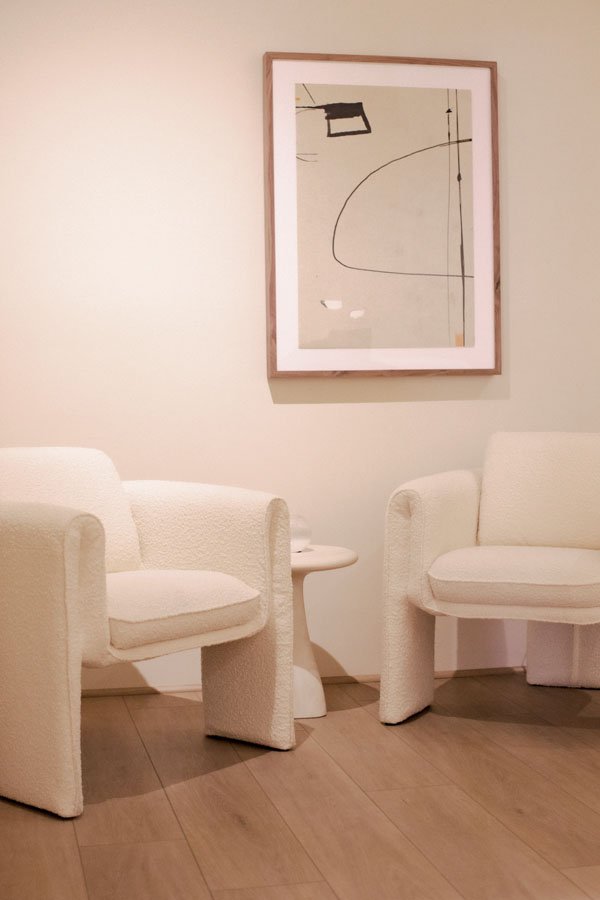
Plush seats to pamper guests; candlelight, breathwork, and sacred circles are also part of the treatment plans.
“We’re trying to get to the mystery that no one has been able to solve,” Hermann says, adding that most often patients’ issues involve pain, digestion, sleep, menopause, or hormones, as 90 percent of her clientele is female.
“Every time I’m at lunch, dinner, or drinks, the conversation turns back to hormones,” she says. It’s one of the shifts and transitions she’s eager to provide support for to an audience that is eager for additional therapies. “We’re in a new chapter now, and we’re more empowered.”
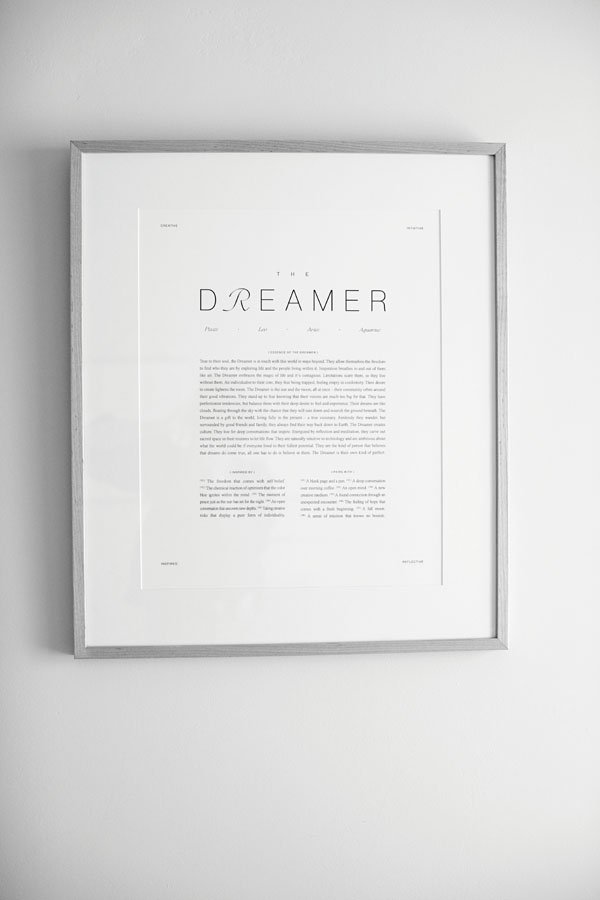
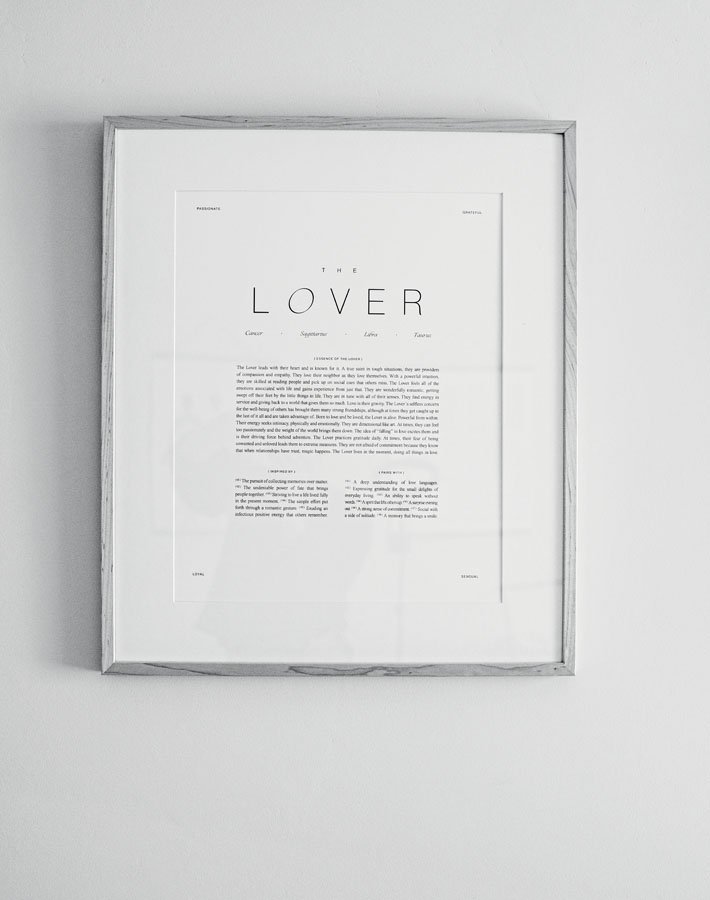
Poetry adds a touch of soul to the integrated experience.
As she continues to roll out offerings, Hermann will seek more information and answers on cutting-edge practices. “I love what I do, and I’ll probably always be in some kind of training,” she says. The key is to offer a space to help everyone take better care of themselves, wherever they are in their healing journey. “If we can reduce anxiety and reset our nervous systems, our bodies will heal.” 1483 East Valley Rd., Studio 19, Montecito, 805-455-1264, montecitowellnessclinic.com
See the story in our digital edition

The Craft of Hospitality
Hearth Homes ushers in the next chapter of the historic inn downtown
Hearth Homes ushers in the next chapter of the historic inn downtown

Designers Katie Labourdette-Martinez (left) and Olivia Wahler (right) attend to every detail.
Written by Jessica Ritz | Photographs by Blake Bronstad
Honoring the past and positioned for the future, THE CRAFT HOUSE INN is “a modernized B&B that has its own story to tell,” says interior designer Olivia Wahler. She and Katie Labourdette-Martinez, her Hearth Homes Interiors cofounder (and sister-in-law), have breathed new life into the Arts and Crafts–style property, which formerly operated as the Glenborough Inn and White Jasmine Inn.
“Everything we do is with an eye toward restoring and reviving the original elements”
“We want families to come stay and create core memories,” Labourdette-Martinez adds. And with four bedrooms and four and a half baths, it’s an ideal one-stop-shop celebration buyout. Plus there’s a separate Lotus Suite that sleeps two.
The emphasis on kin is no surprise, given that the entire enterprise is a family affair. Lucas Martinez, president of Hearth Homes, which also includes hospitality arm Hearth Home Stays, is
Labourdette-Martinez’s husband and Wahler’s brother. Chef Julian Martinez of Barbareño, who oversees the property’s culinary offerings, is a third sibling and rounds out this powerhouse team.

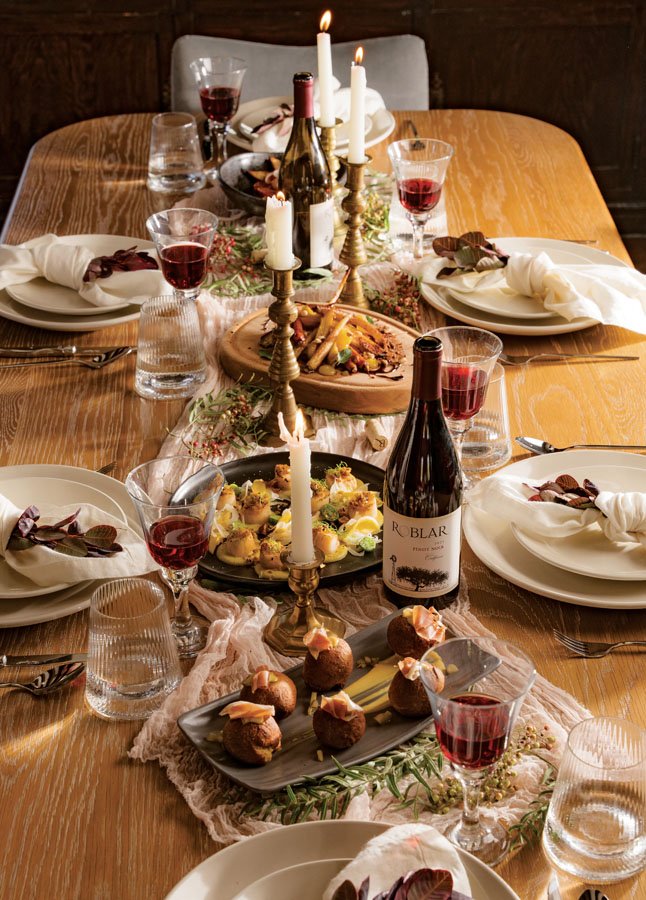


The house dates from the early 20th century, so “we tried to update everything without taking away any of the character,” Labourdette-Martinez explains. “We mixed a little here and there to give it more of a modern feel,” Wahler notes. Bold wallpaper from House of Hackney emblazons the dining room where the rich original woodwork has been restored. Dressers were repurposed into vanities, but the kitchen and bathrooms are outfitted with contemporary comforts.
The venue is now part of the Hearth Homes Stays portfolio. “Everything we do is with an eye toward restoring and reviving the original elements,” says Lucas Martinez, who adds that they’re privileged to be the stewards of a beautiful historic property. “We don’t take that responsibility lightly.” 1327 Bath Street, Santa Barbara, thecrafthouseinn.com
See the story in our digital edition
In Love with Landscape
ATKINSON GALLERY, at Santa Barbara’s City College, is one of the best places locally to see contemporary art, thanks to the insightful exhibitions by its talented director, John Connelly.

Soumya Netrabile, 2 P.M. in the Park.
Written by Lorie Dewhirst Porter | Photography by Tony Mastres
“The artists approach landscape in various ways using a variety of different media, but all have a deep respect for the art history of landscape depiction.”
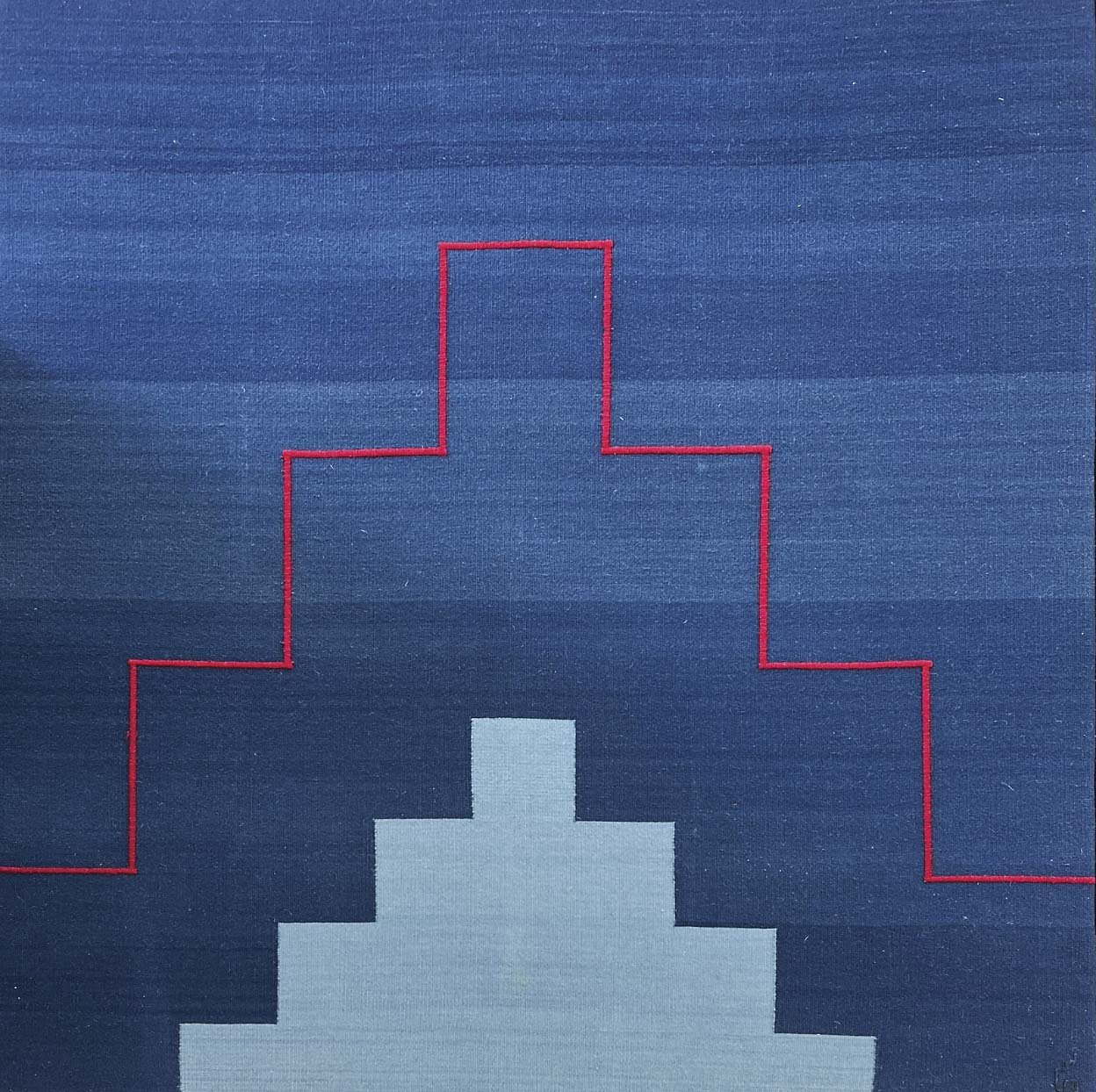
ATKINSON GALLERY, at Santa Barbara’s City College, is one of the best places locally to see contemporary art, thanks to the insightful exhibitions by its talented director, John Connelly. New Landscapes Part I, which is on view through December 8, is the first of a two-part exhibition exploring the nature of landscape, with a focus on land, sky, and sea. Part I features work by Whitney Bedford, Diedrick Brackens, Manuel López, Cruz Ortiz, Jonathan Ryan, and Jonas Wood. Beginning January 22, New Landscapes Part II will include pieces by Ann Craven, Maureen Gallace, Porfirio Gutiérrez, Jordan Nassar, Soumya Netrabile, Robyn O'Neil, David Benjamin Sherry, and Gabriela Ruiz. According to Connelly, the artists approach landscape in various ways using a variety of different media, “but all have a deep respect for and offer a response to the art history of landscape depiction.” Humanities Bldg., H-202, SBCC, 721 Cliff Dr., Santa Barbara, gallery.spcc.edu.
See the story in our digital edition

Perfect Imperfection
Ojai native MARK CHURCHILL has been making pottery for more than 30 years.

Ceramicist Mark Churchill in his studio.
Written by Lorie Dewhirst Porter | Photography by Marian Schulze
Ojai native MARK CHURCHILL has been making pottery for more than 30 years. For much of that time, he worked as an apprentice to local master Frank Massarella; Churchill’s apprentice is Kiran Sahgal. Collectively they belong to Ojai’s ceramics lineage, which famously stretches back to renowned clay masters Vivika and Otto Heino and, of course, Beatrice “Beato” Wood.
Churchill’s own style is evident in his creations, which fuse his unique talents with Japanese and Korean aesthetics and techniques. Over the past decade he has been perfecting his version of the moon jar, a large, round porcelain vessel whose origins date to Korea’s Joseon Dynasty (1392–1897). Revered historically as the embodiment of Confucian ideals, moon jars remain highly prized and collected worldwide. An 18th-century example recently fetched $4.5 million at Christie’s in New York.


“The thing about the moon jar is it’s completely perfectly imperfect,” Churchill says. “It has very formal elements; the opening at the top has to be wider than the outside diameter of the base.” It may sound simple, but moon jars are constructed by joining two large bowls together, which is no easy task. Porcelain clay is extremely tricky to work with, and disasters—like cracks—can occur at any stage in the process (drying, firing, cooling). “When I started making them, if I got one out of 10 not to crack, I’d be really lucky,” he admits, adding, “they’re supposed to be difficult. To me, the point of them is that they take everything you’ve got.”
There’s more to them, though, than their rigorous technical aspects. As a master potter once told Churchill, “When you hold your own moon jar it should feel like your mother’s embrace.”
See the story in our digital edition
Cruz in Control
During its 82-year existence, 11 directors have led the SANTA BARBARA MUSEUM OF ART (SBMA).
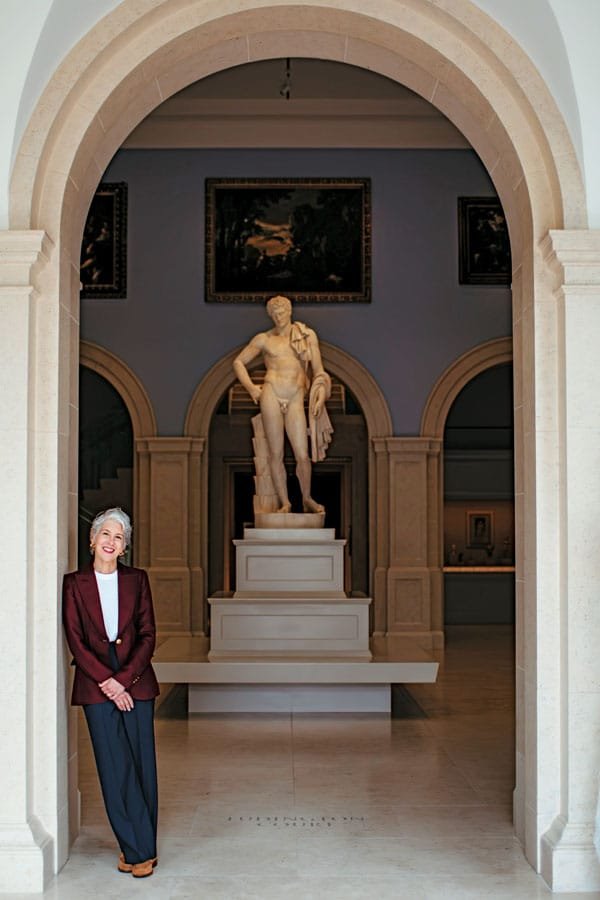
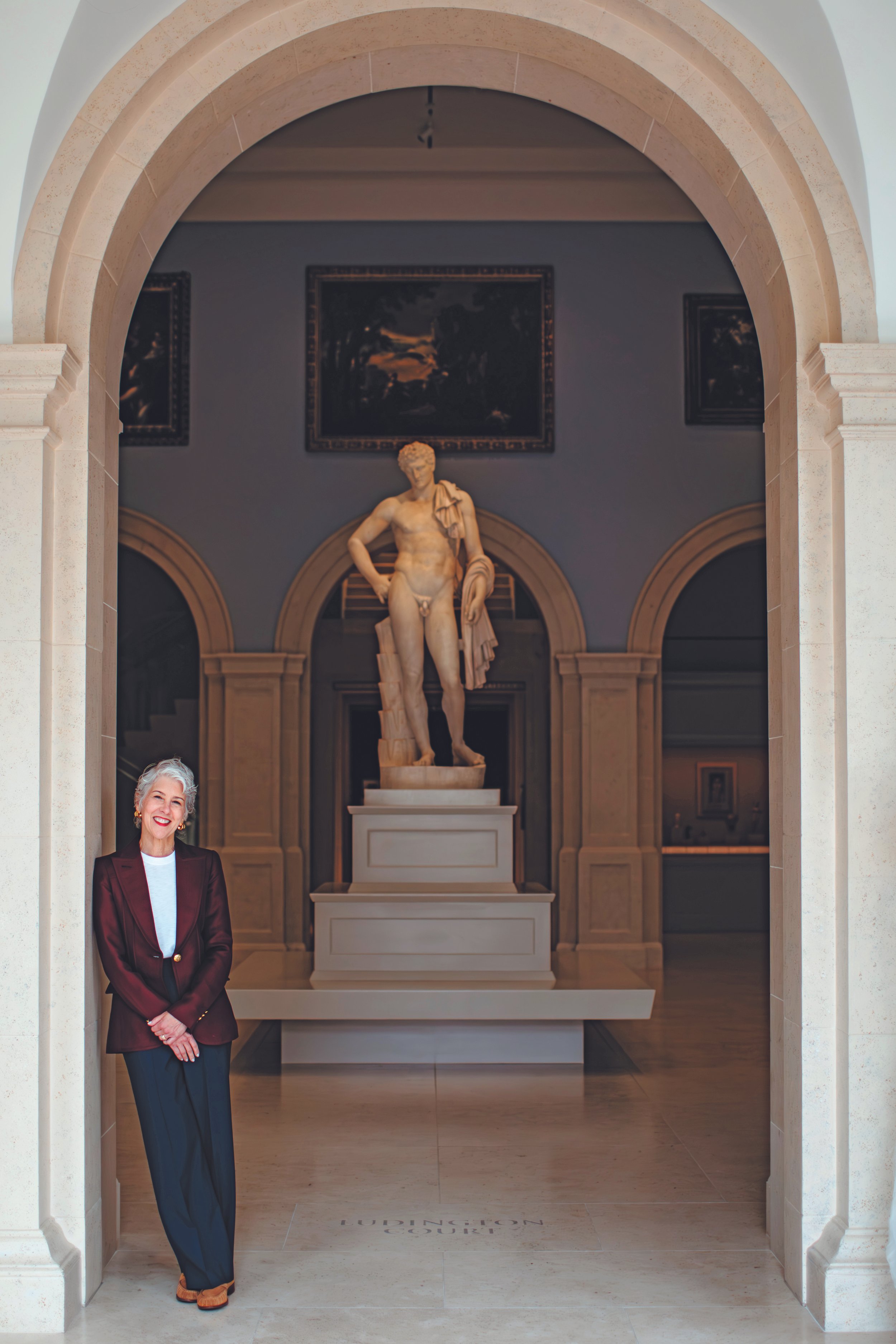
Amada Cruz, the Eichholz Foundation Director of the Santa Barbara Museum of Art.
Written by Lorie Dewhirst Porter | Photography by Sara Prince
During its 82-year existence, 11 directors have led the SANTA BARBARA MUSEUM OF ART (SBMA). Only one of these individuals was female: Ala Story, whose tenure ended in 1957. Now, nearly seven decades later, Amada Cruz has been selected as SBMA’s Eichholz Foundation Director.
This is not to say the museum has ignored women. Mercedes Eichholz and Leslie Ridley-Tree, two formidable Santa Barbara philanthropists, each chaired the organization’s board of directors. And the Women’s Board, the museum’s wildly successful fund-raising group, has significantly shaped SBMA since 1951. But Cruz’s appointment signals a different era, as a new generation of women steps into high-profile leadership roles at several key Santa Barbara cultural institutions.
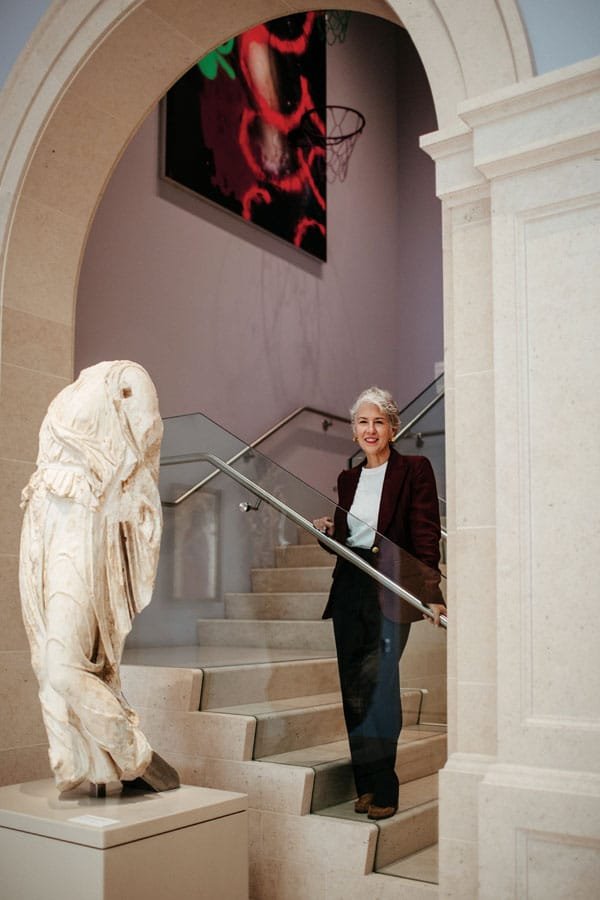

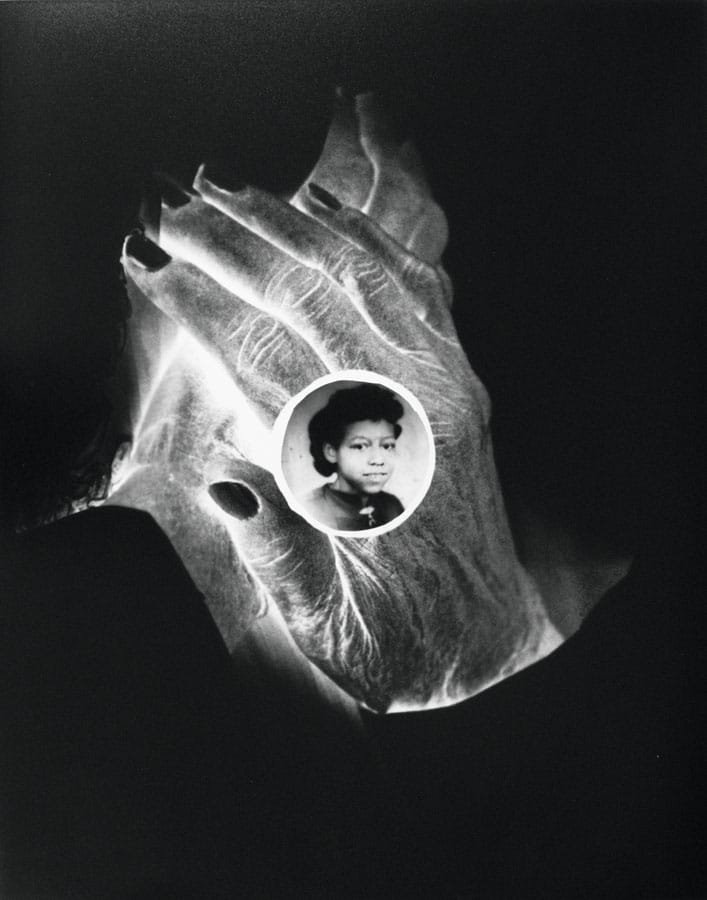
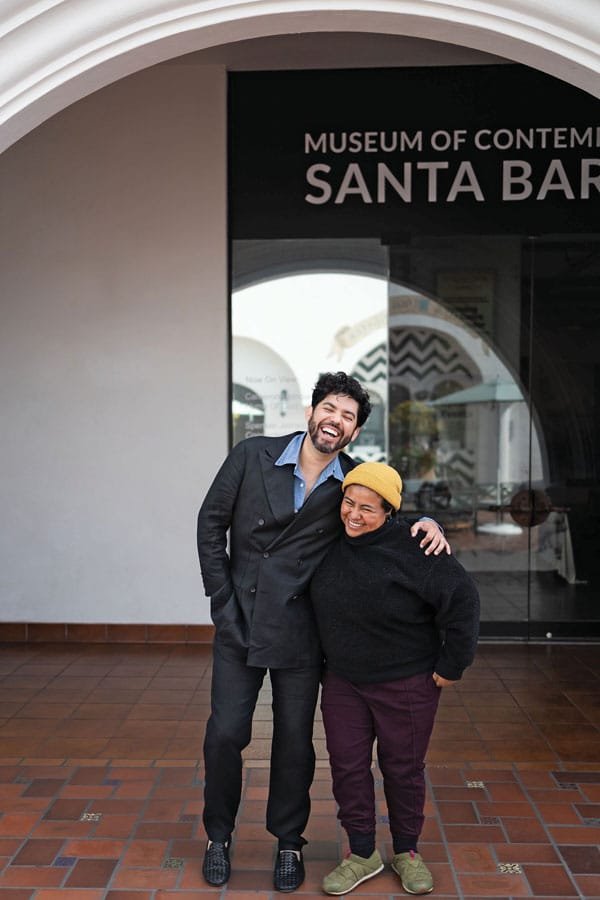
Cruz was nine months old when her family emigrated to the United States from her birthplace, Havana, Cuba. After graduating from New York University with a fine arts/political science degree, Cruz began her art-world ascent as a curator, with stints at the Smithsonian’s Hirshhorn Museum and Chicago’s Museum of Contemporary Art. Early on she was strongly encouraged to apply for directorship positions, and she has followed that path for much of her 30-year career. Cruz ran a renowned art residency program (Artpace in Texas), directed Bard College’s Center for Curatorial Studies Museum in New York, and was director of the Phoenix Art Museum. Most recently, Cruz served as executive director of the Seattle Art Museum.
Compared with the Seattle institution, which has three large venues hosting nearly a million visitors per year, SBMA is intimate, attracting 150,000 annual guests. But the size disparity is what attracted Cruz to Santa Barbara. “I can actually get my arms around this place,” she says. “At this point in my career, I want something a little more manageable. I also want to think about communities and making connections, more than taking care of facilities. I’d like to focus more on mission.”
For Cruz, SBMA’s mission statement is critical. “It is the North Star for everything the museum does,” she says. “I am very attracted to the mission statement, which is very simple in many ways but very important to think about: ‘integrating art into the lives of people.’ That means the museum is not an ivory tower; that means that everyone here believes that art can have an effect on people’s lives.”
Given the reality that museums must compete to stay relevant in a world of virtual entertainment, Cruz knows this mission is no small task. But she has considered what an ideal museum could be. “A place that really provides meaning for people. A place that has connections to a lot of communities, so people come and they feel like it’s their museum,” Cruz says, adding, “I think that really the only future for museums to survive is for people to actually feel they have ownership. People want to see themselves in museums. That is very important to keep in mind.” 1130 State St., Santa Barbara, 805-963-4364, SBMA.net.
See the story in our digital edition
London Calling
Claridge’s and The Lanesborough reign supreme

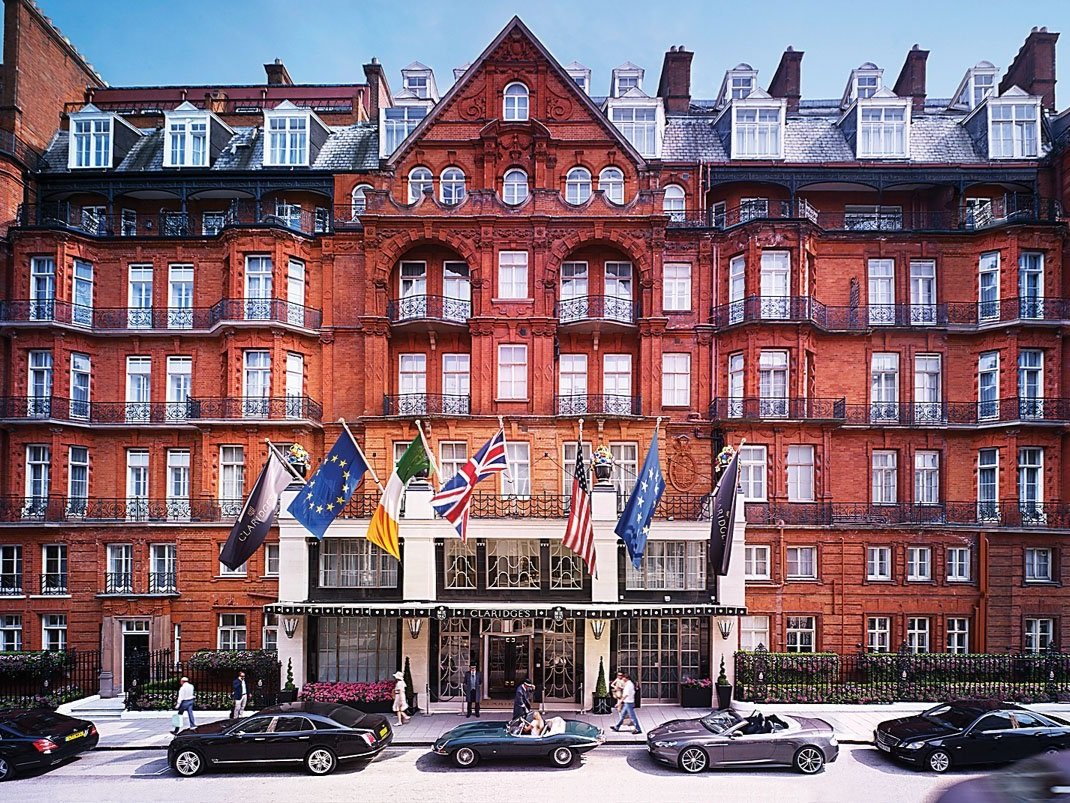
The historic Roman stone facade of Claridge’s hotel in London.
More than 150 years later, Claridge’s still reigns supreme
Written by Caitlin White | Photography by Justin Desouza, Claridge's, David Cotsworth
Tucked between Hyde Park and Buckingham Palace, Mayfair has long cultivated a reputation as one of London’s poshest neighborhoods—and iconic CLARIDGE’S hotel sits right in the heart of it. Opened in 1856, Claridge’s has been serving up luxury for a century and a half and is particularly known for its traditional afternoon tea, recently named by Vogue as one of the city’s best. Heralded for its signature pastel-striped china, smoked-salmon sandwiches, and scones with clotted cream and jam, Claridge’s Foyer & Reading Room is the place to go if you’re feeling peckish in the afternoon, perhaps after a day spent wandering nearby cobblestone streets.

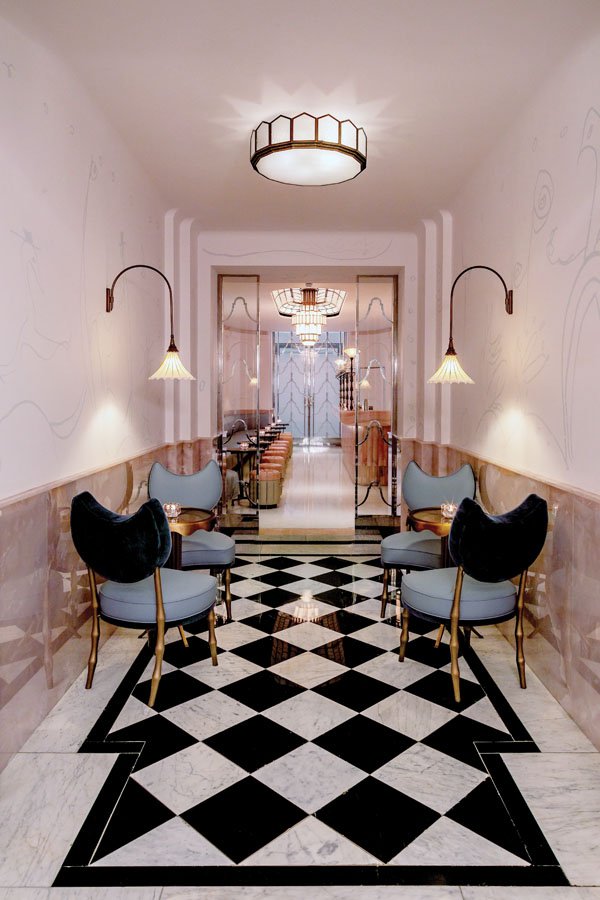
The property’s new bar, dubbed The Painter’s Room, was designed by Bryan O’Sullivan.
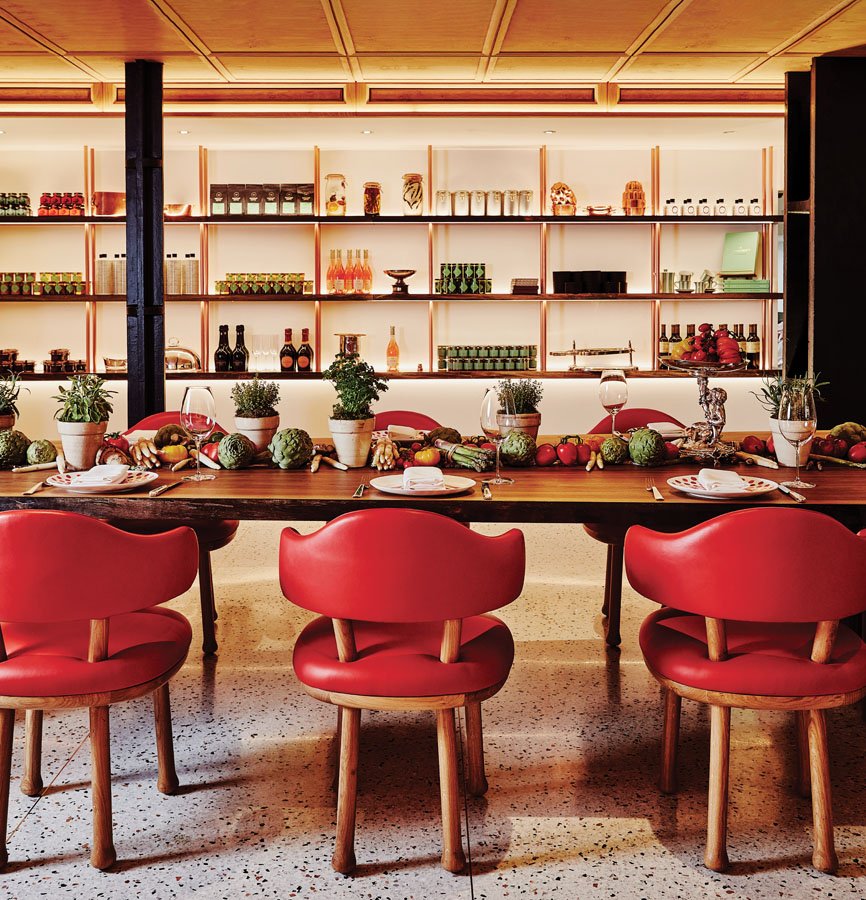
This historic hostelry is also the place to stay if you’re looking for contemporary luxury and a bit of glamour, because the property is ushering in a series of updates that grounds it firmly in the 21st century. Recently opened is the Art Deco-inspired cocktail bar called The Painter’s Room, which serves all manner of elegant libations. Other on-site experiences include L’Epicerie, a chef’s table for private parties and special bookings, and Claridge’s ArtSpace, a subterranean, museum-quality gallery.
As part of the Maybourne Hotel Group, which includes luxe properties on the French Riviera and in Beverly Hills, Claridge’s rooms and suites preserve classic architecture and style without sacrificing modern amenities. Expect grand pianos, chandeliers, hand-painted walls, and antique furniture, along with personal butler service, up-to-date technology, and a sense of effortless chic. Rooms from $895/night. claridges.co.uk
Regency Style, Contemporary Comfort

White-gloved doormen await guests at The Lanesborough hotel in London.
The Lanesborough occupies a sought-after corner of London, but it’s the interiors that are notable, transforming this opulent Regency-style property into a modern palace. The firm of celebrated Parisian photographer and interior designer Alberto Pinto is responsible for the hotel’s two-year renovation, which painstakingly restored the original 1820s architecture with extravagant details like 23¼-carat gold-leaf gilding on the ceilings, custom embroidery, and other artistry, thanks to specialists who matched their crafts to the Regency period.
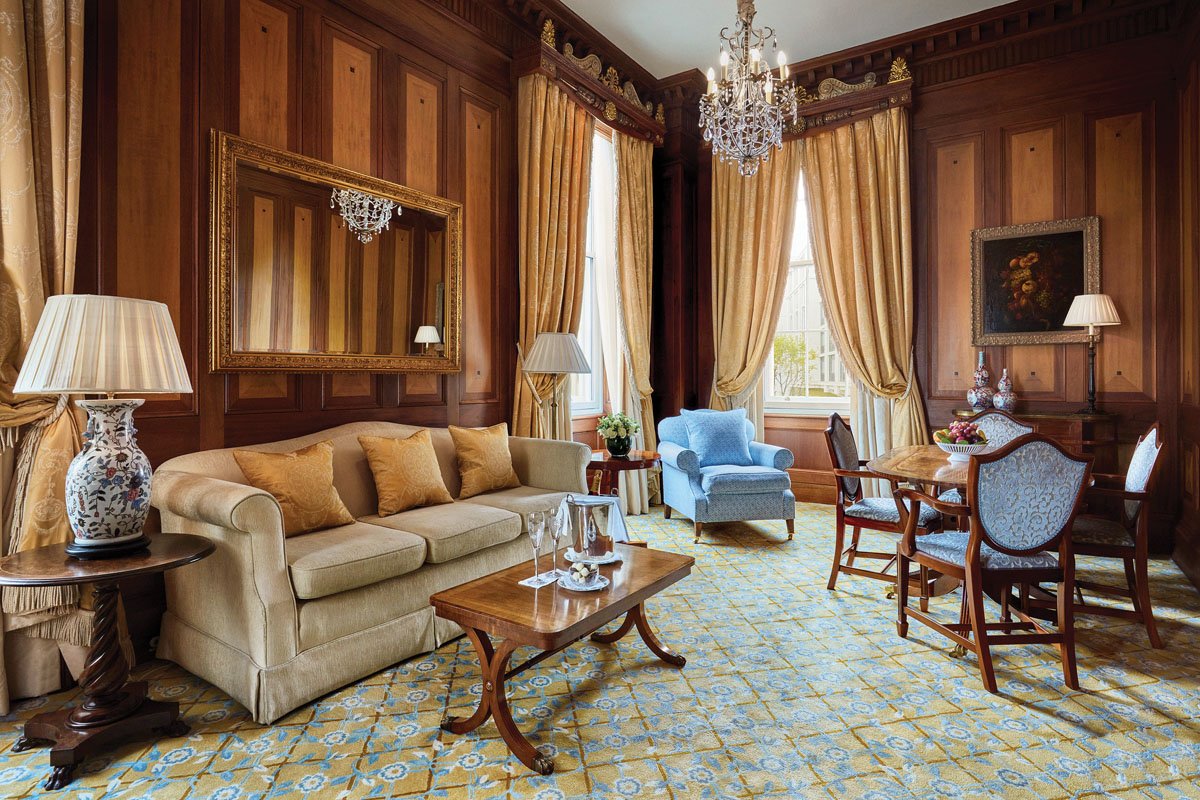
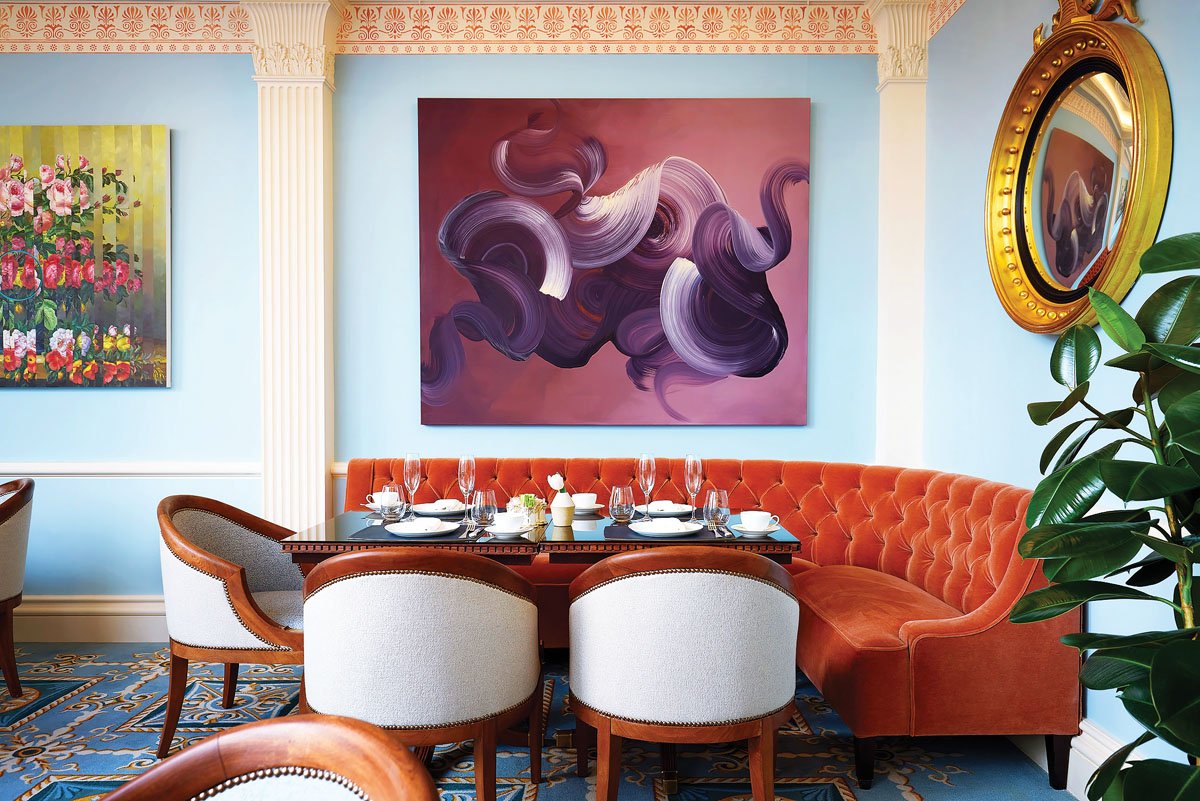
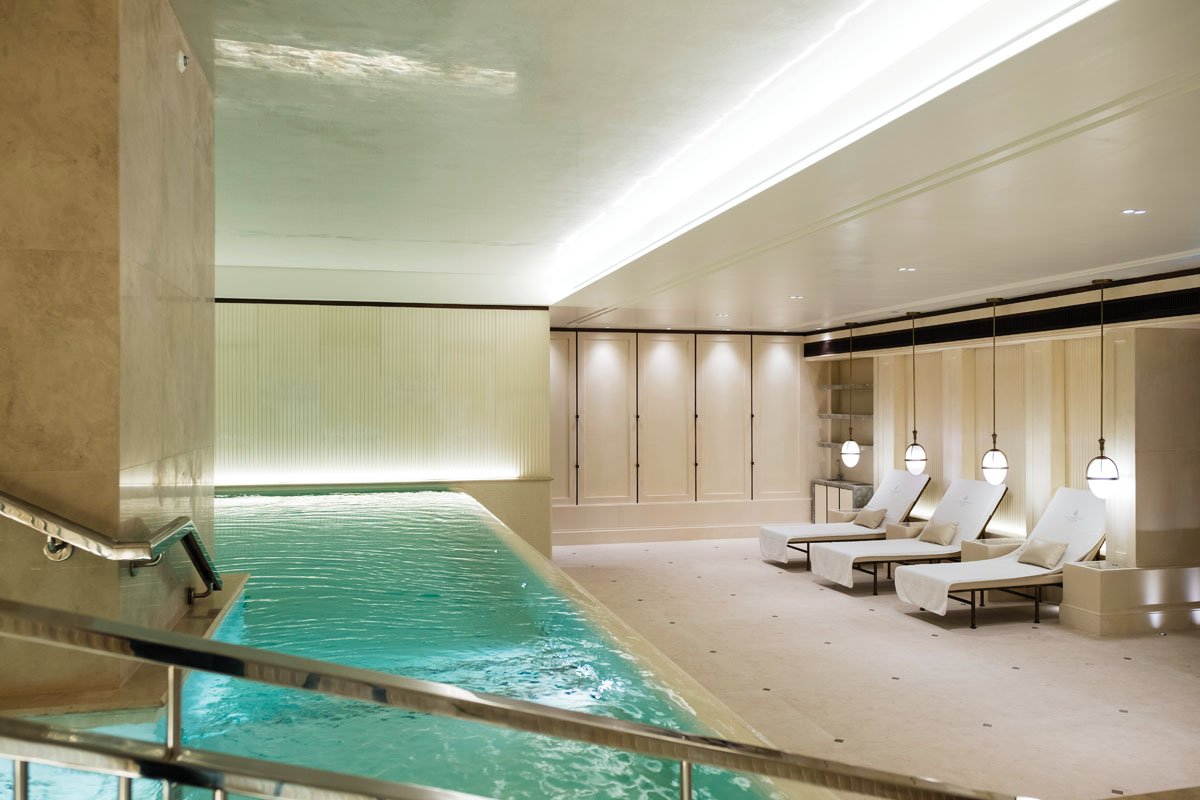
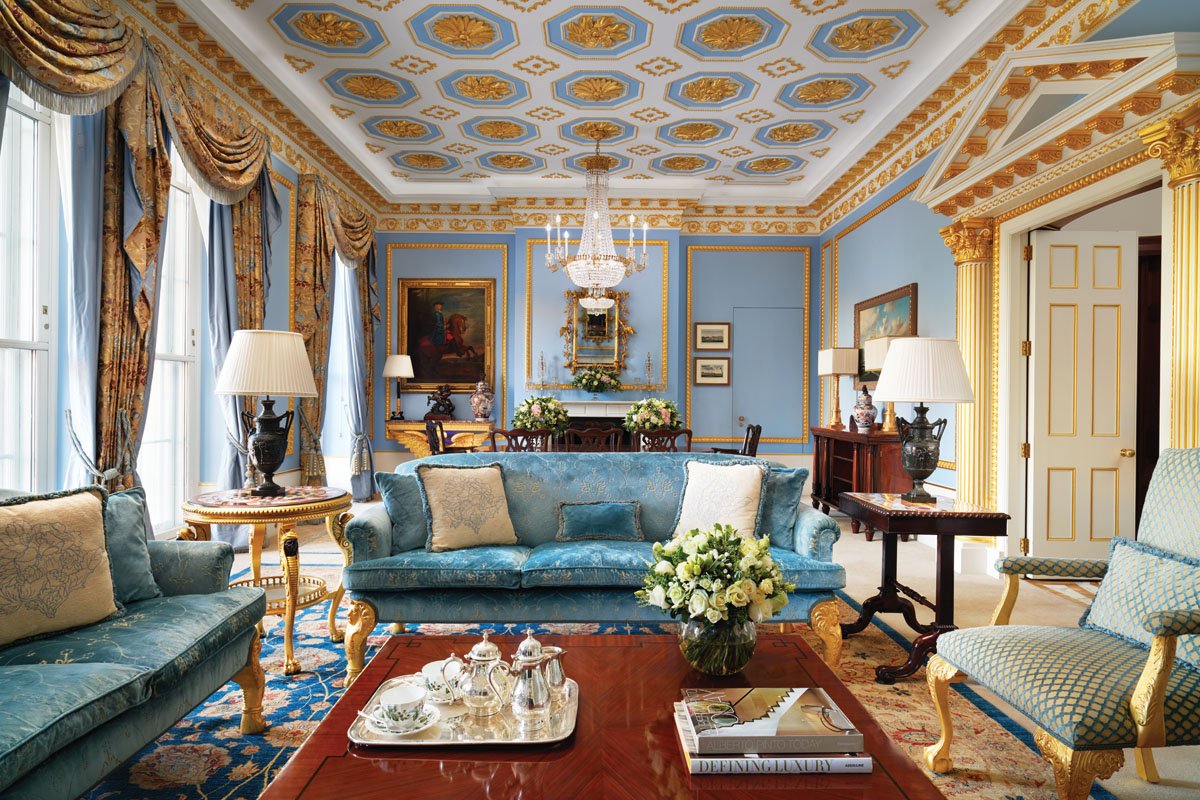
Throughout its 93 rooms—including several multiroom suites—The Lanesborough is a testament to London’s past brought into the 21st century with a joie de vivre that embraces the future. And let’s not forget the lavish amenities, such as 24-hour personal butler service, a fleet of chauffeured cars, and complementary clothes pressing. The 18,000-square-foot spa and club, installed in 2017, has become a destination unto itself, although a table at the newly launched Lanesborough Grill or afternoon tea in the dining room are equally alluring. Rooms from $1,006. Hyde Park Corner, London, oetkercollection.com/hotels/the-lanesborough
See the story in our digital edition

And…Action!
Boasting major star power for its 38th annual iteration, the 2023 Santa Barbara International Film Festival will honor The Witcher: Blood Origin’s Michelle Yeoh with The Kirk Douglas Award at the black-tie fundraiser on December 9 at The Ritz-Carlton Bacara—the award’s first bestowal since Douglas’s passing.

Boasting major star power for its 38th annual iteration, the 2023 Santa Barbara International Film Festival will honor The Witcher: Blood Origin’s Michelle Yeoh with The Kirk Douglas Award at the black-tie fundraiser on December 9 at The Ritz-Carlton Bacara—the award’s first bestowal since Douglas’s passing. Also being honored by the SBIFF are Cate Blanchett (the Outstanding Performer of the Year Award on February 10); Jamie Lee Curtis (the Maltin Modern Master Award on February 11); and Brendan Fraser (the American Riviera Award on February 14), among other talents. The 11-day festival will take place February 8 – 18. To purchase tickets, donate, or learn more, visit sbiff.org.





See the story in our digital edition

Viva la Modernism
Upon entering the lobby of the VICEROY LOS CABOS, the view is so striking that some visitors may question if they’re still in Cabo.
The serene courtyard at Viceroy Los Cabos.
An architectural marvel in Baja California Sur
Written by Caitlin White | Photographs by Christian Horan Photography
Upon entering the lobby of the VICEROY LOS CABOS, the view is so striking that some visitors may question if they’re still in Cabo. They are—that is, not in Cabo San Lucas, land of all-inclusive resorts and year-round spring breakers, but in San José del Cabo, a quieter, refined historic enclave slightly north of San Lucas.
Initially constructed as a boutique hotel in 2016 by celebrated Mexican architect Miguel Angel Aragonés, the former Mar Adentro was later acquired by Viceroy and renovated by Mexican design firm Arquitectura de Interiores. Reopened in 2018, Aragonés’ stunning balance of light and water stayed intact, with shallow pools scattered among the stark modernist towers. To offset the angular buildings, woven nestlike orbs set apart two restaurants, Nido, where ceviche and robatayaki reign supreme, and Nidito, the oceanfront bar that borders two of five pools on the property.

A suite with ocean views and an open-air soaking tub.
Those two restaurants are only the beginning of the culinary experiences available at the hotel: The Cielomar rooftop grill utilizes brick-oven and wood-fired cooking to showcase the exemplary seafood of the region. And the newest dining experience here is Dalia, an outdoor garden where colorful cocktails garnished with fresh flowers and flavorful Mediterranean cuisine are available in equal measure.

The property’s Nidito bar.
To relax after the incredible meals, guests can retreat to their expansive suites, where extravagant amenities like double showerheads and standalone tubs give way to ocean-view balconies. By and large, the Viceroy Los Cabos redefines Mexican luxury on both an architectural and a culinary level. From $550/night. viceroyhotelsandresorts.com/los-cabos
See the story in our digital edition

Reality Bites Back
Ten years ago filmmaker ELIJAH ALLAN-BLITZ produced a video for his positivity-laced song “Hey Yo,” laced with local color shot around the native Santa Barbaran’s Mesa Lane house and with Arnoldi’s Café passing for an all-American diner.

Elijah Allan-Blitz has worked as an actor and musician but is presently living out his dream working behind the camera and in the digital realm.
Written by Josef Woodard
Ten years ago filmmaker ELIJAH ALLAN-BLITZ produced a video for his positivity-laced song “Hey Yo,” laced with local color shot around the native Santa Barbaran’s Mesa Lane house and with Arnoldi’s Café passing for an all-American diner.
The filmmaker collaborated with partner Brie Larson on Remembering.
Cut to this fall, and the now Los Angeles-based Allan-Blitz, strongly established as a pioneer in the field of augmented reality (AR), has created the sweet, bedazzling short Remembering for Disney+. Though only eight minutes long, Remembering—created with the filmmaker’s artistic and romantic partner Brie Larson—feels akin to a trailblazing micro-epic. In this tale of a writer (Larson) discovering the power of childlike wonder and imagination, the unique technical marvel is a passage in which AR technology puts us in the picture, and the fantasyland picture inside our living rooms, via a downloadable app for iPhone and iPad to complete the dimensional illusion. Developed during lockdown, the ambitious project found an ally in Disney, which Allan-Blitz reports “supports creatives and was helping me out, spitballing ideas in terms of new ways to utilize technology, to advance storytelling.”
See the story in our digital edition
Lowe and Behold
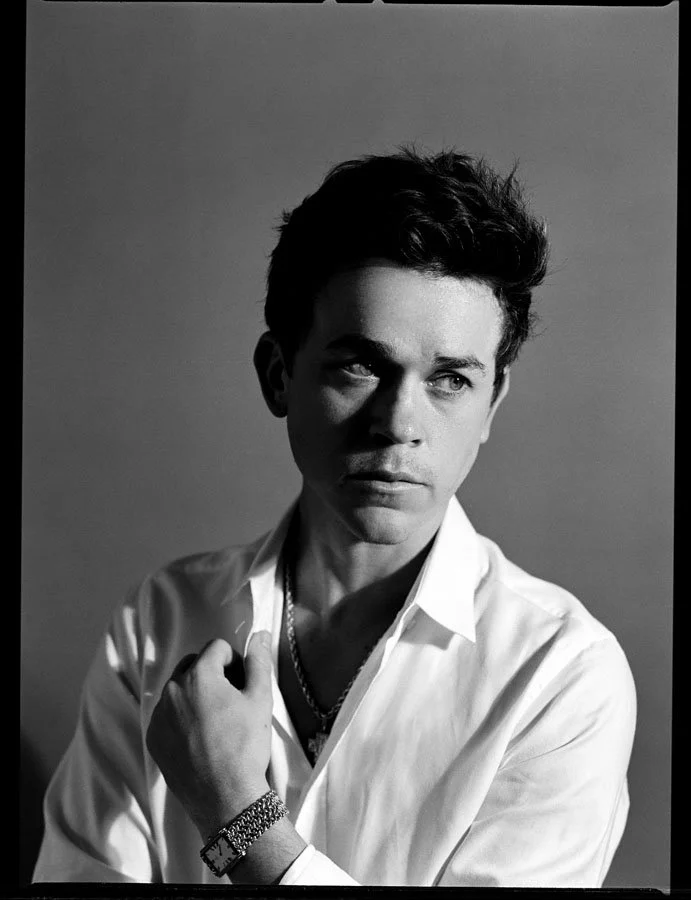
Born into the entertainment world, where apples don’t fall far from trees, JOHN OWEN LOWE grew up in Montecito, the son of Rob Lowe, and is pursuing the family business.
John Owen Lowe
Written by Josef Woodard | Photographs by John Owen Lowe; portrait, Max Thompson
Born into the entertainment world, where apples don’t fall far from trees, JOHN OWEN LOWE grew up in Montecito, the son of Rob Lowe, and is pursuing the family business. While a student at Stanford University, the younger Lowe (he’s now 27) multitasked with acting—in The Grinder and Holiday in the Wild—and has expanded his IMDb imprint to include story editor (on 9-1-1: Lone Star) and work both behind and in front of the camera for the upcoming Netflix series Unstable.

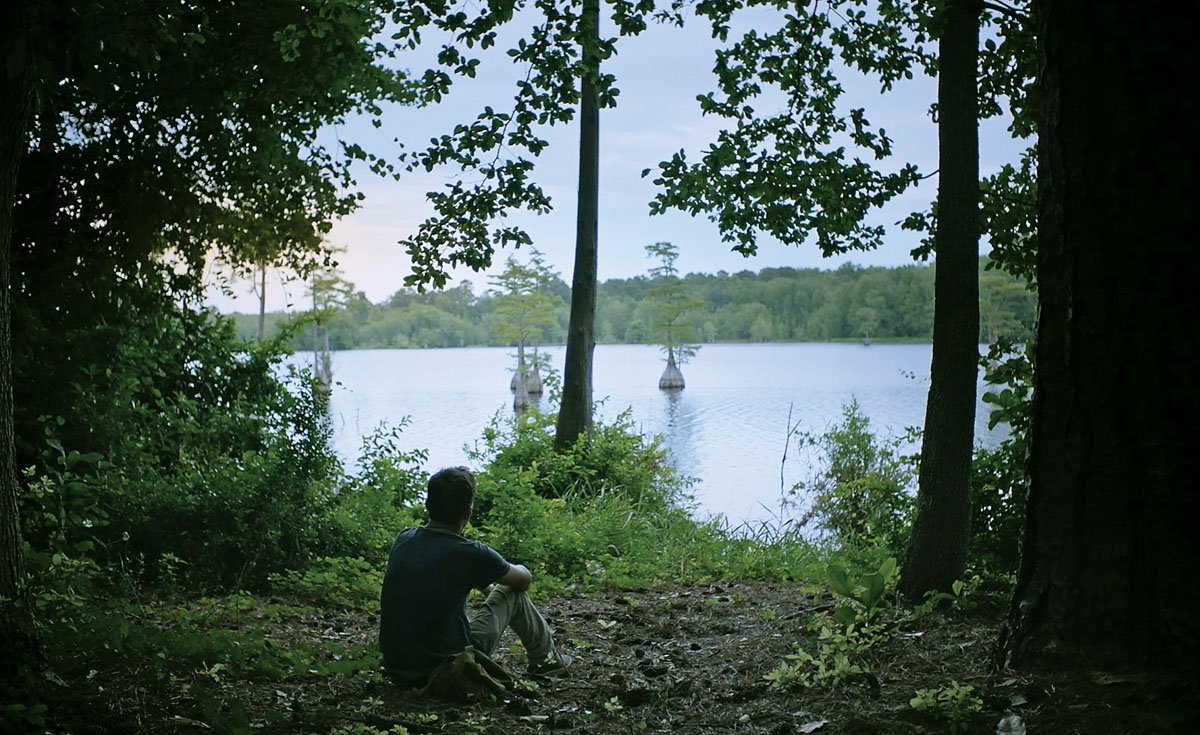
There’s also Grace Point, a new film about misadventures on the way to a remote rehab, in which Lowe is both the lead actor—his first such role—and a producer. “It touches on a deeply important aspect of my life: sobriety,” says Lowe of the upcoming film, which has been accepted into the Santa Barbara International Film Festival’s 2023 lineup. “We cowboyed this movie, production-wise. This was a shoestring-budget independent film, so everyone involved was doing it out of passion for the script and story. It ended up creating a unifying motivation for everyone to push themselves and really deliver.”
See the story in our digital edition

Giving Back
She was the belle of every charity ball. She had flame-red hair and a wonderful throaty laugh, an echo of her days as a torch singer.
The colorful philanthropist Lady Leslie Ridley-Tree
Written by Lorie Dewhirst Porter | Photograph: Courtesy of Santa Barbara Historical Museum
She was the belle of every charity ball. She had flame-red hair and a wonderful throaty laugh, an echo of her days as a torch singer. She was fond of real big jewels and wore them with aplomb. She never left the house without lipstick on. She adored music, men, and Bergdorf Goodman (not necessarily in that order). She had her dining-room walls painted fire-engine red. She was a wonderful cook (coronation chicken and summer pudding were specialties). She encouraged her husband, Paul, to part with a sizeable portion of his fortune to support charitable causes (and after he died, she gave away even more). She was always first in line to support organizations she believed in, and often got her name on the building as a result: The Santa Barbara Museum of Art’s Ridley-Tree Education Center; Westmont College’s Ridley-Tree Museum of Art; the Santa Barbara Zoo’s Ridley-Tree House Restaurant; Cottage Hospital’s Ridley-Tree Pavilion Medical ICU) and Sansum Clinic’s Ridley-Tree Cancer Center, among many, many others. She wasn’t afraid to roll up her sleeves and help out, often in the kitchen at the former Casa Esperanza Homeless Center (now PATH Santa Barbara). She took over and ran Paul’s aircraft-parts business in Chatsworth, commuting there three days a week and refusing to sell the company until a buyer agreed to hire all the employees. She bought a vineyard in her mid-90s and learned everything she could about raising grapes (and selling them). She always wrote thank-you notes. She will be missed by countless people she never met. She believed in making a difference, and she made Santa Barbara a better place for all of us. Thank you, Lady Leslie Ridley-Tree.
See the story in our digital edition

Frame of Mind
In the art world, being rejected is not always a bad thing: The artists denied entry into the Paris Salon in 1863 had their revenge when Impressionism became more popular than academic art.
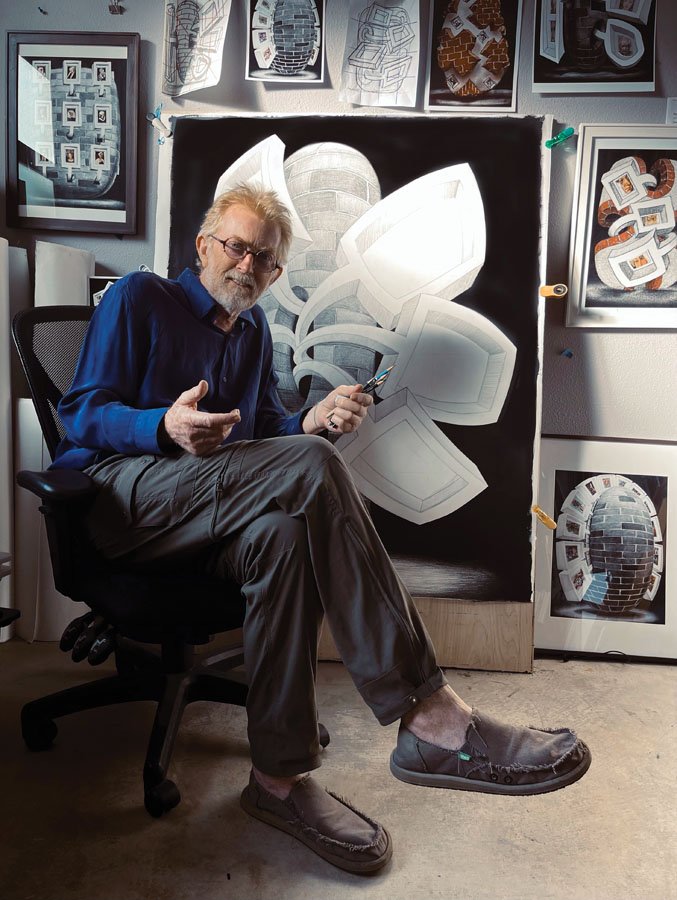
Colin Fraser Gray in his Ventura studio
Written by Lorie Dewhirst Porter | Photography by Sara Prince
In the art world, being rejected is not always a bad thing: The artists denied entry into the Paris Salon in 1863 had their revenge when Impressionism became more popular than academic art. Some years ago, when artist COLIN FRASER GRAY was not chosen for a local exhibition, he embarked on a series of fascinating artworks known as Museum for One, based on the concept of a personal museum and ways to exhibit artwork in “nonregular” buildings. The work highlights Gray’s interest in museum architecture, which nowadays pointedly competes with the art inside. The series displays works by other artists and features large prints of computer-enhanced pen-and-ink drawings, as well as three-dimensional sculptures featuring a built-in wineglass holder and a bottle of wine. (“For the opening,” the artist says mischievously.)
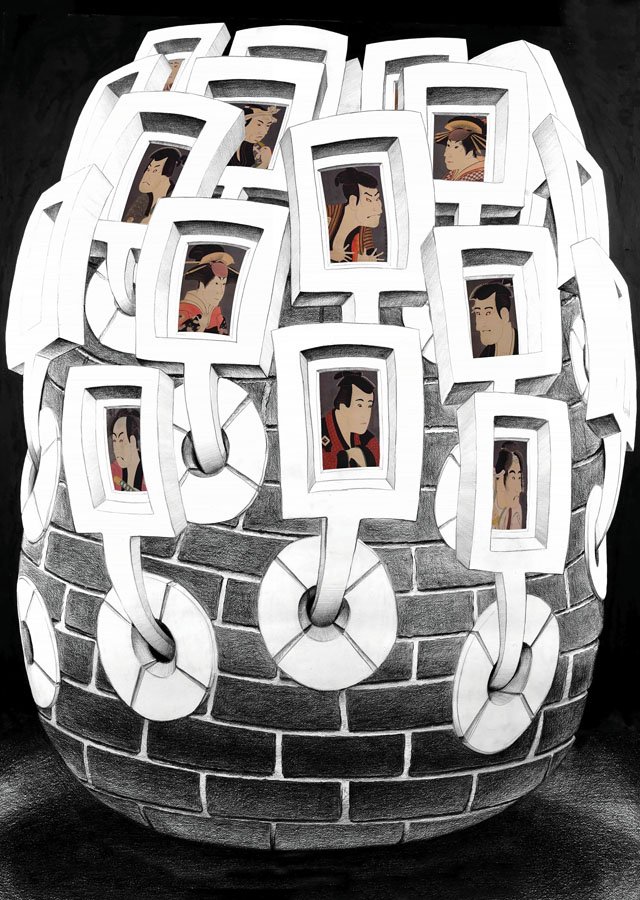


Originally from England, Gray emigrated to California 40 years ago to attend UCSB and never left, opting to teach art at the university’s College of Creative Studies, Santa Barbara City College, and elsewhere. His work, including several public art projects, is often whimsical, insightful, and political. It is always perfectly executed. Gray is also the gallery director at Vita Art Center, a nonprofit community art center in Ventura. colingraystudio.com
See the story in our digital edition

Off the Hook
Even as a busy mother of four, KELLEN MEYER always finds time to knit, as generations of women in her family have done.
Artist Kellen Meyer works on one of her large-scale fiber sculptures, ’Twas a Misty Meisty Morning, in her Carpinteria studio.
Written by Lorie Dewhirst Porter | Photography by Sara Prince
Even as a busy mother of four, KELLEN MEYER always finds time to knit, as generations of women in her family have done. But in the past few years she’s taken her talent with yarn to another level, into the heroic realm of installation art. Her enormous knitted and knotted wool piece, In Search of Wonder, resembles undulating ocean foam or a frothy stream. Not surprisingly, this stunning work was chosen—out of 10,000 entrants—by an international jury for the Arte Laguna Prize, a design competition in Venice, Italy, where it will be displayed in the city’s historic Arsenale in March and April 2023.


Meyer, an Arizona native who moved to Santa Barbara with her family nine years ago, is strongly influenced by the outdoors. So it makes sense that her Carpinteria studio sits just steps from a bird sanctuary, with the ocean not far beyond. Her one-of-a-kind pieces are made of natural materials—often a mix of wool, cotton, wood, paper, willow, or reed—and employ a combination of weaving techniques Meyer has mastered over the years. kellenmeyer.com
See the story in our digital edition

Beaucoup Blue
Ojai is pretty much ground zero for boho chic, so it’s no surprise that Christiane Celle, the French-born former fashion stylist-turned-retail-maven—she founded and sold the Calypso store chain—would find a toehold in town.
Blue Ojai, an eclectic boutique packed with coveted items from around the world.
Written by Lorie Dewhirst Porter
Ojai is pretty much ground zero for boho chic, so it’s no surprise that Christiane Celle, the French-born former fashion stylist-turned-retail-maven—she founded and sold the Calypso store chain—would find a toehold in town. Called BLUE OJAI, it’s part of Celle’s Clic-store empire, which started in St. Barth’s and spread to New York and California. (There’s a Clic in both the Montecito and Marin Country Marts). Originally conceived as a bookstore—Celle’s passion is photography, and she’s married to a photographer—Blue Ojai and the other Clic venues have evolved into concept spaces featuring carefully curated collections of books, art, home goods, and fashion. Blue Ojai is an airy, open shop tucked into a serene white-brick building on the town’s main drag and is packed with coveted items culled from around the world. Look for flowy dresses, menswear, and cool gifts you can’t find anywhere else. 209 W. Ojai Ave., Ojai, 805-633-9086, clic.com.
Must Have

Italian Invasion
A trio of restaurants in the State Street corridor is offering a more authentic take on Italian food.
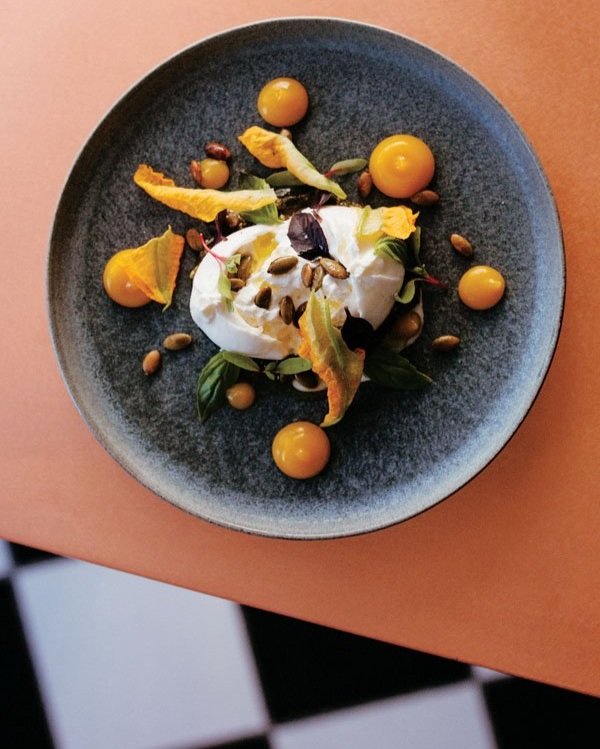
Burrata Pugliese—with butternut squash and sage pureé, walnut pesto, pumpkin seeds, and herbs—at Aperitivo.
A trio of restaurants in the State Street corridor is offering a more authentic take on Italian food
Written by Erik Torkells | Photography by Sara Prince
“I don’t try to get big names or high scores,” says Andrea Girardello of Aperitivo’s wine list. “It’s whatever I would drink.”
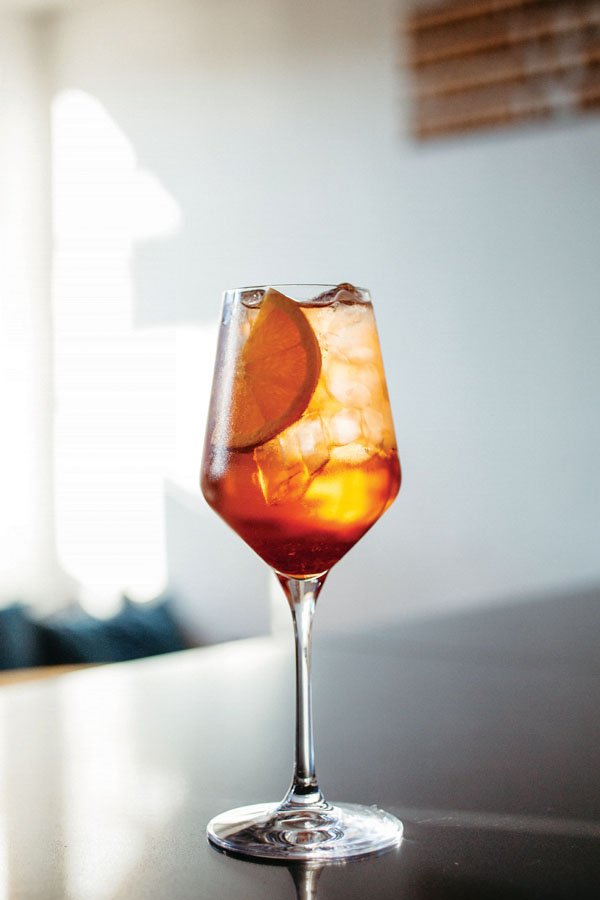
Our journey begins in the north—of Italy, that is—at APERITIVO, where chef Brian Dodero and Milan-bred Andrea Girardello have recreated their version of the aperitivo. It’s “a place catering to locals, especially in Milan, where people can just have a glass of wine and go home, if they like,” explains Girardello. Enthusiasm for Dodero’s inventive cooking, however, has shifted the emphasis from wine bar to restaurant. He imports as much as possible from Italy—including the standout burrata, marinated artichokes, and gelato. Drinks remain an important part of the equation, with an ever-changing lineup of spritzes made with vermouths rarely seen in these parts, and an all-Italian wine list. “I don’t try to get big names or high scores,” says Girardello. “It’s whatever I would drink.” And the take-home pasta-and-wine club, started during the pandemic, is still going strong; every week, a different region—including lesser-known ones like Alto Adige and Le Marche—gets a turn in the spotlight. 7 W. Haley St., Santa Barbara, 805-869-2937, aperitivosb.com.

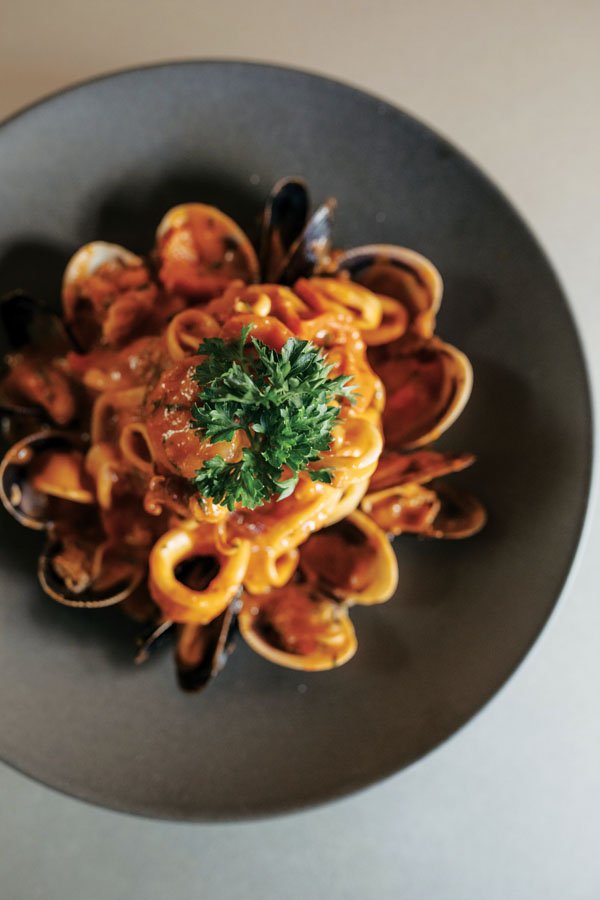

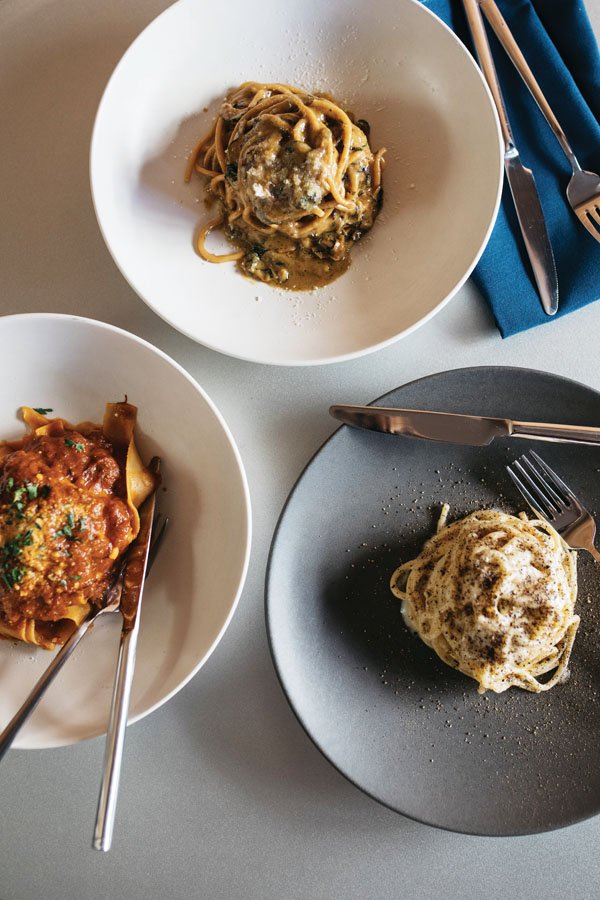
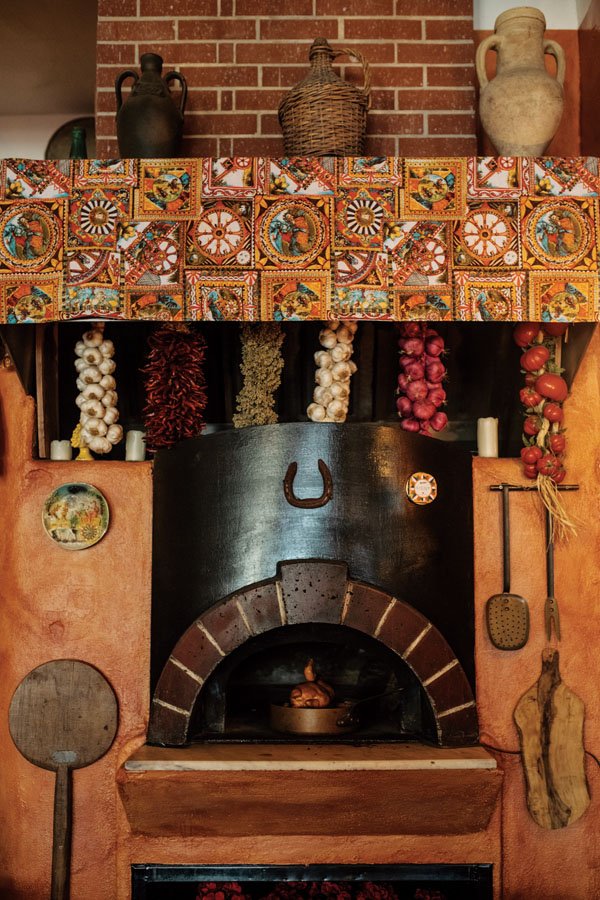
Founded in Naples in 1870, L’ANTICA PIZZERIA DA MICHELE has begun an aggressive stateside expansion, with an outpost in Los Angeles, two in the works in New York City and Long Beach, and a brand-new one in the former Embermill space on State Street. Unlike the Naples original, which features just two pizzas (margherita and marinara), these are full restaurants, with fresh pastas, entrées, and more. The star is still wood-fired pizza, of course, and the goal is to make it exactly as it is done across the Atlantic. “We import everything from Italy—flour, cheese, everything,” says head chef Michele Rubini. “Even our main pizzaiolo is from Naples!” As at Aperitivo, the wine list is entirely Italian. 1031 State St., Santa Barbara, 805-770-8055, damicheleusa.com.


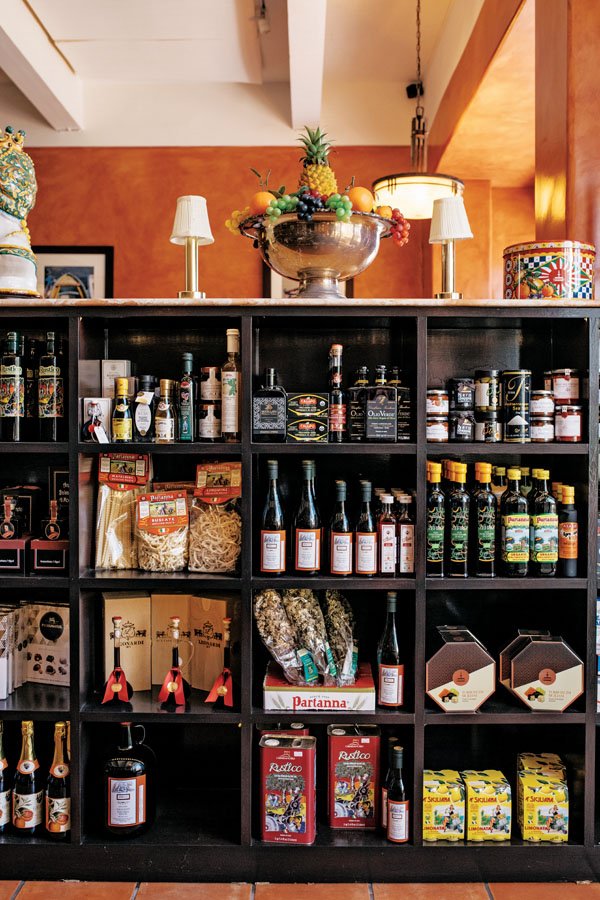
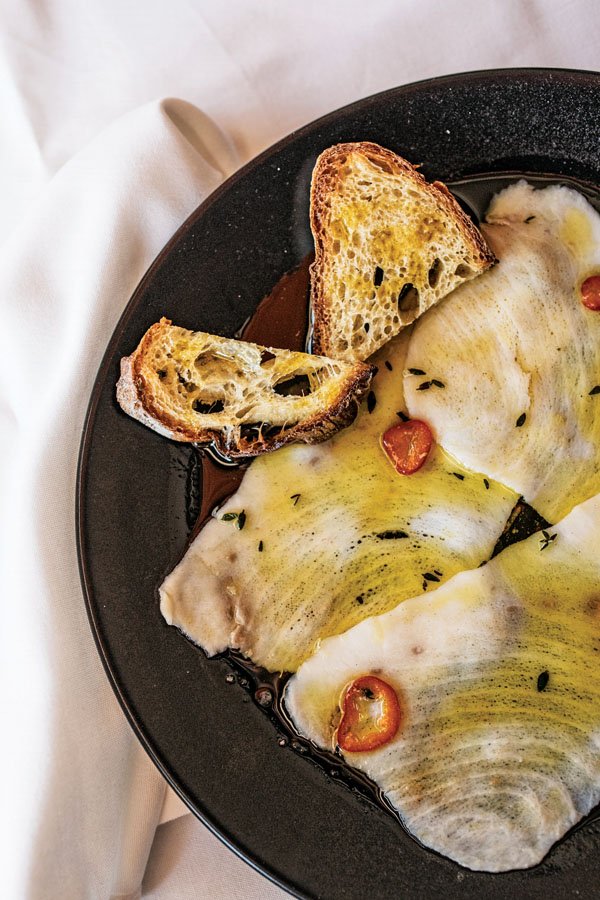
In the shadow of The Granada Theatre, Alberto and Elaine Morello of the Olio family of restaurants, are running the show at BEDDA MIA for an anonymous Roman owner. “Alberto was born and raised in Sicily,” says Elaine. “We got married there in 1993, and we try to go back every year. This was his chance to do a completely Sicilian menu.” That means lots of seafood and classic Sicilian ingredients, such as sliced smoked tuna with fennel, orange, and Castelvetrano olives; tagliolini with cuttlefish and squid ink; and an off-menu dish of pasta tossed inside a giant Pecorino rind. When at Bedda Mia, do as the Sicilians do and finish with a passito from Trapani or a malvasia from Messina. Saluti! 1218 State St., Santa Barbara, 805-770-8777, beddamiasantabarbara.com.
See the story in our digital edition













We Want the Funk
Our epicenter of counterculture turns 50

Our epicenter of counterculture turns 50
Written by Lorie Dewhirst Porter | Photography by Sara Prince
Long before it was dubbed The Funk Zone, Santa Barbara’s industrial area, with its mix of marine and manufacturing outposts, grain mills, tilt-up buildings, and Quonset huts, could easily be described as such. Starting in the 1970s, intrepid gallerist Ruth S. Shaffner saw the area’s creative potential and fearlessly established her eponymous contemporary art gallery there. (She also gifted more than 100 artworks to UCSB’s Art, Design & Architecture Museum.) By the time the Funk Zone name stuck—reportedly in the mid-1990s—the area was already filled with artists known for their knack of repurposing industrial buildings into living spaces and studios.
“The grit collides with the glamour down here.”
Three decades on, there’s an Urban Wine Trail (20-plus tasting rooms), art galleries, vintage boutiques, restaurants, and more (including numerous artist studios). The Funk Zone is also a thriving local community of individuals who support creative ventures and spirits (of all kinds). And while skyrocketing land values threaten the continued survival of the area as an artists’ enclave, local groups like Keep the Funk are committed to preserving its inherent funkyness. Without a doubt, The Funk Zone is a truly unique and vital part of Santa Barbara.
“The Funk Zone feels like home with its south-facing light.”


Joan of Art
Celebrating the work of visionary artist Joan Tanner

Tanner in her studio, contemplating Mire, a site-specific installation she created for her Out of Joint solo exhibition at the Santa Barbara Museum of Art.
Celebrating the work of visionary artist Joan Tanner
Written by Lorie Dewhirst Porter | Photography by Sara Prince
Good art makes us look; great art makes us see. Joan Tanner’s art does both, depending on the viewer’s level of receptivity. Even the mildly curious will be rewarded by looking, as will those opting for a deep intellectual dive. At 87, Tanner is a seasoned pro, having produced and exhibited artwork for more than five decades. Fittingly, the Santa Barbara Museum of Art—which mounted Tanner’s first solo show in 1967—is celebrating the artist with a solo exhibition, OUT OF JOINT (on view February 12 – May 14), co-curated by SBMA’s contemporary art curator, James Glisson, and independent curator Julien Robson, director of the Great Meadows Foundation in Kentucky.


Robson has known Tanner for over 20 years, having curated a significant solo show of her work at Kentucky’s Speed Art Museum in 2001. Glisson joined SBMA in 2020, and he visited Tanner’s studio later that year after viewing examples of her earlier work in the museum’s permanent collection. “Because of the sheer elegance of her recent work, I felt it was important to share,” Glisson says, “and I discovered Joan hasn’t had a museum show in Santa Barbara for many years.”
Video courtesy Zach Mendez and Santa Barbara Museum of Art
Tanner, originally from Indiana, received her BA from the University of Wisconsin-Madison in 1957. Painting was her first focus; even so, her paintings often hinted at three dimensions, and in the 1980s she shifted to sculpture (enhanced by a strong drawing practice that has never waned). Aesthetically some have linked her work to that of assemblage artist Kurt Schwitters (whom Tanner admires for his “nonchalant use of materials”), but it was the work of Mario Merz, of the politically charged Arte Povera movement, that caught her attention early on. Tanner is especially attracted to the by-products of commercial activity, the discarded remains of completed work. These remainders are reminders—of waste, pollution, and our planet’s imperiled condition. Yet her work does not lack humor or hope.


As part of the Out of Joint show, Tanner has conceived two site-specific installations. The most imposing piece, Mire, comprising brightly painted plastic mesh, a network of metal rods, and shellacked vinyl tubing, fills and spills from the entryway of the museum’s McCormick Gallery, dramatically altering the surroundings and recontextualizing the space where Tanner’s art is displayed. (Negotiating the physical boundaries of the artist’s exuberant installations is integral to the experience.) Mire can also be viewed as a nod to SBMA’s recent renovation and the construction that took place in the gallery itself. Out of Joint: Joan Tanner is not to be missed sbma.net.
See the story in our digital edition

Heading North + South
Cambria and Laguna Beach roadtrips
Heading North
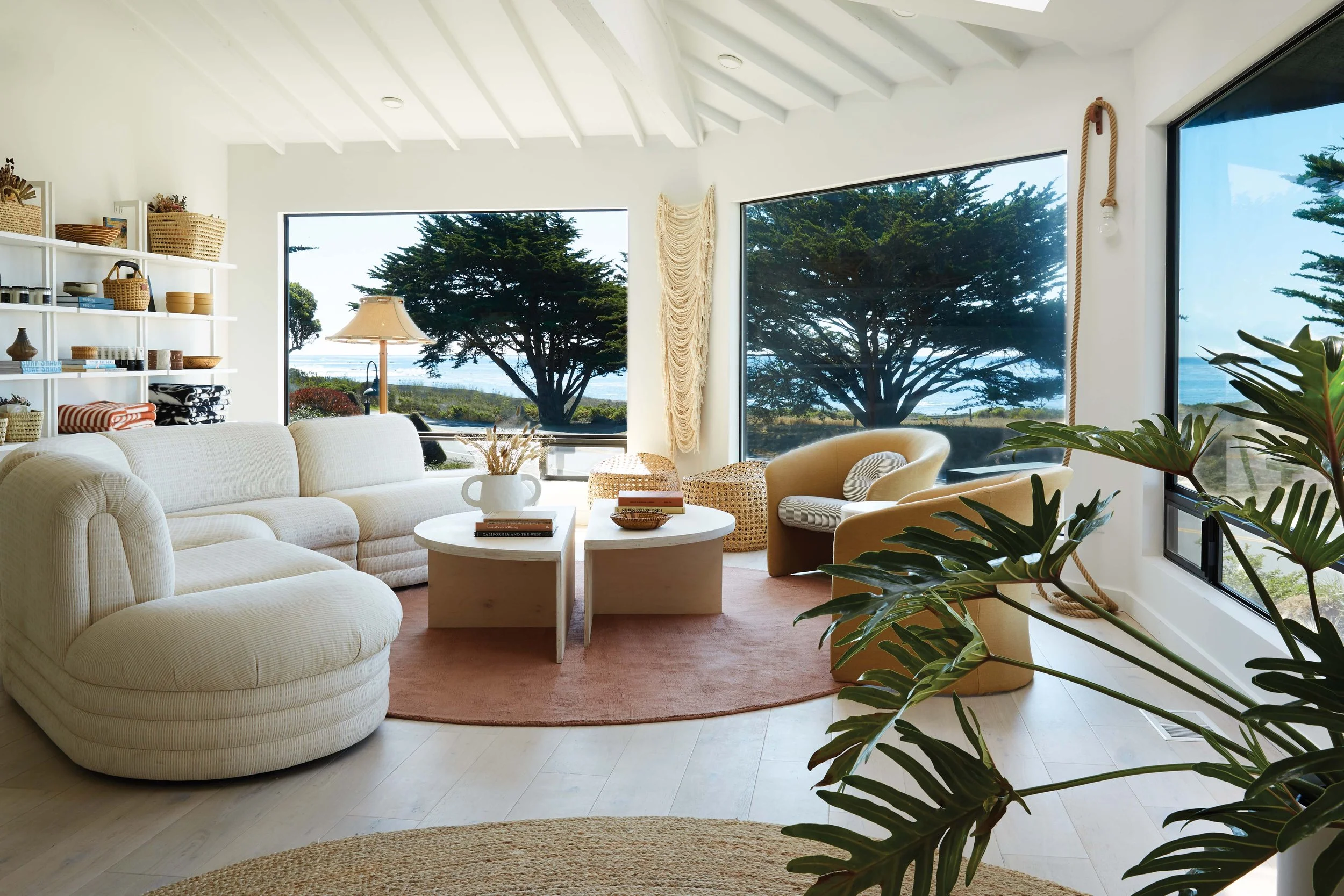
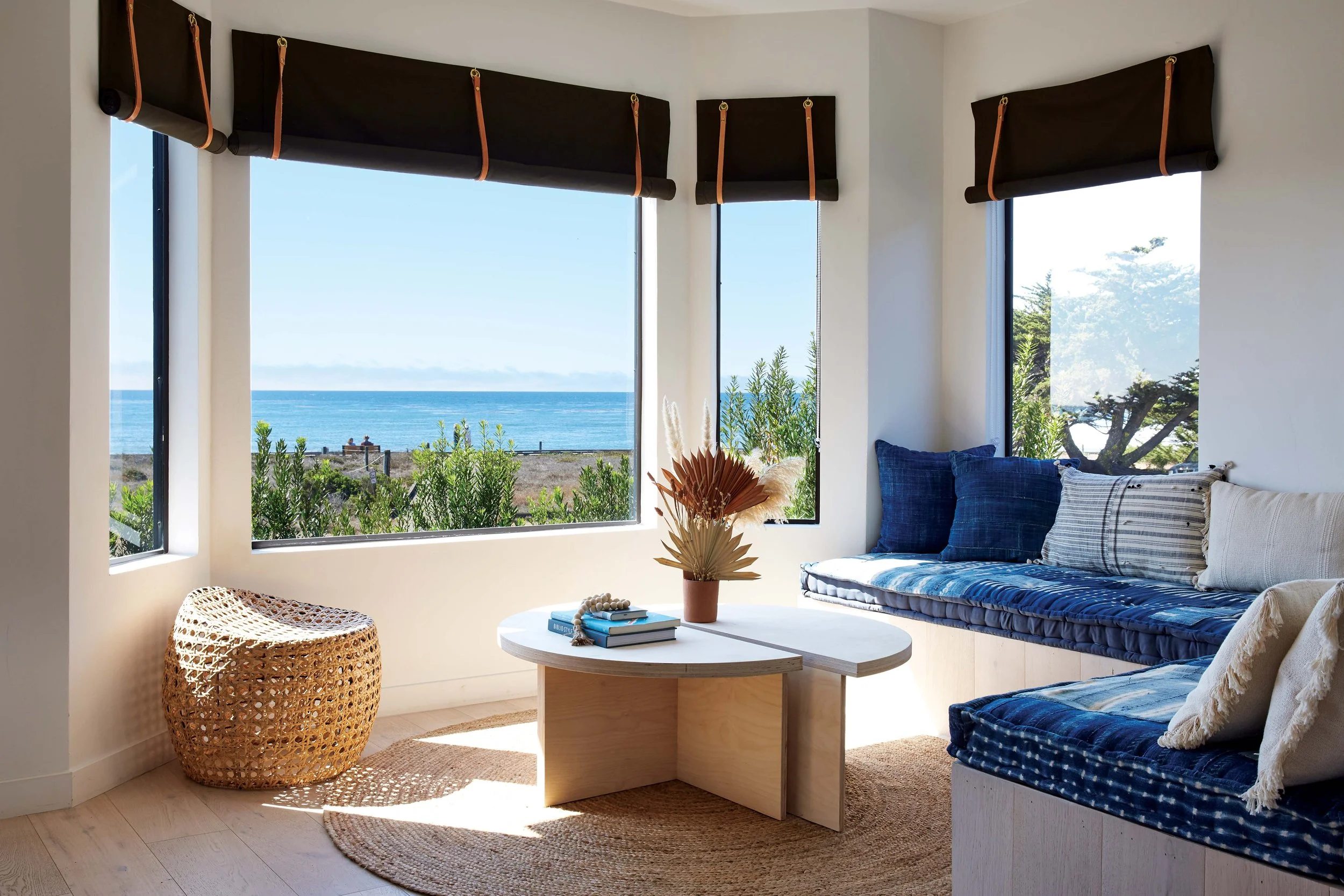
For a quick change of coastal scenery, cozy Cambria is a convenient couple of hours away.


Written by Joan Tapper | Photographs by Jonny Valiant
STAY: White Water (shown), a 25-room lodge designed by Los Angeles–based Nina Freudenberger with a refreshing Californian/Scandinavian vibe, looks out to the boardwalk along Moonstone Beach. Rooms and suites offer fireplaces and sea views. From $329/night. WHITEWATERCAMBRIA.COM.
SHOP: Stock up on vintage wares in the antique shops and boutiques of Cambria’s walkable center. Sea + Green, for one, offers nature- and sea-inspired home goods and accessories. SEA-N-GREEN.COM.
PLAY: Hike the trails that crisscross the dramatic bluffs of Fiscalini Ranch Preserve, with its views of sea life offshore and birds soaring overhead. FISCALINIRANCHPRESERVE.ORG.
DINE: Global cuisine is on the menu at Robin’s, where locals enjoy a garden setting that also features music throughout the year. The ocean’s delicacies abound at the Sea Chest, but be forewarned: There are no reservations and no credit cards accepted. ROBINSRESTAURANT.COM. SEACHESTOYSTERBAR.COM.
Heading South
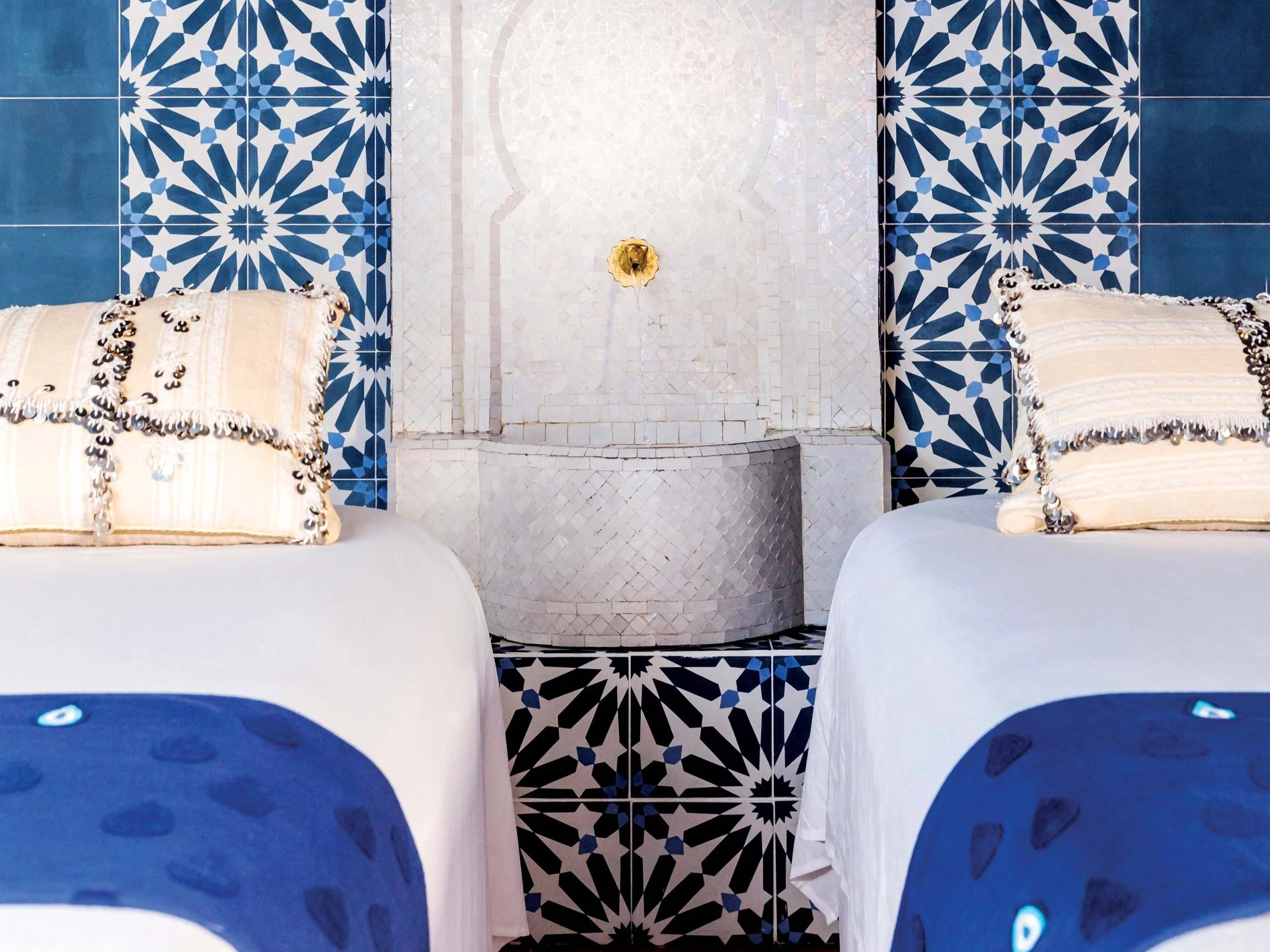
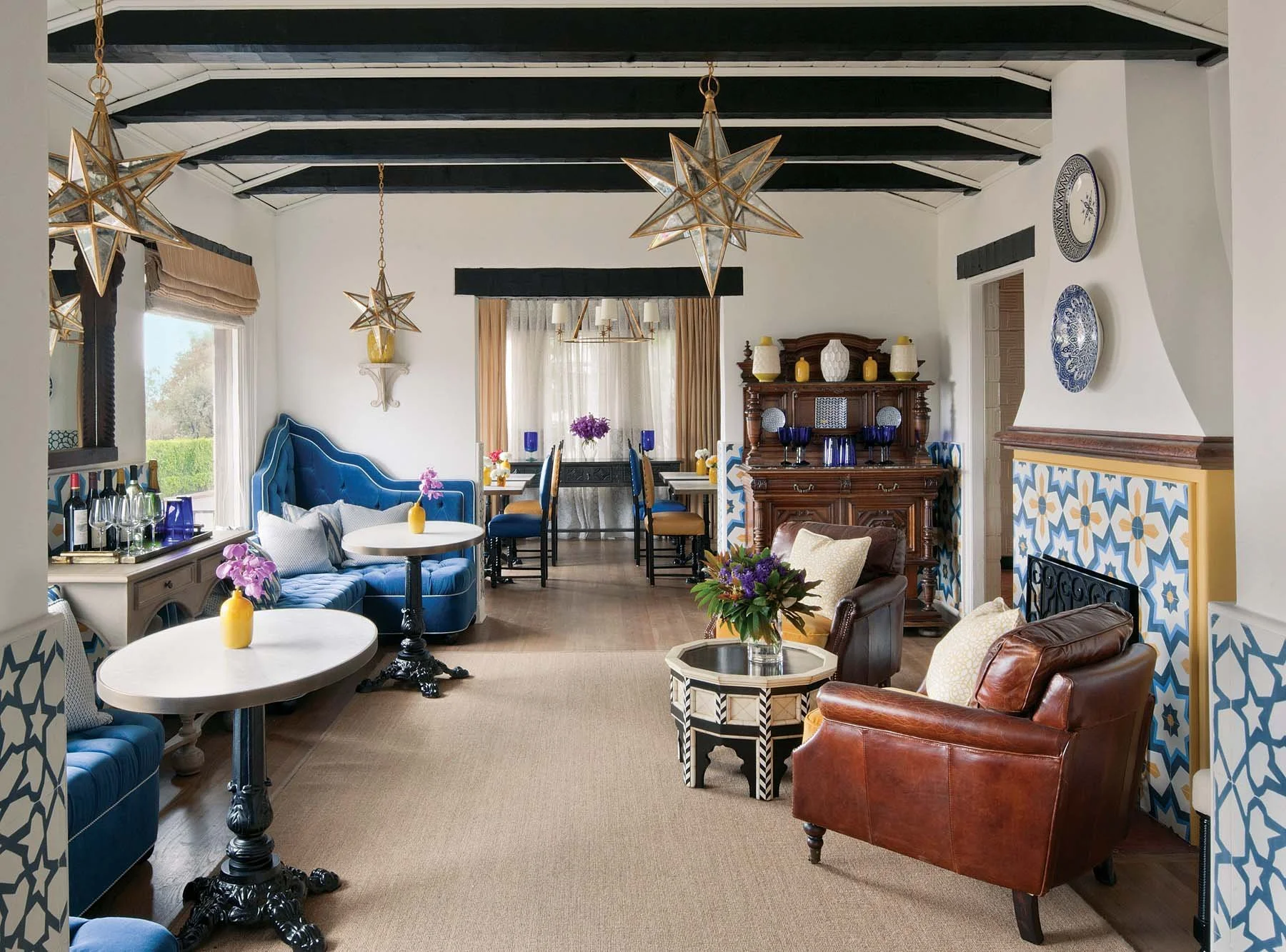
Laguna Beach combines SoCal coves and beaches with a vibrant arts-colony heritage.


Written by Joan Tapper | Photographs: Lobby: Tim Street-Porter; Bedroom and exteriors: Jaime Kowal Photography.
STAY: The Spanish Colonial buildings of the maze-like 23-room Casa Laguna Hotel & Spa (shown) were renovated and redesigned by Martyn Lawrence Bullard to preserve their eclectic architecture and turn the property into a stylish, comfortable inn. From $329/night. CASALAGUNA.COM.
SHOP: Casually elegant clothes and accessories suited to the beachfront lifestyle are on offer at Simple Laguna. SIMPLELAGUNA.COM.
PLAY: Artists have clustered in Laguna Beach since the early 20th century. Today the First Thursdays Art Walk offers a way to sample what’s on display at the city’s 100-plus galleries and artist studios, and the Laguna Art Museum has a noted permanent collection. LAGUNAARTMUSEUM.ORG.
DINE: Nick’s Laguna Beach is a local institution, featuring seafood and a killer prime rib sandwich. La Sirena Grill serves up delicious organic Mexican fare and sustainable ideals. NICKSRESTAURANTS.COM. LASIRENAGRILL.COM.
See the story in our digital magazine

One to Watch: STUDIO
The Funk Zone is about to light up: Jeremy Wilson…

Written by Erik Torkells for Siteline
The Funk Zone is about to light up: Jeremy Wilson, a marketing and entertainment consultant who recently moved here from New York, had planned on opening an office next to the Brass Bear—but then decided to take it up a notch. The result is STUDIO, a bar, production space and sound room which he says will offer “experiments in liquid, light and sound.” Along with beer, wine, and cocktails, we can expect ever-changing light installations and “a wide-ranging music experience for those who want something outside of the typical club.” 28 Anacapa St., Unit C. @STUDIOSOUNDROOM.

