
Feast of the Season
Valerie Rice shares the bounty from her garden for a Cal-Ital culinary experience
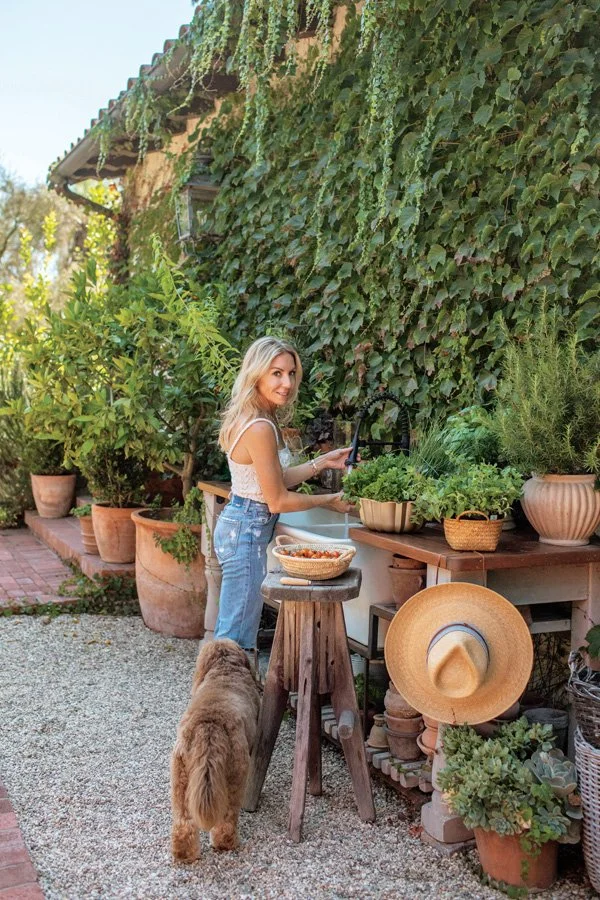
Valerie Rice washes produce from her garden at home.
Photography by Sara Prince
In Italy, ingredients are meant to be enjoyed where they come from. The tomatoes, wheat, olive oil, and cheese are connected to the land, the people, and generations of knowledge. The recipe may be simple, but the ingredients are anything but ordinary. Luckily, we have our own version of this magic right here in Santa Barbara. Our farmers markets are a feast for the senses—rows of colorful produce, baskets overflowing with the season’s best, and farmers who know their crops like proud parents. And while I will always have a soft spot for Italian wine, cheese, ceramics, and olive oil (my suitcase is proof), I’ve been inspired by the incredible ingredients being made right here at home. This recipe is exactly that kind of cooking. It’s relaxed, seasonal, and forgiving—the type of dish that makes entertaining feel effortless. It can be prepared ahead, served at room temperature, and enjoyed while everyone lingers over a glass of wine, tells stories, and inevitably goes back for “just one more bite.”
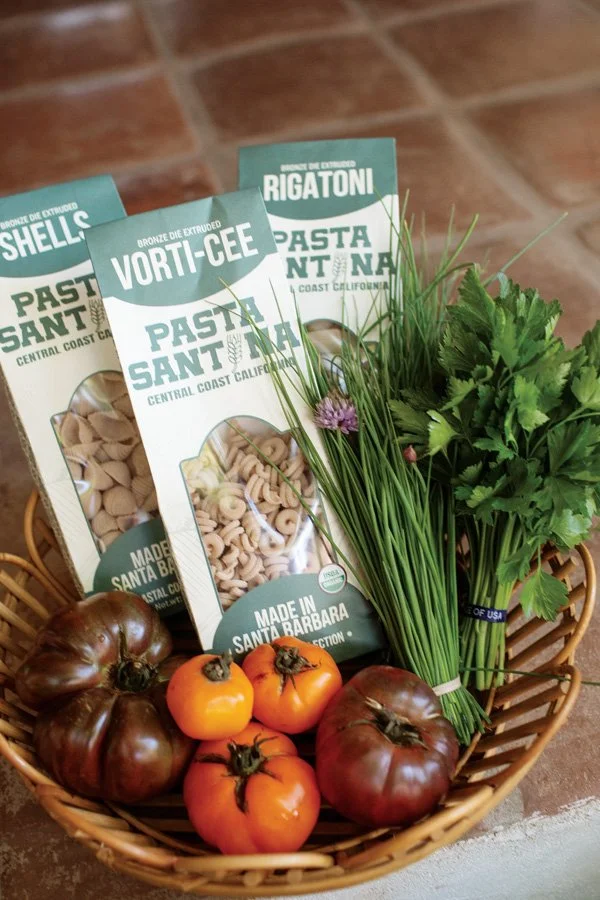
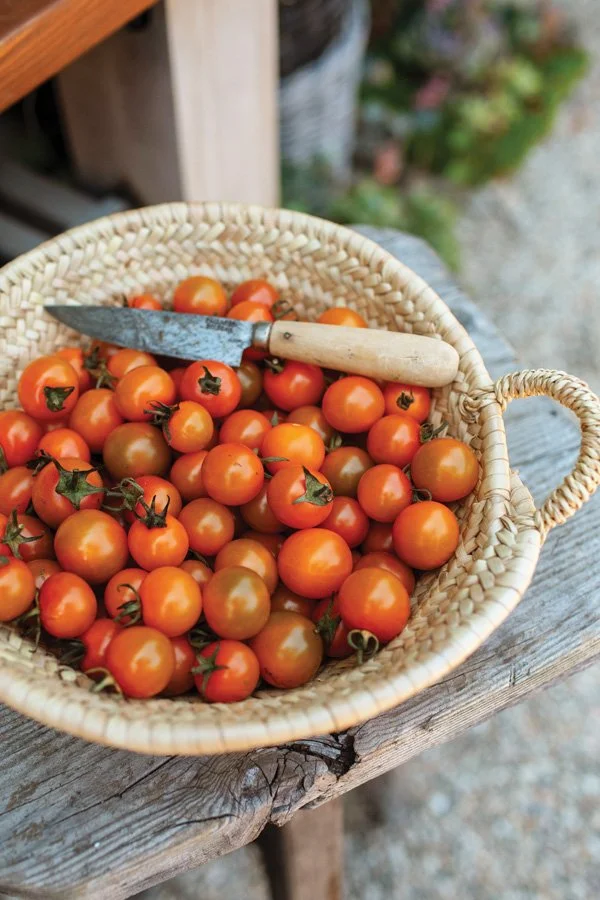
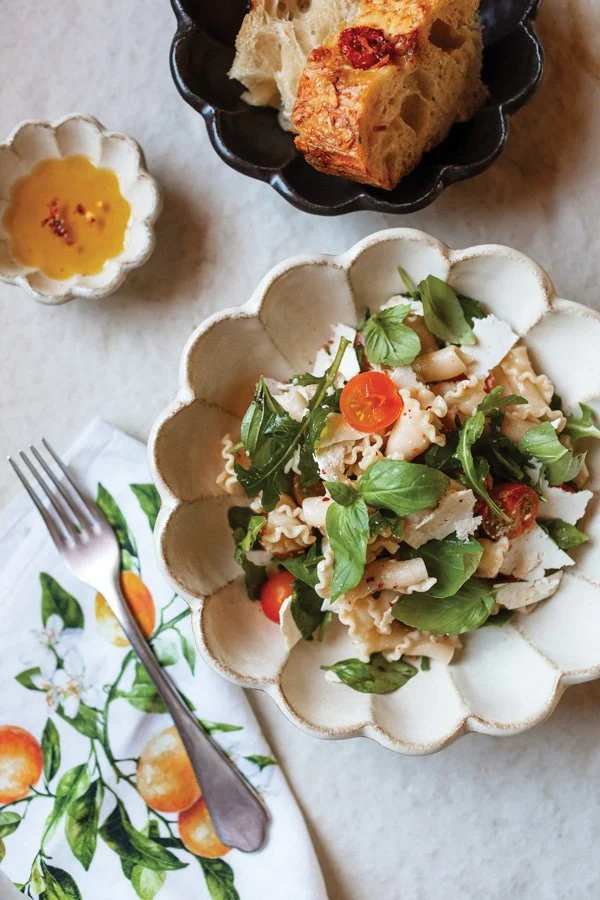
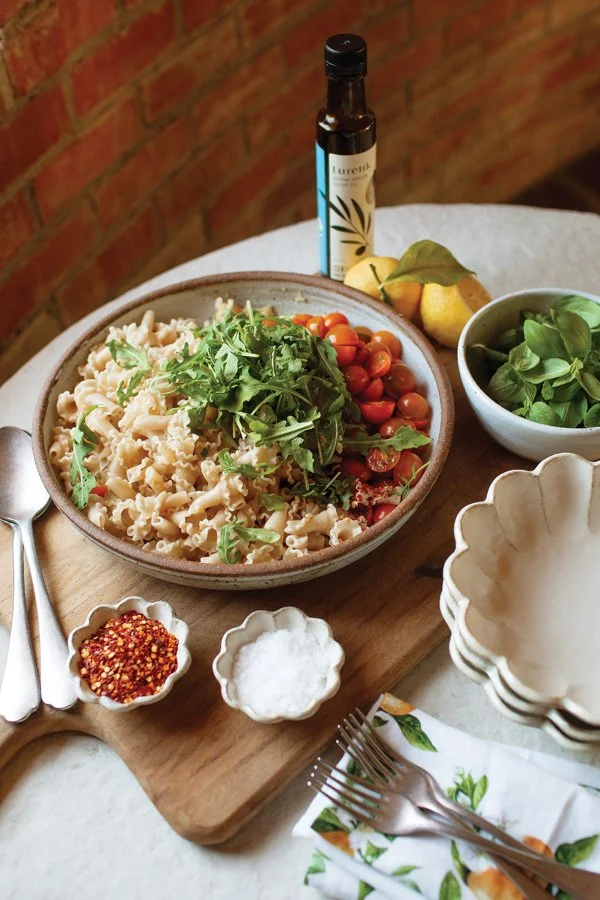
One of my favorite parts of cooking this way is getting to know the people behind the ingredients. For this recipe, I’m using Pasta Santina’s trumpet pasta made by my friend Sergio, who mills local California wheat into beautifully creamy pasta with incredible texture and flavor. I’m also reaching for Luretik olive oil from Santa Ynez, made by my friend Elise—a former Italian philosophy professor who now grows Italian olive varieties and produces an oil that is vibrant, peppery, and full of character. These products are proof that exceptional ingredients don’t have to travel thousands of miles. Sometimes they’re growing, milling, and being crafted right in our own backyard. Ricotta salata is the perfect finishing cheese because it stays crumbly and adds a bright, salty bite. I usually find it at the Upper Village grocery, but feta or shaved Pecorino Romano make good substitutes. eatdrinkgarden.com; pastasantina.com.