Super Star
Multimedia artist Russell Young reveals the hidden sides of cultural icons
Written by John Connelly
Photographs by Sam Frost
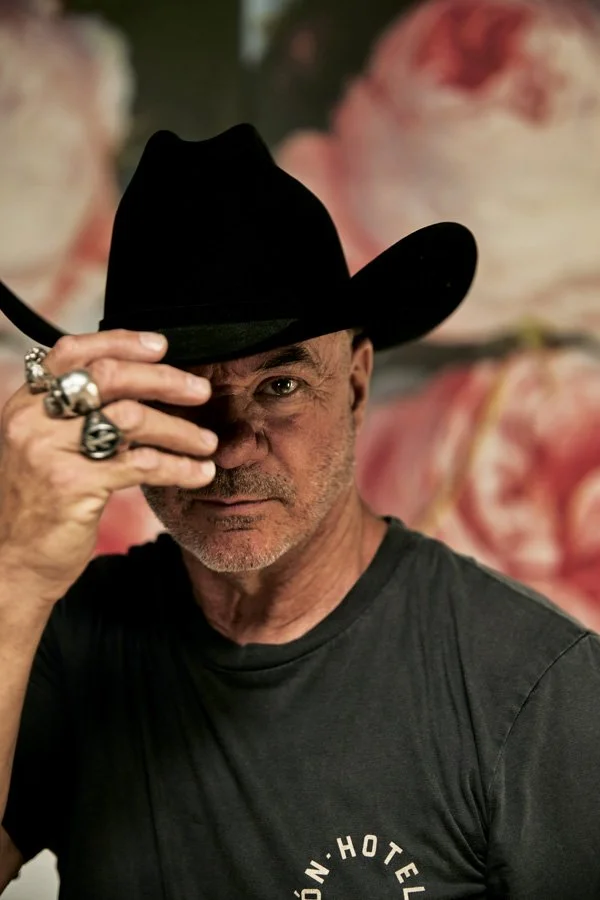
The British American artist Russell Young has a distinct man-in-black style that suggests, despite his humble origins and youthful challenges, he has lived a full and fascinating life. Young is a passionate survivor who has built a massive career working in various media, including painting, photography, screen printing, and sculpture. He is perhaps best known for his silk-screen paintings of cultural icons that incorporate Diamond Dust, a gritty, sparkling composite famously used by Andy Warhol.
Born in Yorkshire, England, in 1959, Young was adopted at the age of one after a brief respite at a foster home and a nunnery. He never knew his birth parents’ identities, but the uncertainty of his origins had a profound effect on him as a child and as a young artist. He grew up moving from town to town, where his adopted father, an electrical engineer, would take him to museums and to see films like The Magnificent Seven, establishing a lifelong fascination with California and the American West.

Young, in his new Ojai studio, sorts through photos from his archive.
At 15, Young lied about his age so he could enroll in art school. He then moved to London, where he met commercial photographer Christos Raftopoulos, who became a mentor. Inspired by his tutelage, Young began photographing the early gigs of bands like Bauhaus, R.E.M., and The Smiths, which led to photo shoots and magazine spreads. This commercial work eventually landed him the album cover of the 1986 George Michael album Faith. The opportunity, Young says, “opened the Golden Gates” and was a “big influence” for him as an artist. What followed were more celebrity photo shoots, including sessions with Morrissey, New Order, and Björk, and pioneering music videos with a wide range of artists from The Brand New Heavies to Eartha Kitt.
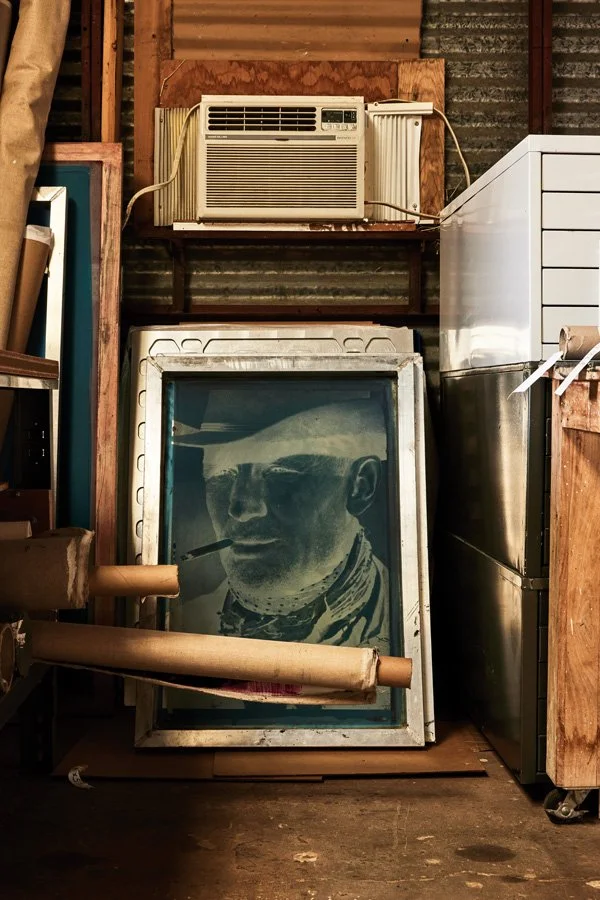
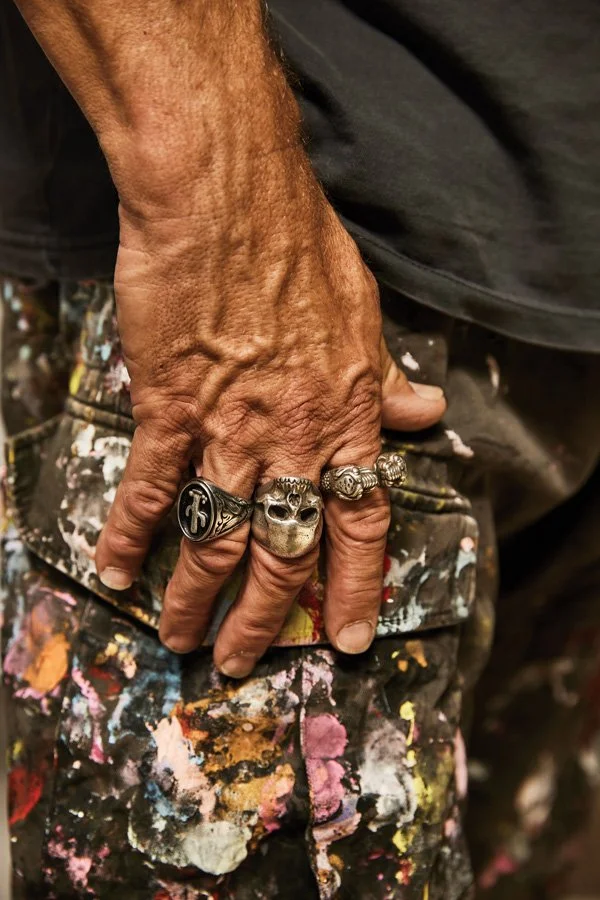
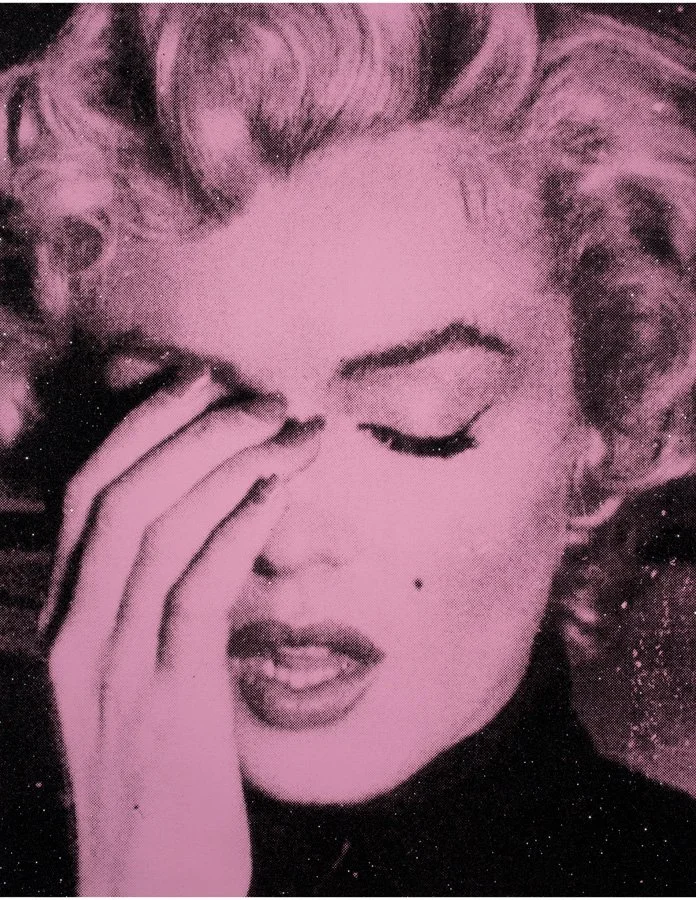
After a move to New York City in 1997, Young introduced a new series of mug-shot “anti-celebrity portraits,” paintings that he says were “perhaps… a dig at my former career” as a commercial photographer. His following series, Dirty Pretty Things, introduced his now-signature use of Diamond Dust, and in 2005 Young created one of his most iconic works, Marilyn, Crying. The image, carefully cropped by Young, features a portrait of a raw, vulnerable Marilyn Monroe with eyes cast down away from the camera and one hand obscuring much of her face. The 100th anniversary of Monroe’s birth arrives in 2026, and Young is working with the Monroe estate to launch a campaign to honor that occasion. His new Marilyn 100 series debuts during Art Week in Miami this December.
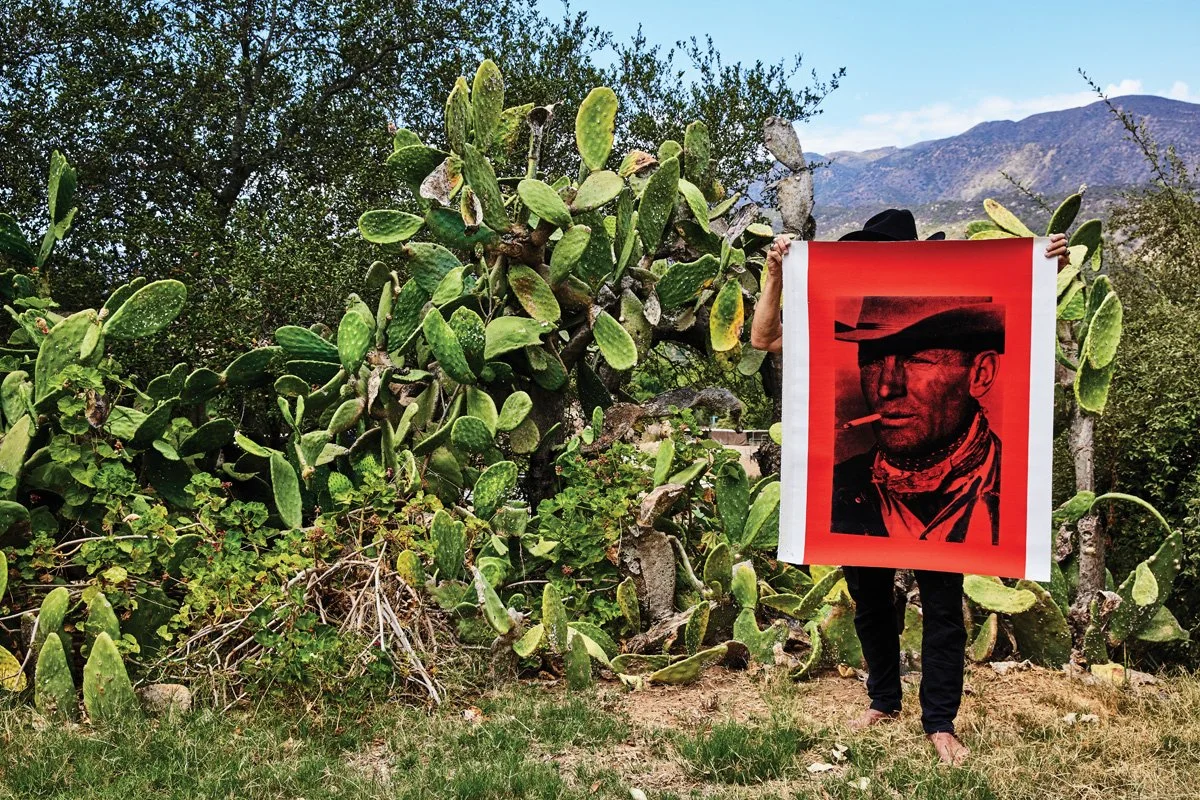
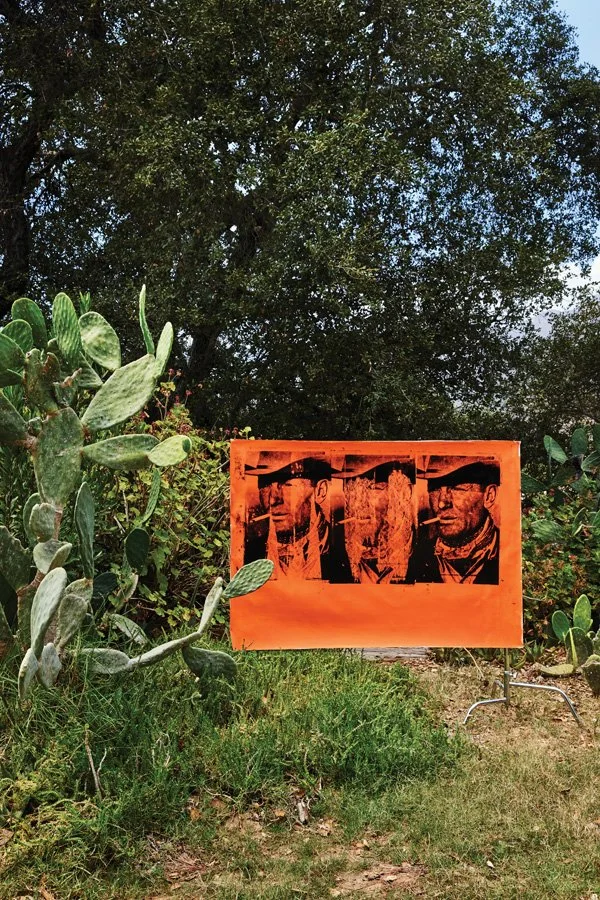
On his property in the Ojai Valley, Young displays images of the Marlboro Cowboy who features prominently in his series West.
Young has had several close calls with disaster, including a plane accident in Cleveland in his early 20s, a near-death experience in 2010 after contracting the H1N1 virus that put him into a coma for a week, and a narrow escape from the devastating 2017 Thomas Fire. All these challenges have continued to fortify a certain fearlessness and sense of survival, a daring and a perseverance in both life and his work. He regularly hikes alone for long stretches in the mountains of the Los Padres National Forest, swims out a mile in the moonlit ocean to look back at the lights of Rincon, and has spent extensive time camping and hiking the Channel Islands. “I like to isolate myself on the edge of the mountains or oceans,” Young says.
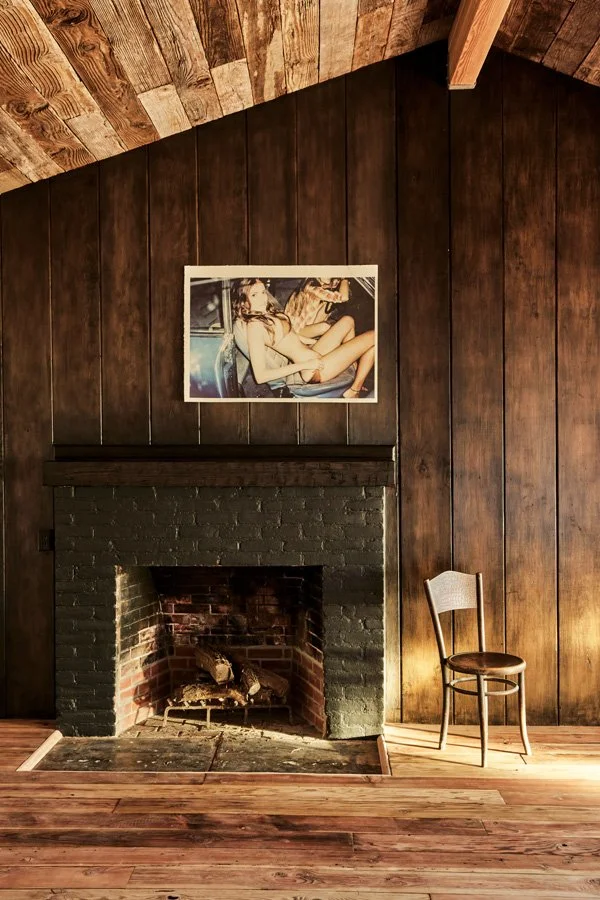
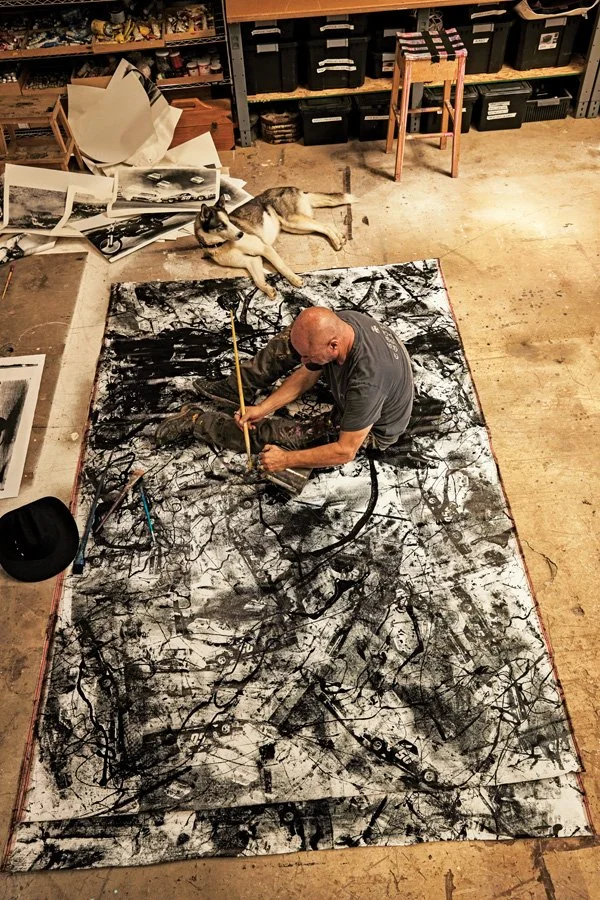
After living through 9/11 in New York, Young moved his family to Shepard Mesa in Carpinteria in 2002 and established an art studio in an old airplane hangar. He currently resides in a beach house on the Pacific Ocean and is renovating a nearly 100-year-old home in the Ojai Valley. A new studio in a former woodworking shop is located nearby. Young says he is drawn to and loves this “magical strip of flat lands surrounded by huge mountains” that produces our unique Mediterranean climate and “gives birth to and throws out very special people.”
“The West still taps into our most primal instincts.”
For him, one of those special people was Edie Sedgwick, the actor, model, and socialite who was born in Santa Barbara and became an “It Girl” in the 1960s and one of Warhol’s Superstars. Sedgwick died at age 28 from an accidental drug overdose following a period of drug use and a battle with mental health issues.
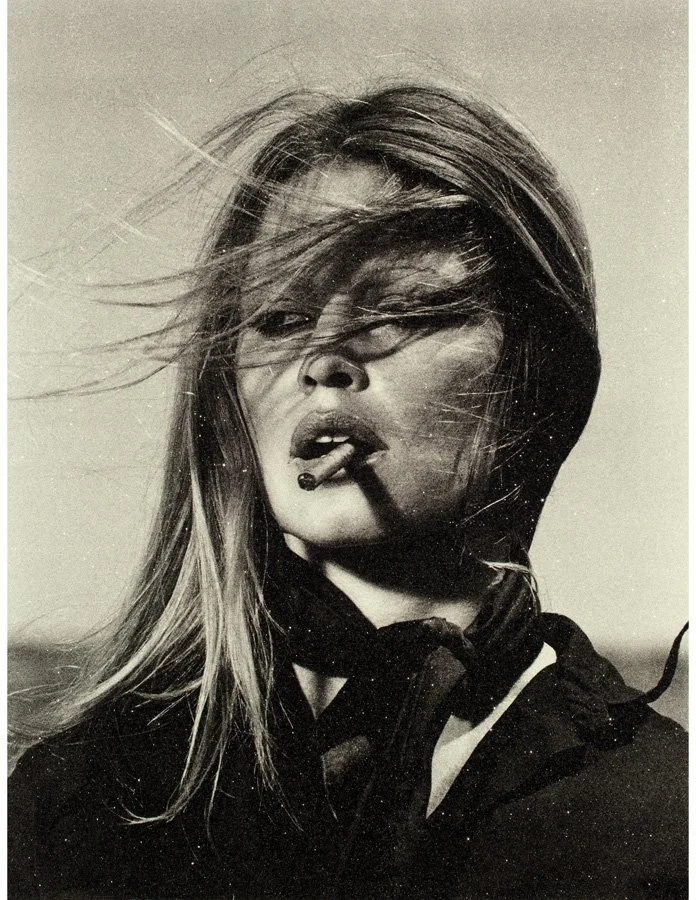
Young’s work studded with his signature Diamond Dust medium include images of Brigitte Bardot and Marilyn Monroe.
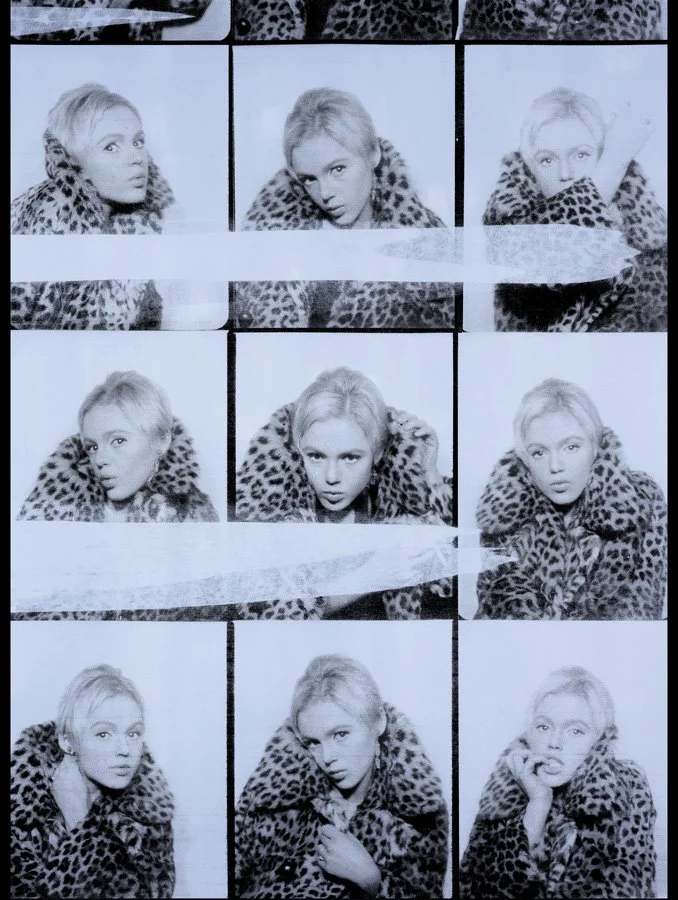
Young’s choice of Sedgwick—photographed by Warhol in 1965 in his iconic photobooth format at the height of her notoriety—for the cover of this issue of Santa Barbara Magazine embodies his interest in using glam shots of cultural icons to reveal the underbelly and fissures of American fame. His goal is to “interrogate the idealization of America’s history,” in particular that of the American West. According to Young, “The West still taps into our most primal instincts but also our most grandiose dreams.” His ongoing West series features “curiosities, knick-knacks, heirlooms, and fantasies of his own world built within the larger framework of the American drama.” Subjects include everything from the Marlboro Man cowboy to Elvis Presley, and Young’s choice and presentation of the images somehow capture “the exact edge where boylike wonder falls into violent truth.”
Recently Young has been stitching together his canvases to mimic the breadth of Hollywood wide screens, and they are intended to “pay homage and also to expose the artifice of our dreams.” Other subjects in Young’s newest works depict turn-of-the-century photographs of animals that, if not already extinct, are certain to become so soon. In another series, he enlarges flower paintings from the Dutch Golden Age to highlight the impossibilities of their unseasonal arrangements and expose their hidden messages. Both the animals and the flowers are “evocative of an earlier Young, when he was awestruck by things that seemed out of reach and would do anything to grasp onto their truth.”
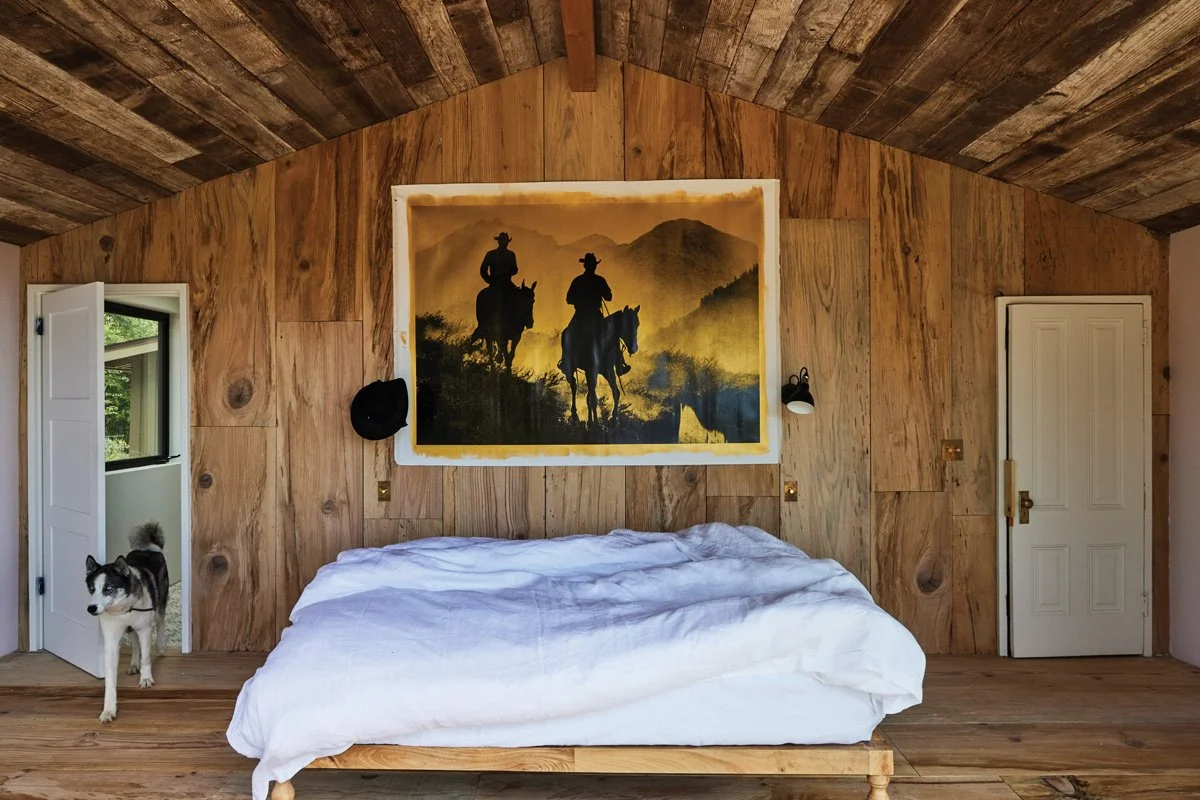
Another view of Young’s Ojai home featuring work from the series West.
The artist “is interested in secrets, those we keep, those we share, and those we are unwilling to confront.” With the impossible flower compositions of 17th-century Holland or an image of a fragile socialite starlet, he reveals that “a rose petal might, upon a closer look, be riddled with holes.”