
Second Wave
Novelty architecture from the 1970s finds itself at the Whale House
Written by Josef Woodard
Photographs by Alex Noble
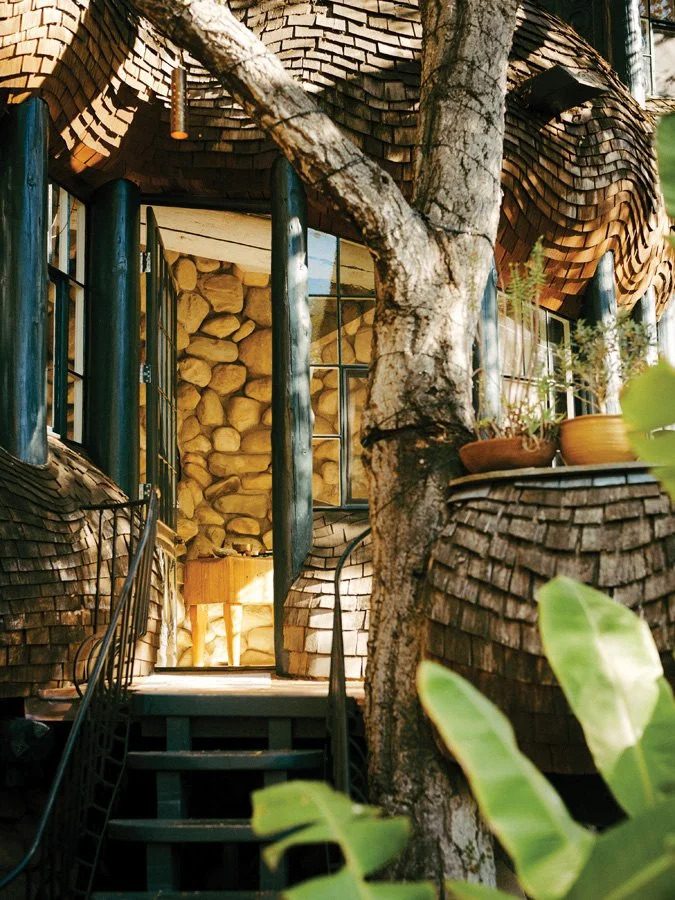
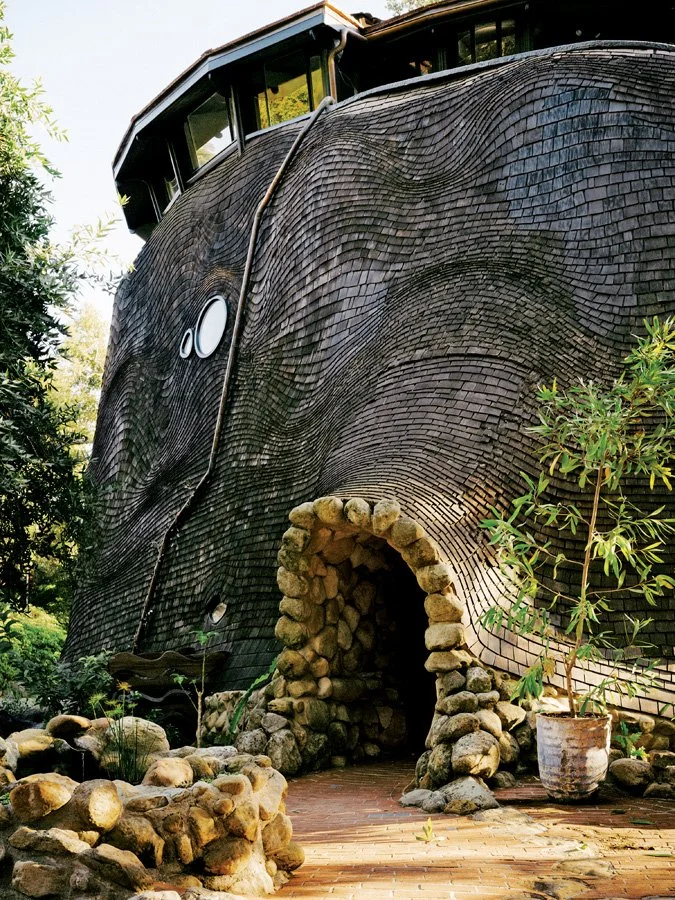
For nearly 50 years, the architectural phenom known as the Whale House has been the stuff of myth and mystery in Santa Barbara. The entirely wood-shingle-wrapped structure in Mission Canyon, the brainchild of the architect Michael Carmichael, is one of the more idiosyncratic architectural wonders on the West Coast, let alone in the 805 area.
The whale-like building has come in and out of public focus and traffic over the years, becoming more public when it went up for sale in 2023 and was featured in various publications and on HGTV’s Zillow Gone Wild, with host Jack McBrayer ogling and exploring the place. The house is currently enjoying a rebirth and a rebranding thanks to the passionate efforts of Josh and Marley Raab.
The new owners spent two years renovating the historic structure and have become its stewards. They are keepers of the enterprise now officially known as the Cetacean House LLC (cetacean: a marine mammal of the order Cetacea, such as a whale, dolphin, or porpoise). Aside from some practical Airbnb rentals, they have ambitious plans to use it for music performances, fundraisers, activist pursuits, and other community-based causes.
“The house was love at first sight with my wife”
For many in the area, the Whale House has long been a teasing point of interest, glimpsed across the creek and through the trees from Mission Canyon Road. I have been in the ranks of the curious from childhood, as was Marley, who, as a 5-year-old, passed by on her way to summer camp at the Santa Barbara Botanic Garden. When the house came on the market three years ago, she urged her husband to make an offer.
For the chance to own the house, “it was love at first sight with my wife,” Josh says, noting that she “really wanted the place. I said, ‘OK, let’s do it.’” When the deal finally went through a year later, the planning and work began in earnest.
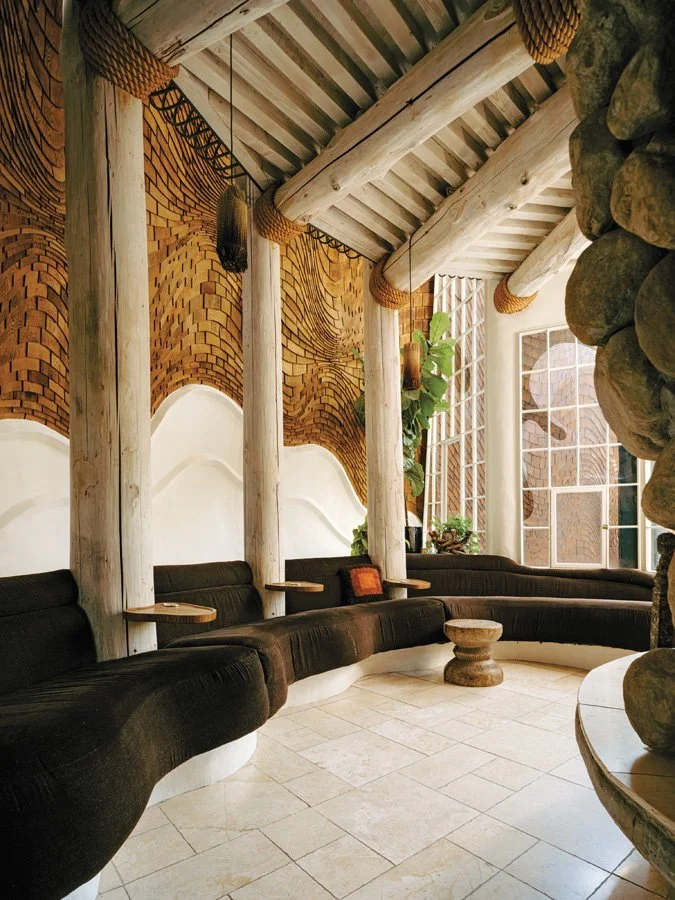
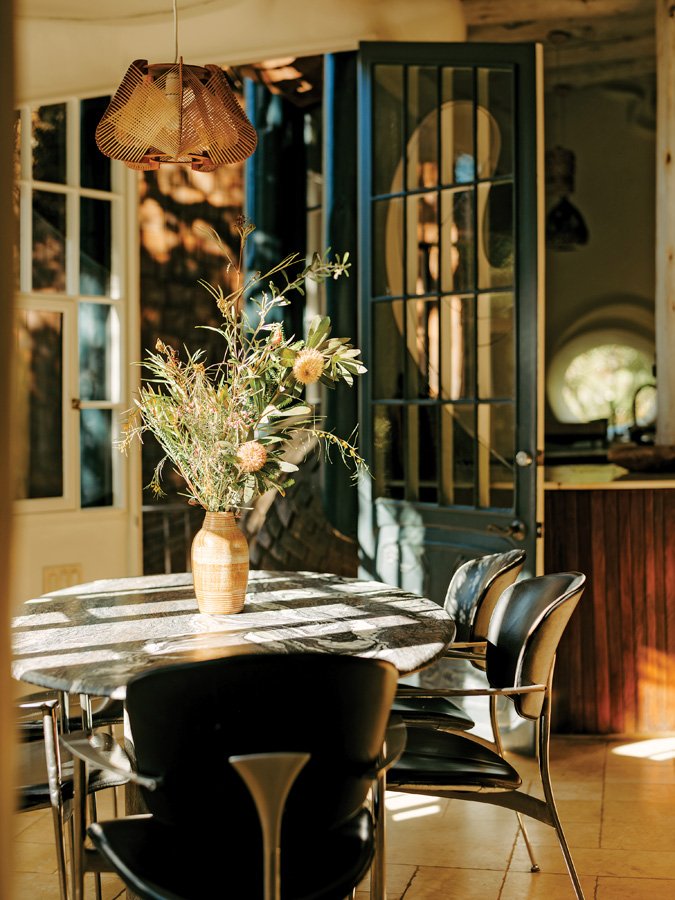
After staying overnight, I have graduated from inquisitive outsider to enthralled insider. Although it was only a 10-minute drive from my house (near Elings Park) to this special property, it seemed a world away. As the house’s caretaker, Marcella Guaman, told me before my visit, the place “is magical. It embraces you like a hug.” Duly transfixed, I am now officially a Whalehead.
“We talk about it as a world-building space where creatives come to think up new ideas.”
Carmichael’s creation invites an odd array of associations. Call it a Gaudi meets Greene & Greene meets Lord of the Rings meets whole Earth Catalog mentality. Imbued with the idealism and radicalism of an off-the-grid ’70s mindset, Carmichael spent five years working on his dream project, aided by 20 artisans (who were actually his art students); he had already finished the unorthodox Wave House on the coast north of Refugio Beach, in 1976.
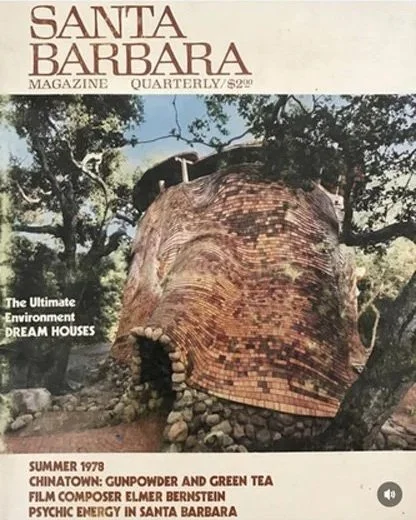
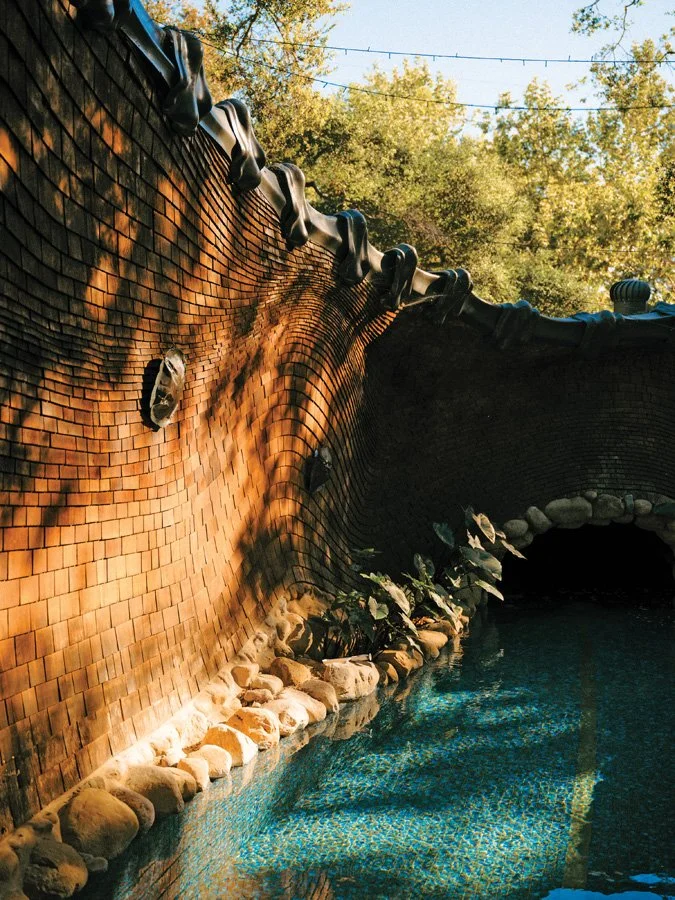
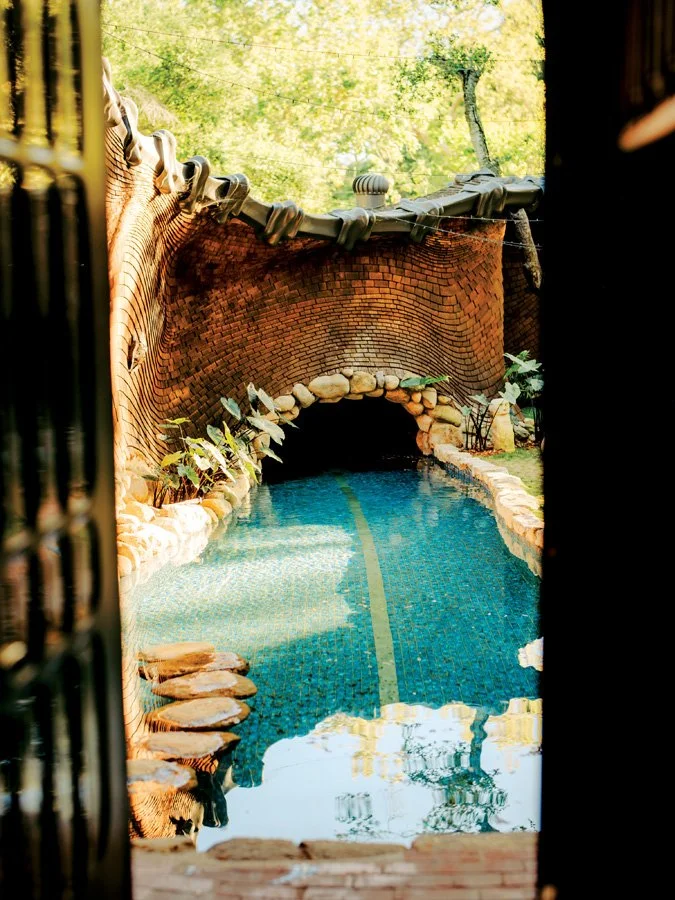
There are few right angles here; it’s all about swooping lines and curving forms, from the hand-carved biomorphic exterior to interior surfaces. Inside, the structure is a microcosmic realm unto itself. Walls seem to morph, powered by their own design whims. Portholes appear at random intervals (in a house with 270 windows), and a narrow 75-foot-long pool winds through a tunnel to a grotto-like space suitable for napping and other activities.
A metal perimeter on top of the wavy walls represents the whale’s spine with 49 “vertebrae,” but it also suggests an undone zipper. The dramatic pool area is the centerpiece of the ground-floor area of enclosed living space, which rises three more floors, beyond the kitchen and living room to a master bedroom outfitted with a showcase shower—sporting four separate nozzles and considered the “heart of the whale”—adjacent to a hot tub. Another bedroom suite occupies the top floor, and a guesthouse sits in the lower corner of the property.
As he got deeper into the project, Josh—an editor who has worked with Al Gore, Netflix, and other high-profile connections—realized he wasn’t doing a renovation. “I was doing a restoration,” he says. “Places like these don’t really exist. They couldn’t build this today. We’ve thought a lot about what it would cost to build now, even if you could get it permitted.”
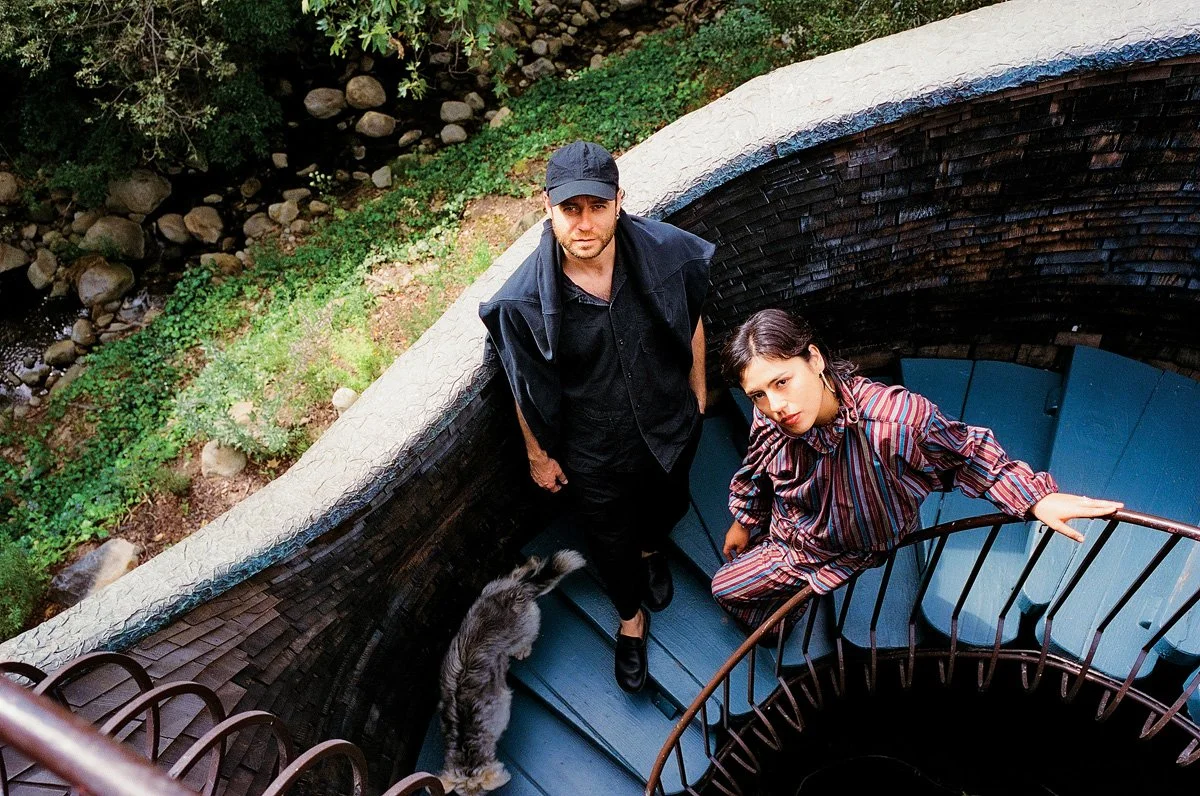
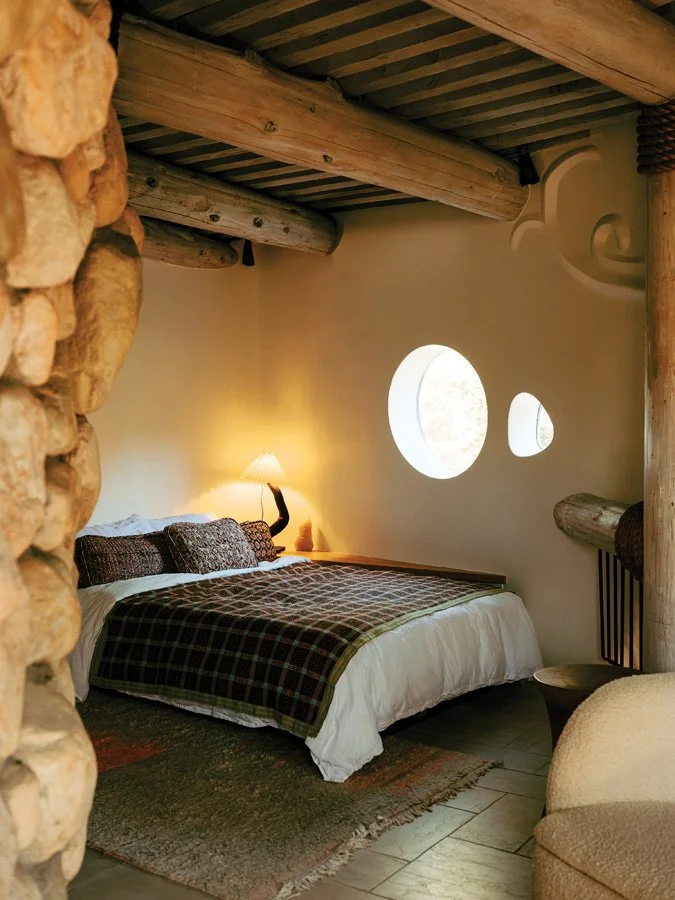
The Raabs’ redo involved “taking it from what my contractor called a ‘novelty home’ to a real home that had working heating and waterproofing” and was aligned with code. “Before us, it was kind of just a sculpture that you could live in. And now it feels like a little bit more of a home. It’s totally livable now. We’re the first people with an Instagram
[@santabarbarawhalehouse] for the house. We’re the first people who have turned it into a thing. It was pretty private before.”
Small touches in the remodel confirm the couple’s points of view. They minimized the maritime elements in the existing design and emphasized the sea-creature orientation of Carmichael’s original concept to make it “more whale and less whaling.” On the low overhang leading to the sauna, lined with fastidiously carved cedar panels, hangs a warning sign: “Cultivate awareness—watch your head!” The sign originally said “Danger,” notes Josh, but Marley wanted to soften the harshness of that word. “So now we’re making hats with that phrase. They’re gonna say, ‘Cultivate awareness.’”
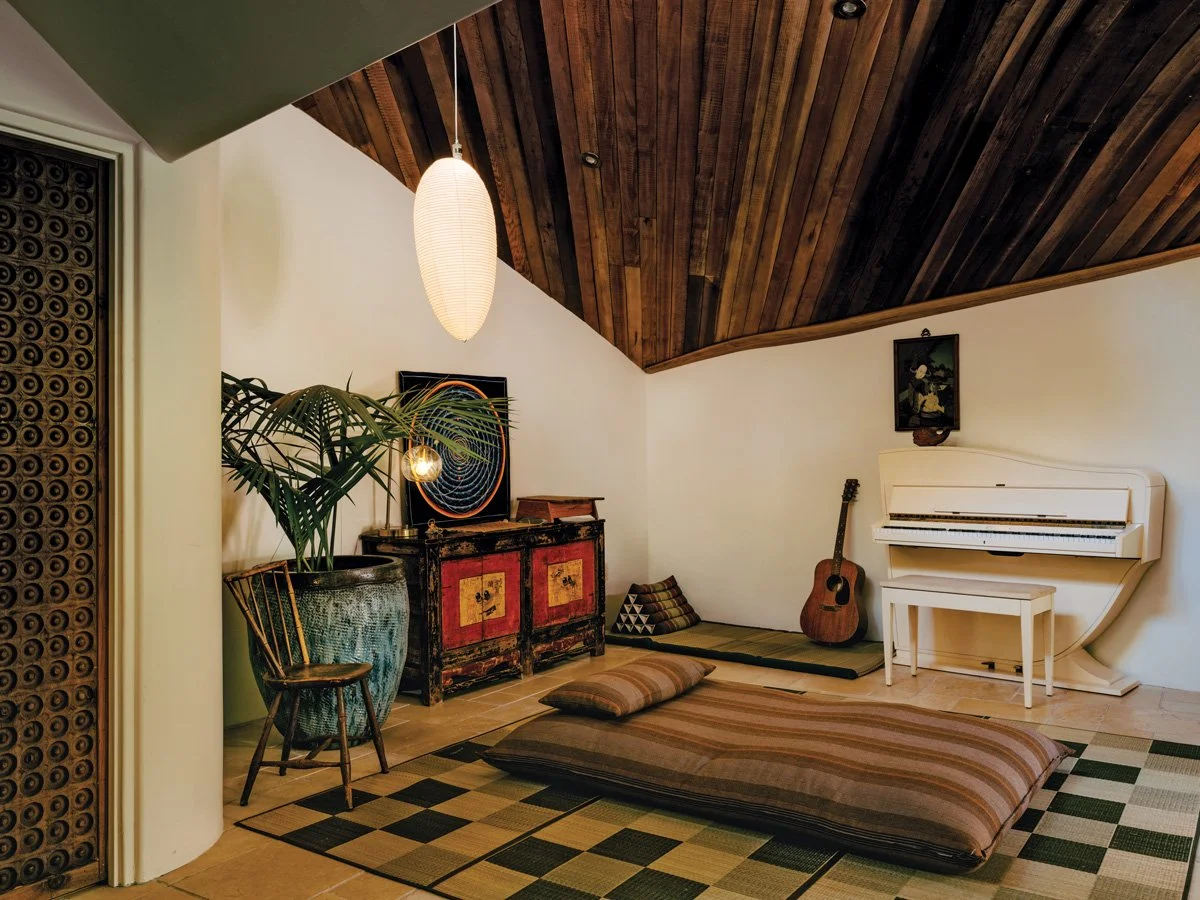
The interior of the guesthouse at the far end of the pool level, which is considered the tail of the whale and features a piano of unorthodox design.
Helping with the extensive glass for the project was Steve Handelman, who had been involved in the original work. Expert plant advice came from comedian Eric Wareheim (known for the Tim and Eric TV and film franchise) and was paired with landscaping elements contributed by Marley and landscaper Steve Hanson.
Music has naturally been a part of this space. Eddie Vedder of Pearl Jam lived here for a time, and the Raabs inaugurated a slowly growing list of performances with one by Uruguayan singer-songwriter Juan Wauters. Subsequently, the Whale has hosted Carlos Niño (producer for Andre 3000) and Maria Taylor (muse for the musician Conor Oberst), with more to come. “There’s something here when you have these events,” Josh says. “You have a childlike feeling, especially when you multiply that with 50 people.”
The Whale House has also served as a residence for guests of the Santa Barbara International Film Festival and become a New Year’s Eve roost for Meta execs seeking a “psychedelic house” for the occasion. In support of the Raabs’ activist interests, the property has hosted a fundraiser for a Chumash bioregional center and will do so for upcoming events for the founder of Greenpeace and the environmental “good trouble” makers at Climate Defiance.
The nature and function of the Whale House are still evolving. For now, Josh sees it as “a community space, a community bathhouse. We talk about it as a world-building space where creatives come to think up new ideas and think up new realities.”
He adds, “The role Marley and I have—and that this place reflects in us—is letting people at least imagine different ways of being, whether it’s doing their song or whatever they’re doing. It’s about opening up the blinders a bit, so we’re not so tunnel vision on a really dark future. That’s really the driving force here, just opening the doors to people who really are excited about alternative options.”