
The Man Who Listened
A morning with legendary horseman Monty Roberts, and the legacy he was still building
Written by Stefan Siegel, founder of IRON
Photographs by Ryane Nicole
After a beautiful sunrise heading north along Highway 1, with Ranger beside me and Braveheart in the trailer behind, I pulled into the iconic California Horse Center, known as Monty’s Flag Is Up Farms in Solvang, and started unloading my adopted one-dollar horse named Braveheart. I felt like unloading a scrappy muscle car at Monterey Car Week, but his stature and a lot of purple shampoo earned him a lot of oohs and aahs from some very serious horse trainers from Germany, Argentina, and Italy.
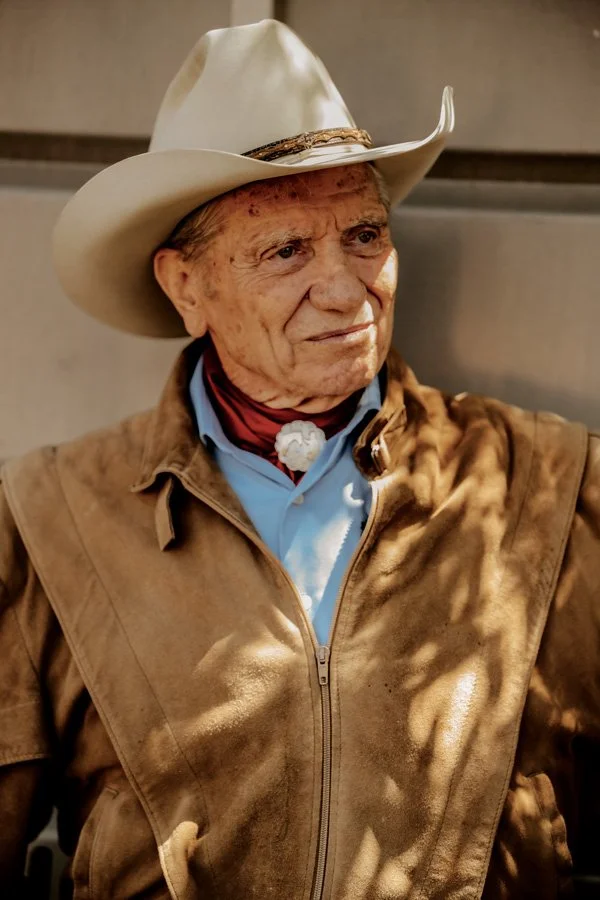
Then a black truck came toward us, one of those you know only the owners would drive. The passenger window went down, and there was Monty Roberts. At 91, he looked less like the grandfather of modern horsemanship and more like John Dutton arriving to settle something on Yellowstone: reflective Oakleys, an El Presidente Stetson, and a leather jacket that looked like it had survived the original Blade Runner.
He took the glasses off, our equally blue eyes met, and the first thing he asked was, “How does this look?”
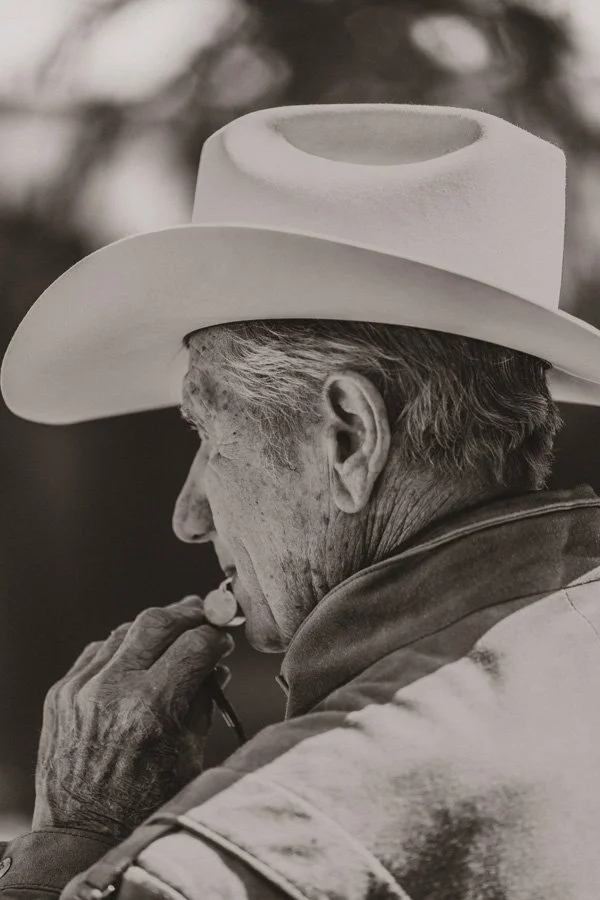
I told him I loved the ’80s jacket, and that he should leave the sunglasses in the truck. I think that was the moment his wife, Pat, who was driving, realized Monty and I might be up to no good, because my next question was simply, “Where is your horse?”
The premise of the IRON Podcast is that my guests ride alongside me. Monty was 91, yes, but Pat is 90 and still showing horses, so I considered it a perfectly legitimate question. Pat did not. Monty was not getting anywhere near a horse.
Monty smiled. I smiled. Pat had spoken. And Braveheart came along anyway.
“Monty’s idea was almost embarrassingly simple. Stop beating horses.”
I had gone to Solvang to interview probably the most famous horseman alive. Within the first hour I found myself thinking about something else entirely: How absurd is it that a man can spend decades proving that violence is unnecessary, and not even economical, be mocked by the establishment for it, and then be gifted Queen Elizabeth II as his most unlikely friend and champion, before everybody decides perhaps he has a point?
I know this pattern rather well. Most industries adore innovation only once somebody sufficiently important has certified it as innovation.
Monty’s idea was almost embarrassingly simple. Stop beating horses. Horses were “broken.” They were restrained, whipped, frightened into obedience. Monty’s father had been part of that world and Monty spent much of his life dismantling it. “Anti-violence was my credo,” he told me.
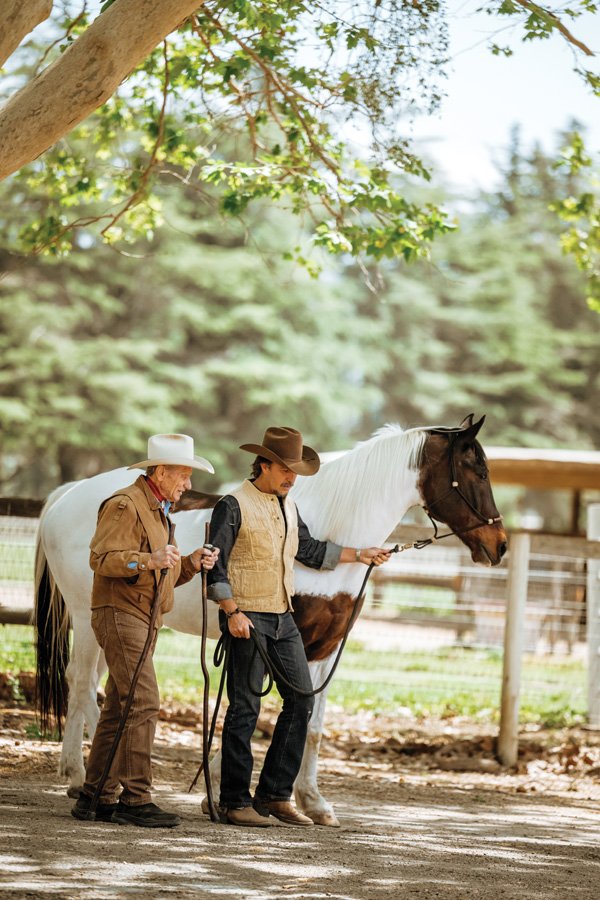
Stefan Siegel with Monty Roberts
Queen Elizabeth II saw something in his work that much of the horse establishment apparently could not. Monty told me, with striking honesty, that without her he would not have gone even a third as far. What surprised me was not that the Queen supported him. We know that story. What I had not understood was that they were genuinely close. He would telephone her roughly every 10 days. When a tiny runt triplet deer appeared on the ranch weighing barely two pounds, Monty called the Queen. She named him Benediction, reasoning that such a small animal deserved a large name. Monty negotiated the nickname Benny. Her Majesty agreed. Benny lived another two and a half years.
“At 91, he looked less like the grandfather of modern horsemanship and more like John Dutton arriving to settle something on Yellowstone: reflective Oakleys, an El Presidente Stetson, and a leather jacket that looked like it had survived the original Blade Runner.”
At this point we’re leaning against one of those iconic sycamores, the trees made familiar by The Cowboy and the Queen, just Monty and me. Pat dropped us off, like she needed a morning without the kids, and disappeared while our production truck was still getting itself organized. Monty kept two walking sticks connected to him and told me that the sticks would eventually go into his coffin. “Maybe I’ll see Benny again someday. Who knows.” That was the first thing he said when we were alone, the crew was still setting up. It would have been easy to dismiss this as the sentimentality of an old man, had his entire life not been constructed around exactly the same idea: Animals mattered enough that violence against them became intellectually impossible.
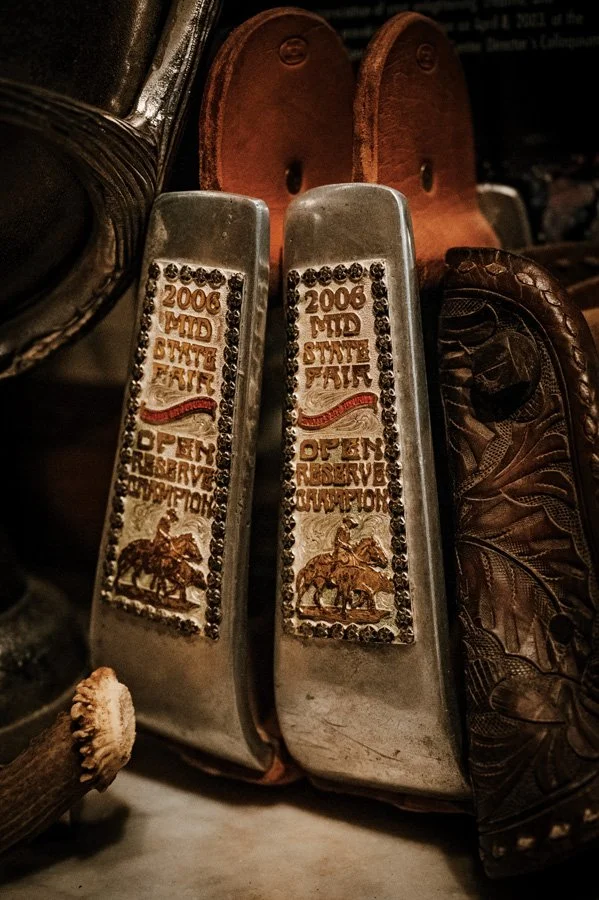
The mythology disappeared quite quickly that morning. That was when I realized how fragile he actually was. He could no longer straighten himself up and pretend everything was fine. His knees hurt. He became dizzy. At one point he looked down at his shaking body and said his nervous system was “going to pieces.” And then he would start talking again and somehow become enormous.
“If you believe in what you’re doing,” he told me, “and if you believe it will leave the world a better place when you’re gone, then you don’t complain about how hard it gets, you don’t complain about how high the winds go—and then, watch carefully—to see what I could do to make it even a little bit better. Not just good. But better.”
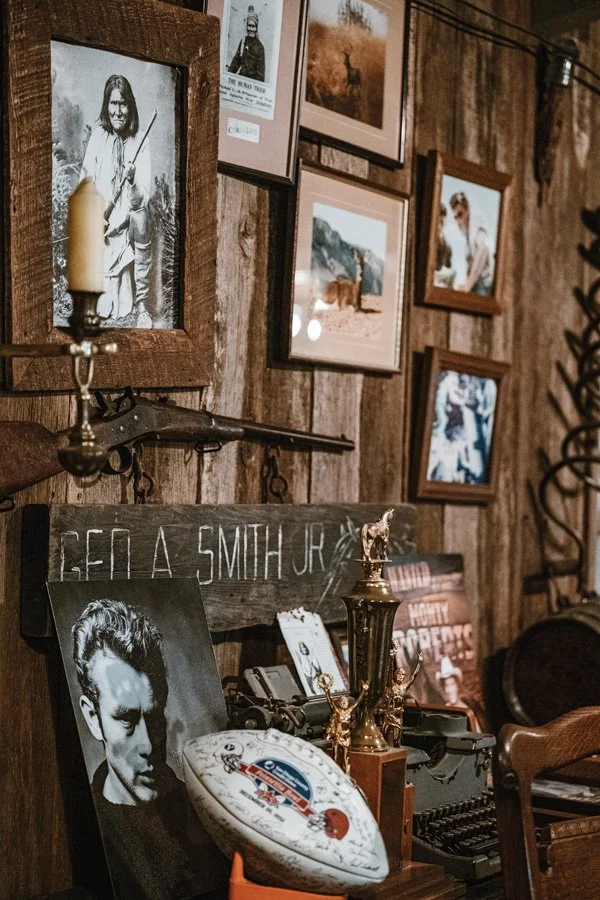
Later, inside his house, we walked through what felt less like a home than the physical hard drive of an extraordinary life. Letters from the Queen covered walls. Objects from Windsor Castle sat alongside world championship trophies, saddles, photographs, Pat’s bronzes, family history, James Dean, and memories that Monty occasionally could no longer quite retrieve until somebody supplied a name and the entire story returned.
“Do horses find us?” I asked Monty.
“There is no question.”
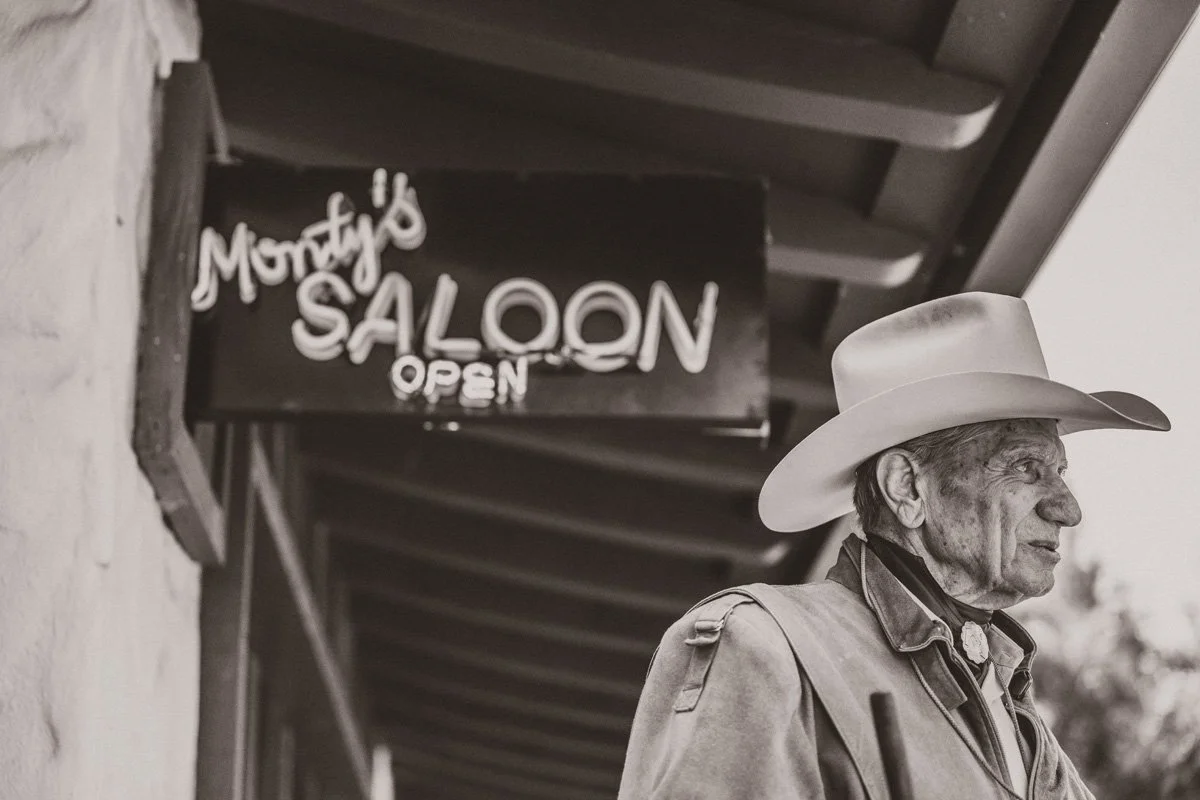
After Monty went inside his house to rest, Debbie took me through the mountain trail course. We’re now finally recording on horseback, Braveheart calmly leading Skinny, a BLM Mustang from the same wild Nevada bloodline as Shy Boy, believed to be his nephew and later his companion. With our film truck ahead of us, we ride across bridges and through water as though Braveheart had worked there all his life.
At the end of the day I asked Debbie to excuse us for a moment. Braveheart took me onto the old five-eighths-mile race track and I finally let him run. He flew. Apparently he wanted another round.
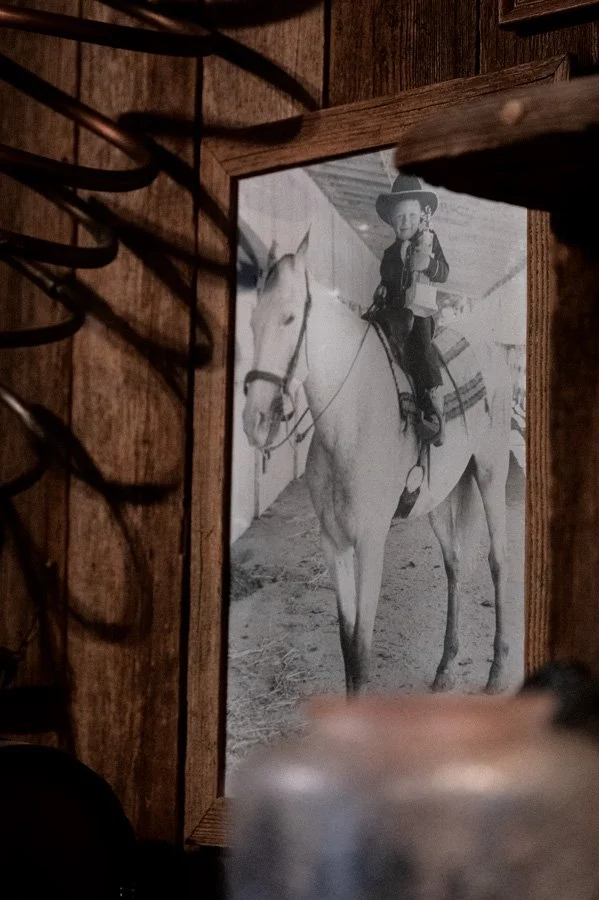
What stays with me now is not really the Queen, the championships, or even the extraordinary house full of proof that Monty had been right. It is Johnny Tivio. Monty pointed at the photograph of the horse everybody had written off and said, quite casually, “So he and I are still together. I’m waiting to go meet him.”
At the time it was simply another Monty story. I hear it differently now.
Watch Stefan Siegel’s full IRON podcast conversation with Monty Roberts at @iron.usa