
A Woman’s Worth
Honoring the architectural legacy of Mary McLaughlin Craig
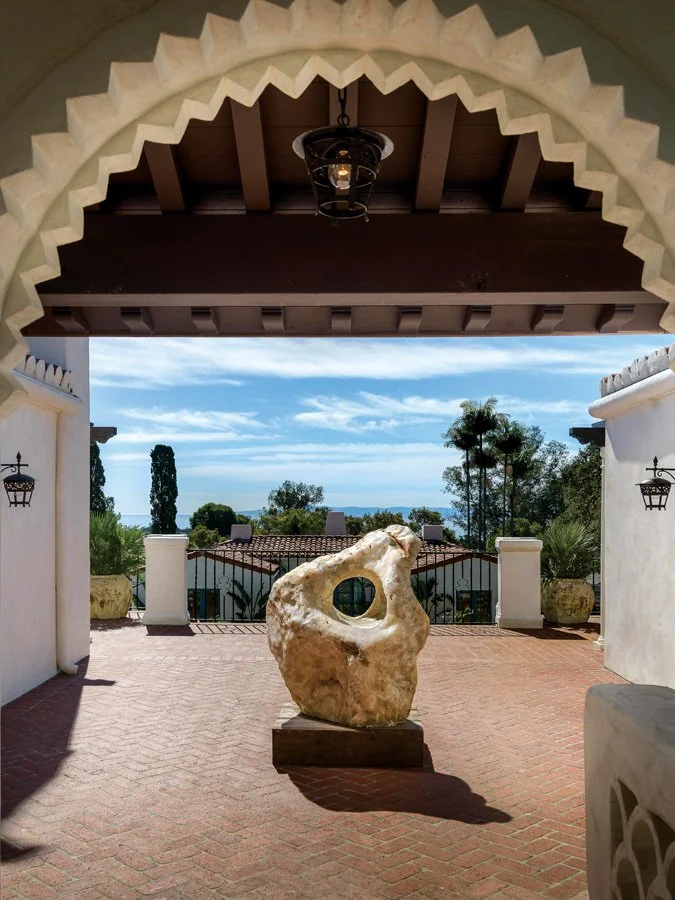
Framed by a characteristic sawtooth arch in the home designed by Mary McLaughlin Craig, an abstract stone sculpture dominates its space on a terrace that looks out to the Pacific.
Written by Joan Tapper
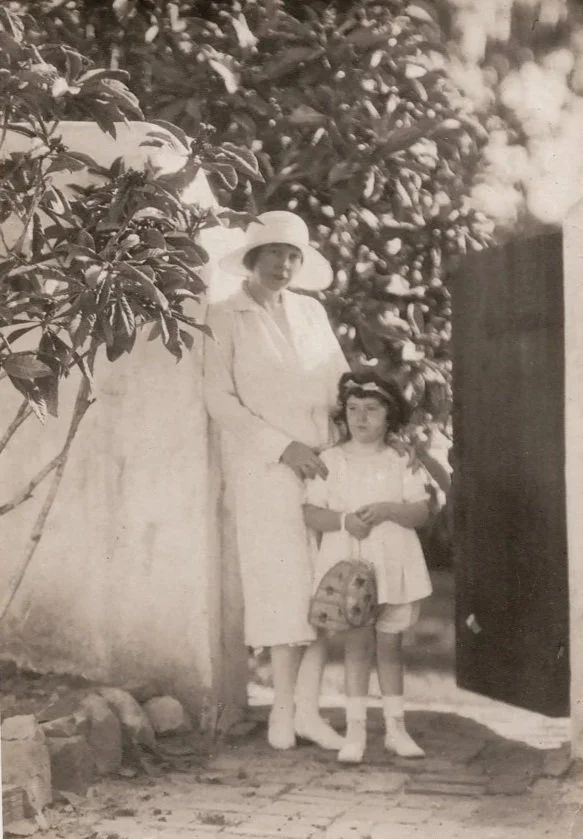
Mary McLaughlin Craig with her daughter, Mary, in 1925.
Think of the quintessential Santa Barbara style, and it’s undoubtedly Spanish Colonial Revival architecture that pops into your mind: white stucco walls punctuated by arched openings, red tile roofs, and decorative wrought-iron details, put together in an asymmetrical layout with grace and charm. Among the less-known creators of this architectural legacy is Mary McLaughlin Craig, who came into her own as a designer after the death of her husband, James Osborne Craig, at age 33.
Born in 1889 in Deadwood, Dakota Territory, Mary had come to Pasadena with relatives in 1913, but she visited Santa Barbara often, and by 1918, she was essentially settled there. She had already made the acquaintance of James, a Scottish-born architect who was designing houses in Montecito and elsewhere in the newly popular Spanish style, and the couple married a year later. James had a thriving practice; among his most notable projects—and still a highlight of downtown Santa Barbara—was the El Paseo complex, but it was unfinished when he died in 1922 and was completed by others.
Undaunted, Mary used her connections, her unerring good taste, and her innate talent to launch her own career, designing ranch houses, mansions, and eventually, from 1924 to 1926, the eight lovely Plaza Rubio houses across from the Santa Barbara Mission. They cemented her professional reputation.
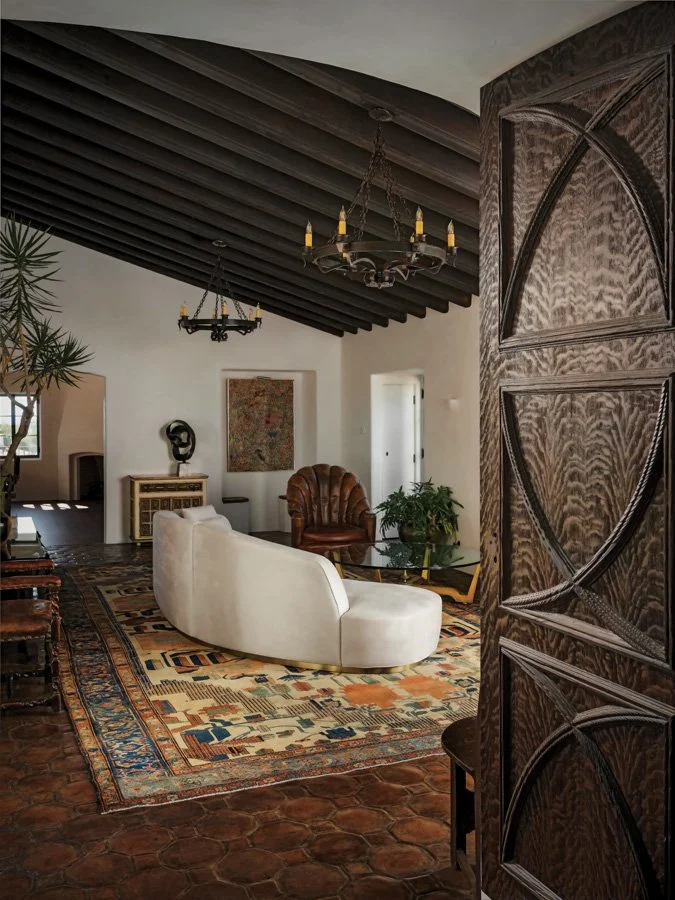
A restored wooden door, originally imported from Portugal, opens to a view of the office.
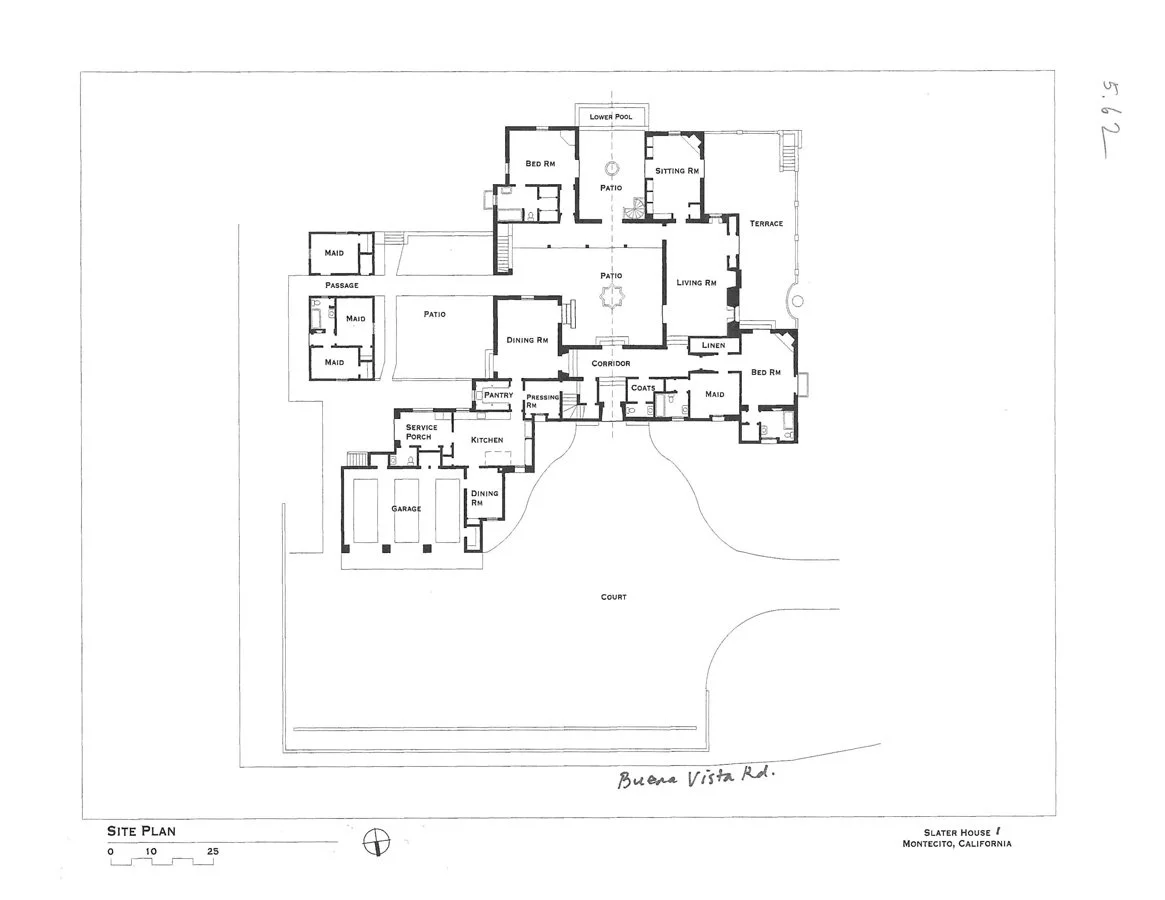
In 1927 Mary was commissioned by Mrs. William A. Slater to build a house for herself and her son on Buena Vista Drive in Montecito. Her design featured an axis that led from the main entrance through two patios—one in the center of the home and the other overlooking a pool and the ocean beyond. The living room and dining room were on opposite sides of the central patio, while a corridor led across to Mrs. Slater’s bedroom. Mary made sure to take advantage of the location, making the most of the mountain and ocean views.
Although she never became a licensed architect—she worked with architect Ralph Armitage for drafting, construction, and engineering—Mary would design many other projects in the decades that followed, before her work slowed down after 1940. She died in 1964.
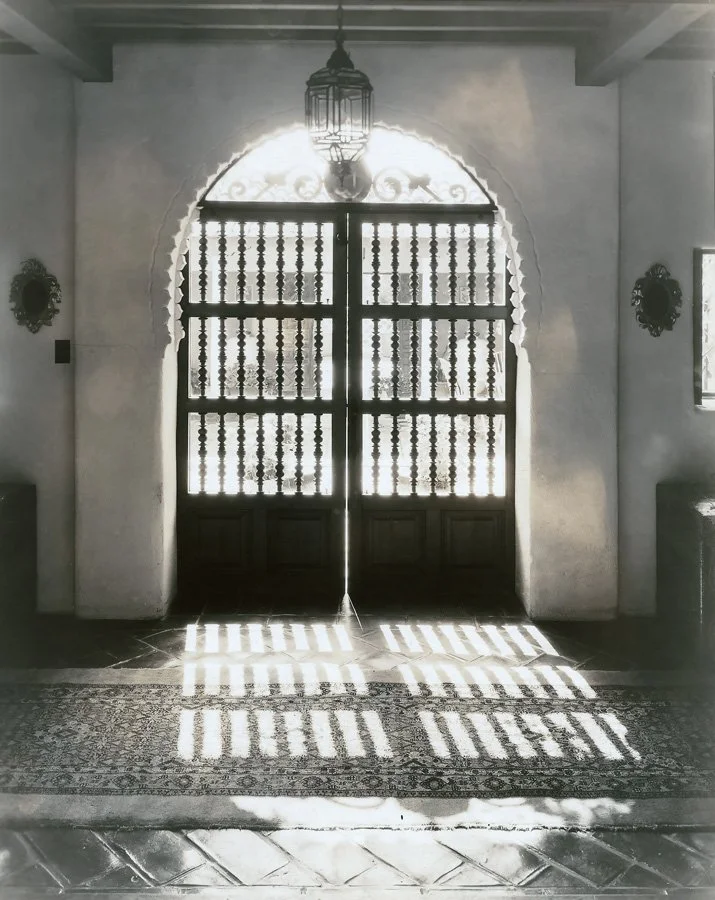
In 1976 her papers were acquired by the Art, Design, and Architecture Museum at the University of California, Santa Barbara, providing an invaluable resource for the study of local architecture. And with Spanish Colonial Style: Santa Barbara and the Architecture of James Osborne Craig and Mary McLaughlin Craig (Rizzoli, 2015), the Craigs’ granddaughter Pamela Skewes-Cox and Robert Sweeney have filled in the story of the couple’s lives and details about their many creations.
Fast-forward to 2024. Architect and designer Xorin Balbes, known for his work on historic properties, had acquired the house, and he began a two-year renovation meant to preserve the uniqueness of the home and ready it for 21st-century life. “I admired the rawness and simplicity of Mary’s design,” he says, as well as her architectural characteristics, such as the antique terra-cotta floors, the sawtooth arches, and especially the “cozy feeling in each space that holds you so intimately. I wanted to honor the work she had done and expand it with a similar sensibility”—to make sure that it was hard to see what was old and what was new.
“I admired the rawness and simplicity of Mary’s design. I wanted to honor the work she had done and expand it with a similar sensibility.”
“The layout of the house still worked,” he says, “but everything needed to be upgraded…all the systems, the roof, and obviously the kitchen and the bathrooms.” Balbes also added to the layout, including enhancing the grandeur of the primary bedrooms and building a new terrace that segues into an entertainment pavilion with a gym, a sauna, and a theater.
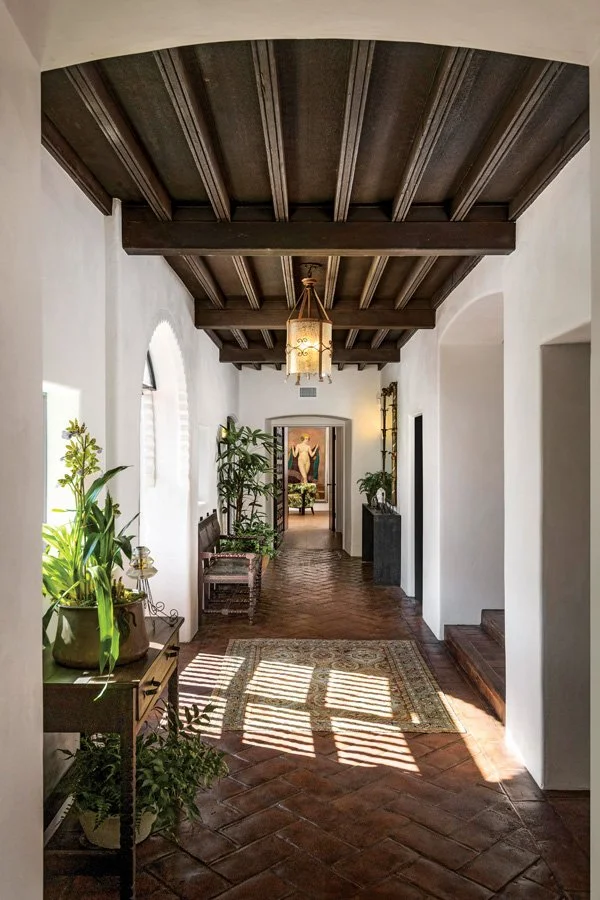
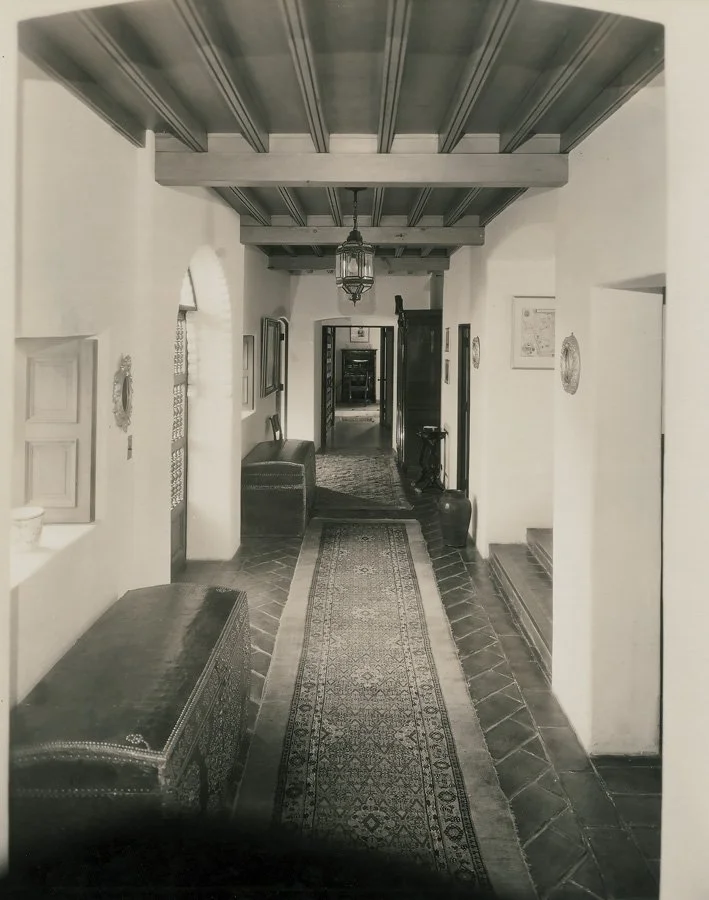
But certain elements of classic contemporary living were there from the outset. Balbes points to the way the home “cascades down the hill and how each courtyard has a fireplace and basically becomes outdoor rooms and extensions of the interior.” The original design also conveyed “a sense of living in a village,” rare in a residential offering. “This is what everyone thinks about when they think of Montecito.”
He adds, “I love honoring the creativity of the past and marrying that with my creativity and the needs of today. It’s a challenge, and I enjoy making sure it is seamless.”
Images courtesy of the Craig Family Collection. Floorplan: Craig (James Osborne and Mary McLaughlin) Research Materials, donated by Pamela Skewes-Cox, Courtesy of the Santa Barbara Historical museum. SLATER HOUSE II GATE: The Jessie Tarbox Beals Collection, courtesy of Frances Loeb Library, Harvard Graduate School of Design The Jessie Tarbox Beals Collection, courtesy of Frances Loeb Library, Harvard Graduate School of Design